Onyx one last time and a reflector as a background

Today is the last post about the photos taken during the shoot at the Onyx club. It covers beauty photography and, for a change, something more fashion-oriented, although done very much in a hurry. The star is Klaudia Danch, who keeps appearing in my shoots. Karolina Zientek did the makeup, and Aga from the Le'Prestige salon did the hair. The usual team.
I was on the road throughout the past week and had no time to work on the post, so today's will be a little shorter. I will soon write something about the shoot I did while I was away as well. Especially for that trip, I arranged photo equipment bags that do not take up three seats in the car or weigh so much. I also replaced my standard modifiers with quick-folding ones, which has its advantages but, as it turned out, drawbacks too. More on all of that another time. I also plan to return to speedlights and put together an ultra-mobile kit, but that will get a separate post too.
Onyx for the third time
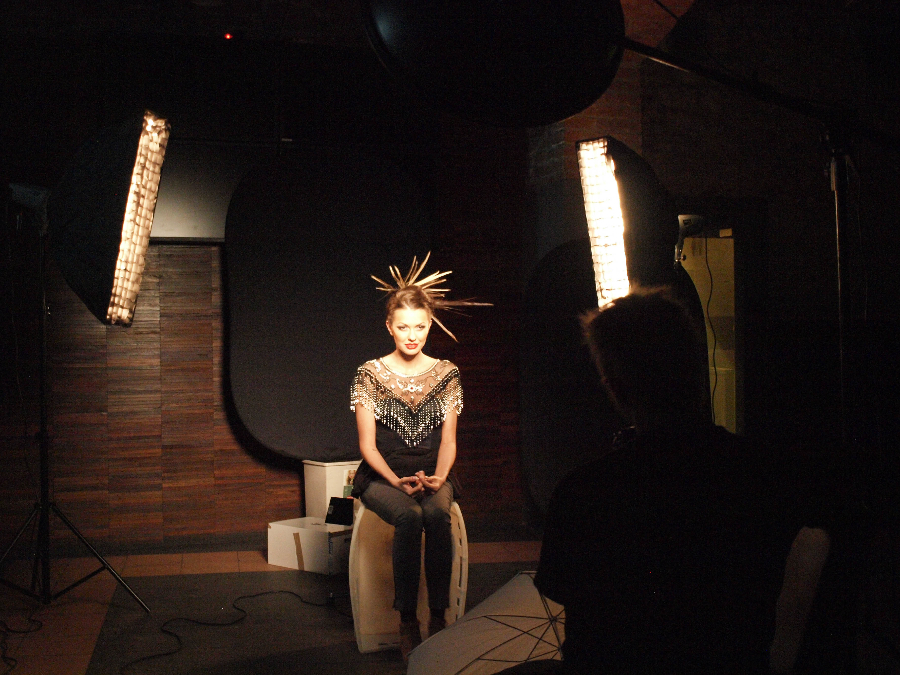
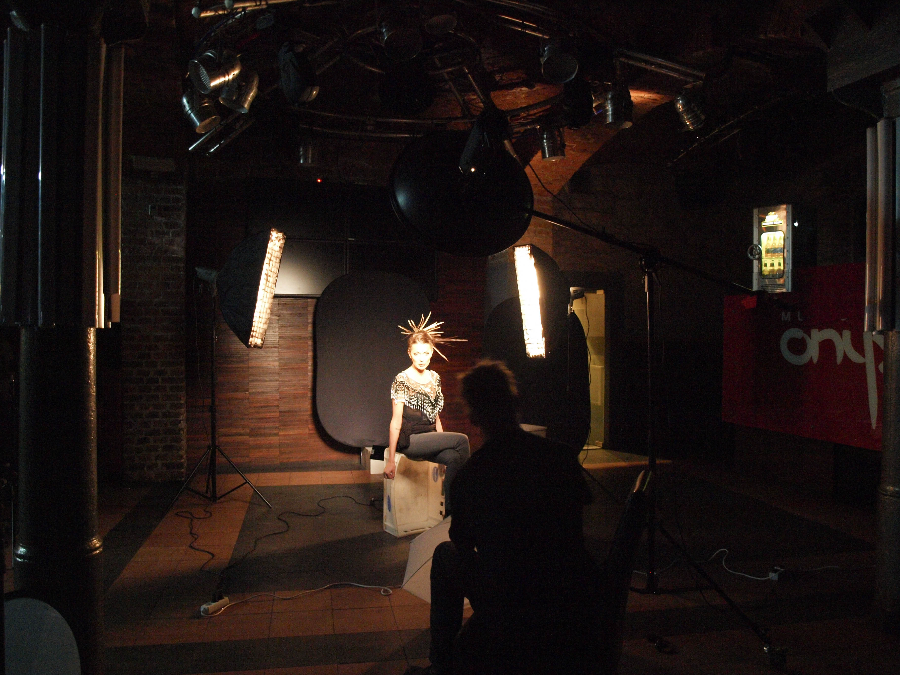
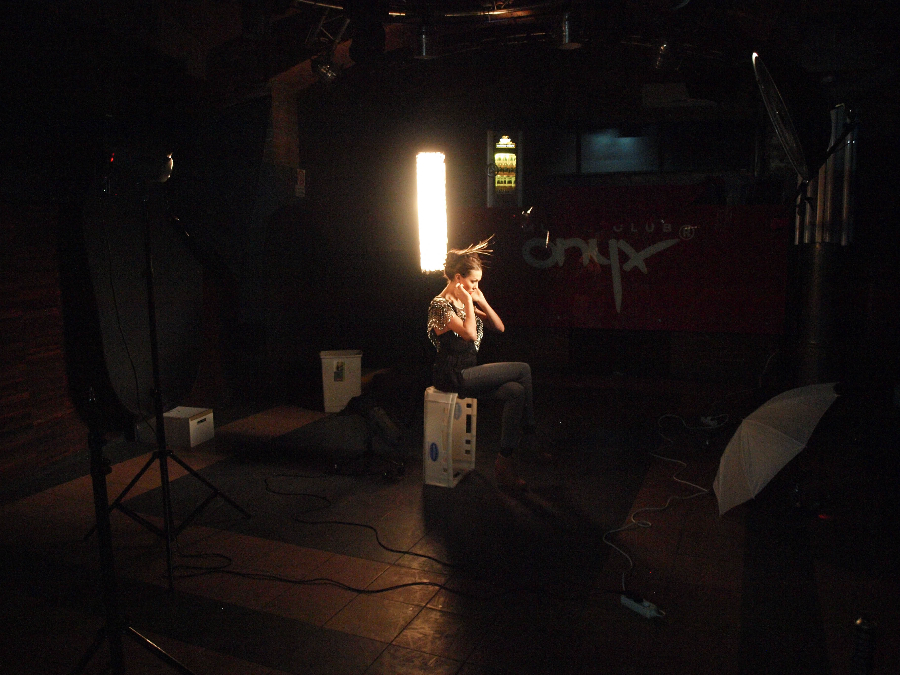
I have already described the shoots with Ola Lech and Aleksandra Cogiel. Now it is time for something about the photos with Klaudia Danch. I photographed all three girls on the same day and in the same place. I had almost the entire studio with me. I used a Powerlux VC-800LR as the main light, while Powerlux VE lights served as rim lights and lit the background. These are the lower-end models, available for little money, which I described here. First, a beauty photo taken straight on:
 Nikon D700 | Nikkor 135mm 2D DC | F/8 | 1/200 | ISO 320
There is nothing groundbreaking about this photo, which is why I had not planned a proper post about these pictures. It was taken with a standard setup: a beauty dish as the main light, an umbrella filling the shadows, and two rim lights made with 22 x 90 cm stripboxes fitted with honeycomb grids.

 Nikon D700 | Nikkor 135mm 2D DC | F/8 | 1/200 | ISO 320
The lighting in the photo above remained unchanged, but the model turned to the right, so the way the light fell changed considerably. Both photos also had a separate light on the background, which, as usual, was a black reflector.
A reflector as the background
I have already been asked about this reflector many times, so it will not hurt to say a little more about it now. It was not made by any reputable company. If I remember correctly, it is F&V or Quantuum, as I own two, so it is a typical cheap Chinese product. It is the 120 x 180 cm, 5-in-1 version. I do not iron it. I mention that because this was the most common question, and most people asked specifically about the creases :).
It is true that it is not badly wrinkled, and I also try to position it so the creases show as little as possible. If some marked section is visible, which is usually the case, I remove it during editing with the clone stamp/healing brush or dodge&burn. Anyone who has taken my retouching course knows that, in my opinion, you can fix almost anything with dodge&burn :).
How you light a reflector like this is very important. I usually light it from below because that gives me the distribution of light I generally want. But if the reflector were very badly wrinkled, it would definitely be better to light it as straight on as possible. A steeper angle of incidence makes the texture of the background more visible, and in this case that means the creases. I would not want that, as each one would cast a shadow. With frontal lighting, the light fills the uneven areas and makes them less visible. Another trick for hiding creases is to soften the light with a modifier because hard light brings out even the smallest details. I do not normally do that, although it happens sometimes, very, very rarely, when I want the background lit evenly. You can also set the depth of field so the background is blurred, but low aperture values have no place in my photos. If someone shoots portraits, though, they usually use a wide-open aperture, which leaves the background completely blurred. For people taking photos like that, the background is rarely a problem. Another solution is to move the reflector as far away as possible. But you need to remember not to overdo it because of the reflector's dimensions, especially since its rounded corners will become visible fairly quickly.
Make us some "fashun"
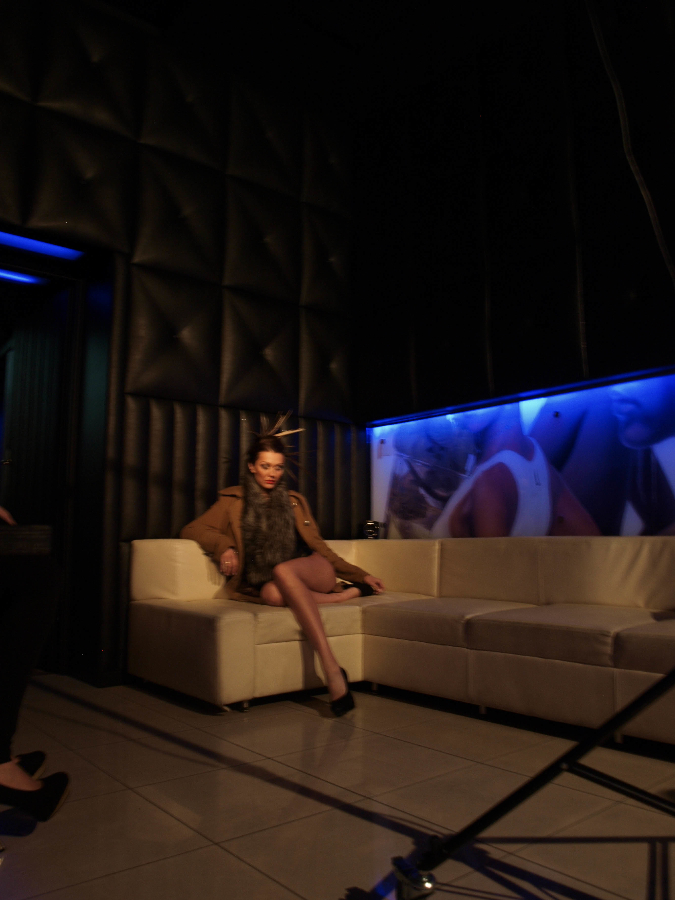
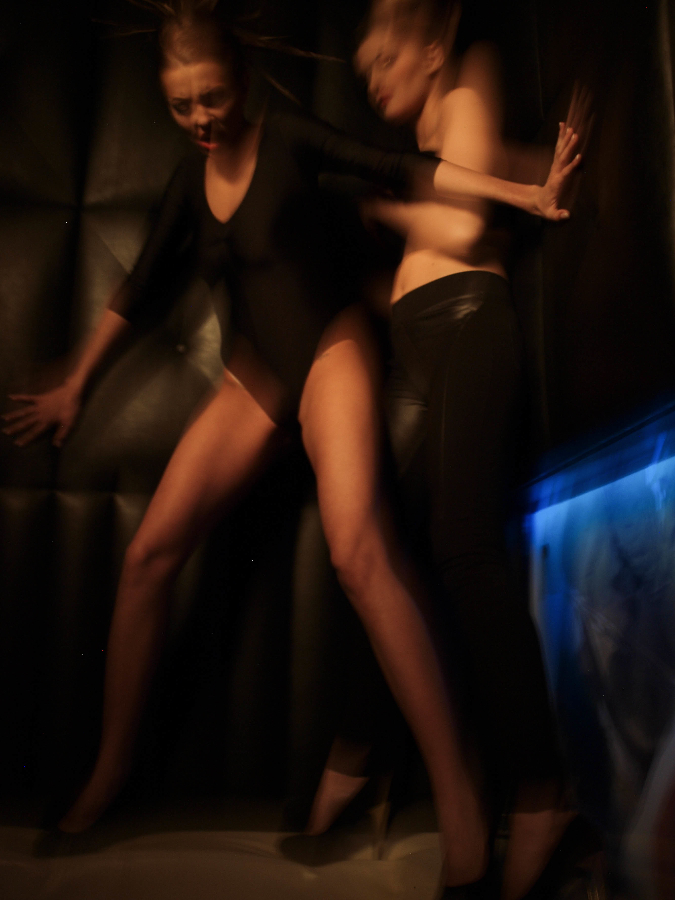
After the beauty shot, it was time for a full-body photo. We had to move the equipment to a lower floor and set everything up again from scratch. We shot the whole thing with the beauty dish alone, without rim lights, separate background lighting, shadow fill, or anything else. Ola was there with Klaudia. We did not change the whole styling because time was running out. Only the clothes were replaced.
 Nikon D700 | Sigma 50mm 1,4 EX DG HSM | F/8 | 1/200 | ISO 200
As you can see, I took the photo from a very low angle at a focal length of 50 mm on a full-frame camera, equivalent to 35 mm on most digital SLRs. The girls stood on a platform, so the light had to be very high. I do not know whether it was 3.5 meters or more, but the remote control proved invaluable once again. Changing the settings by hand would not have been easy.
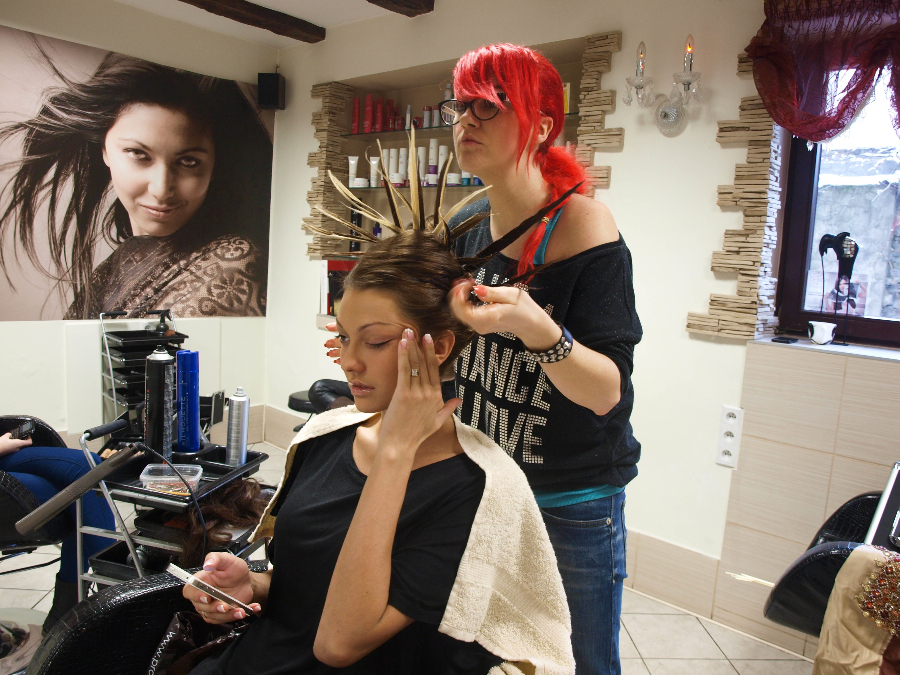
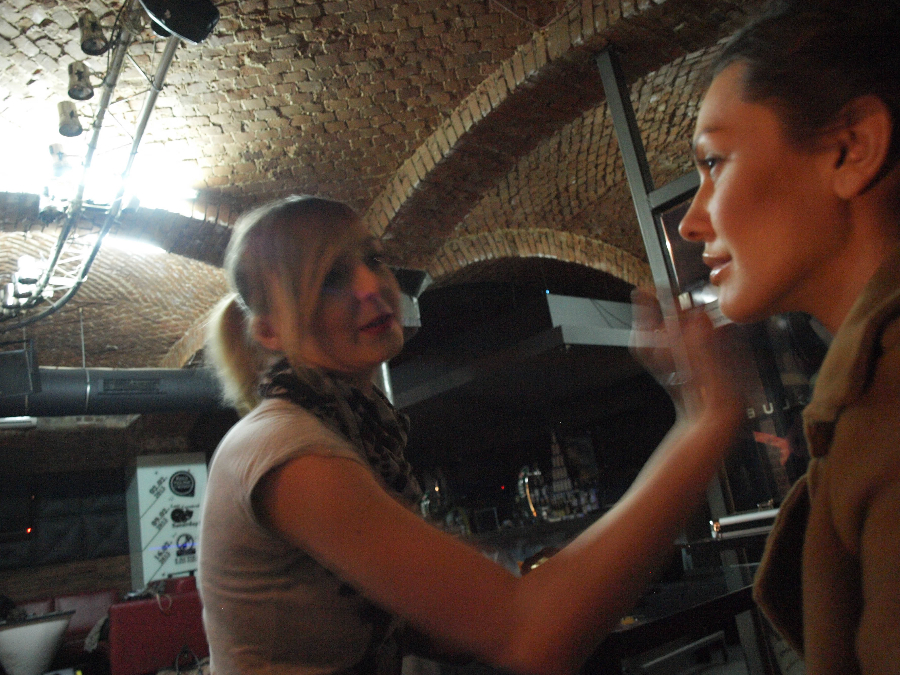
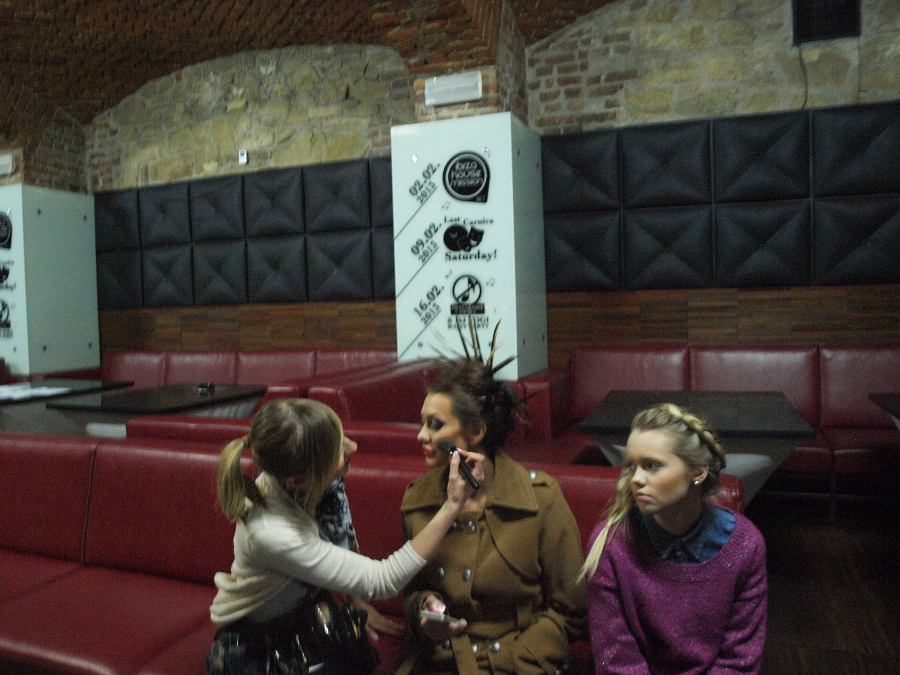
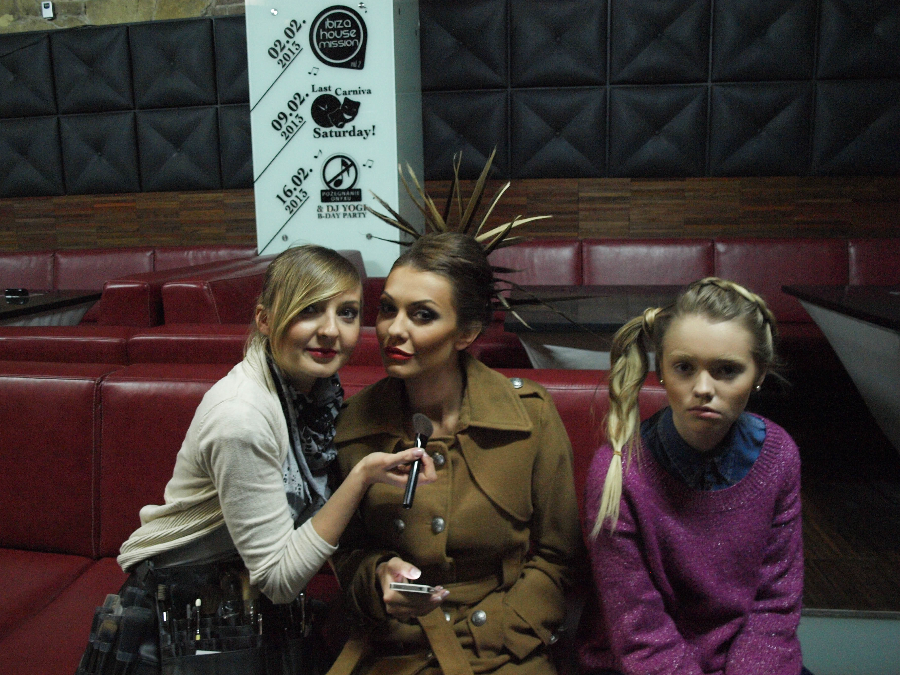
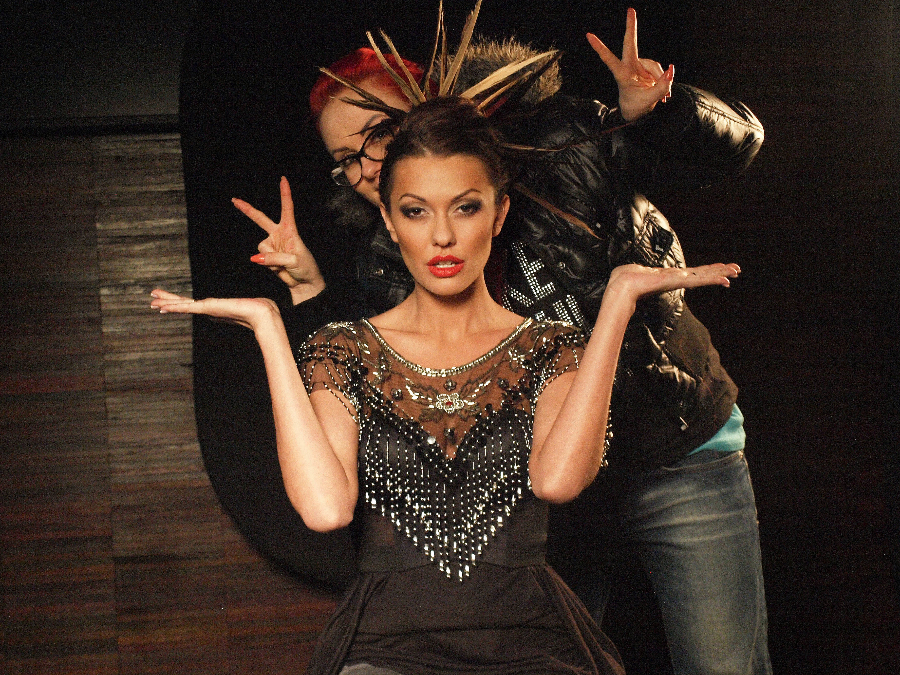
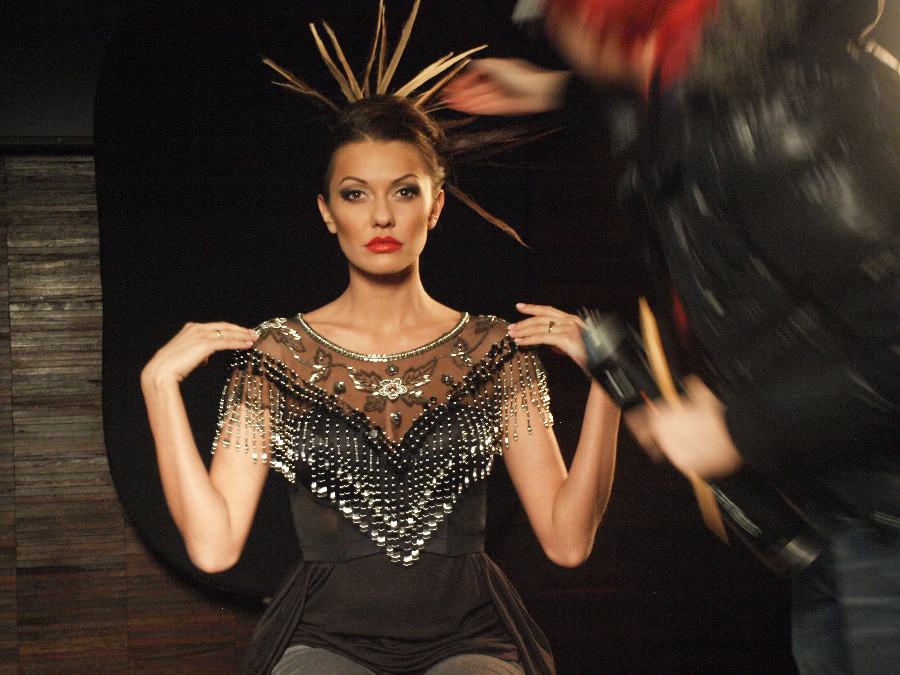
Backstage
Summary
I do not yet know when the next post will appear, whether it will be Tuesday as usual or Thursday, exactly one week after this text was published. As always, a link will appear on Facebook. Outdoor shoots are still waiting their turn because winter is dragging on, but I will certainly organize a few this year. Partly with those in mind, I cannot stop thinking about putting together the most mobile kit possible. I even think I have found a more portable alternative to a beauty dish. In any case, I will have plenty to write about this summer :).
The photos were taken with lights from FsFoto.pl.