Red Light and Powerlux VE Flashes

I recently described a beauty shoot done at the Onyx music club. That day, however, I photographed not only Aleksandra Cogiel but two other girls as well. I also had the opportunity to see how the Powerlux VE series flashes performed (I had already written about the VT series).
One of the girls was Ola Lech, whom I had also photographed before (in November last year); you can read about that shoot here. This time the styling was created for publication in one of the e-magazines, but the deadline turned out to be earlier than we thought, so other photos were ultimately used. The team was the same as before— Karolina Zintek as the makeup artist and Aga from Le'Prestige as the hairstylist. Mateusz “Pro” Proiciak assisted.
Concept 1
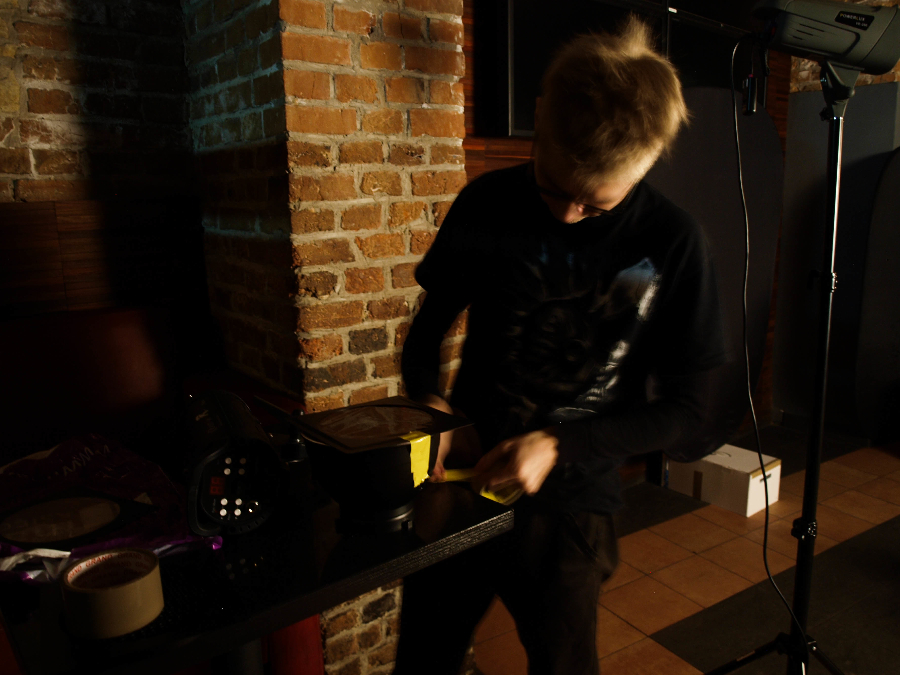
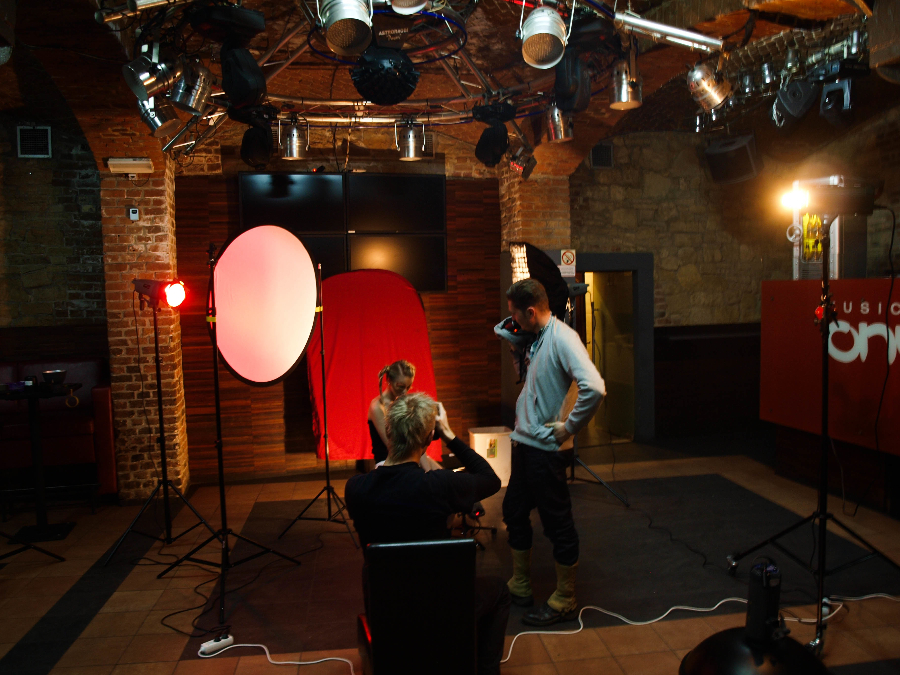
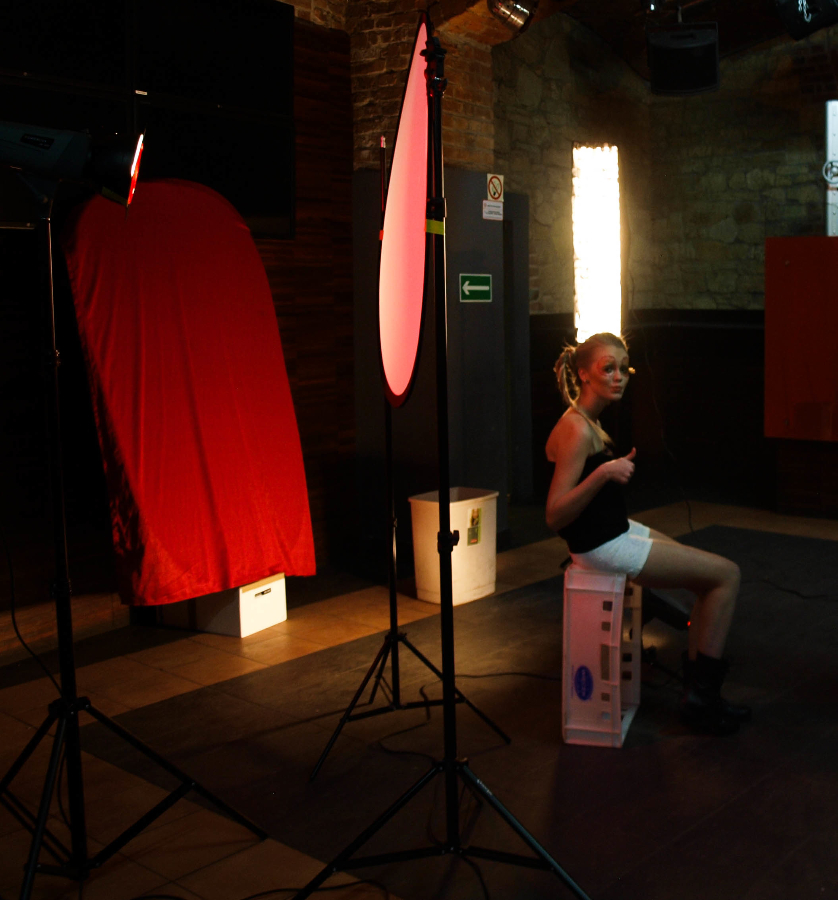
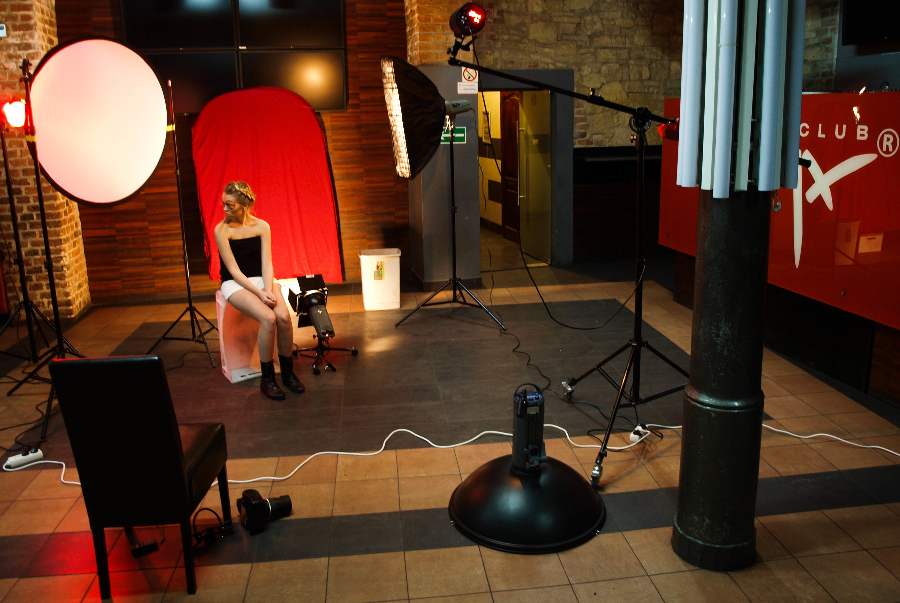
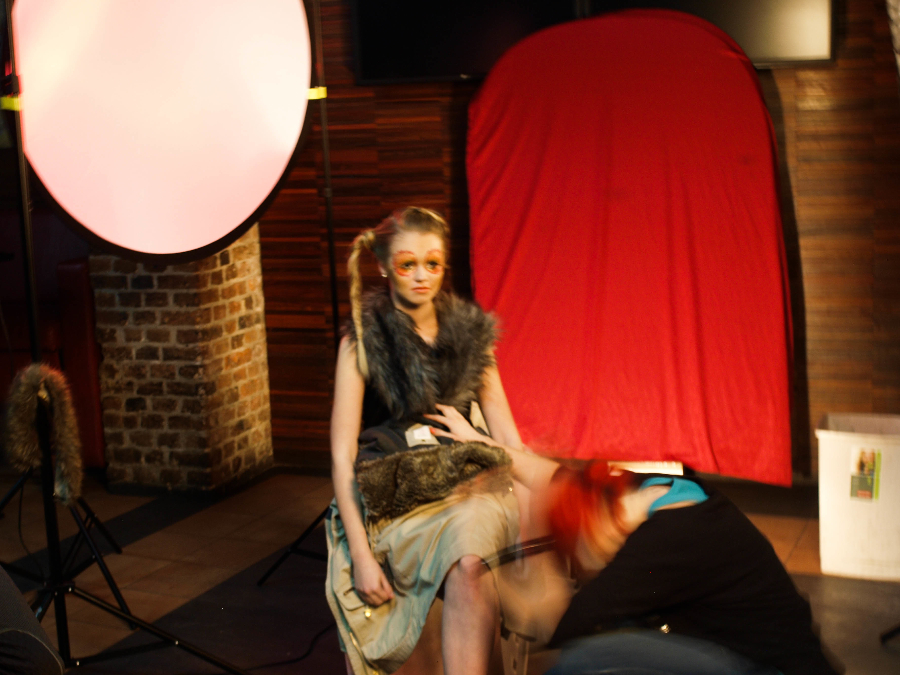
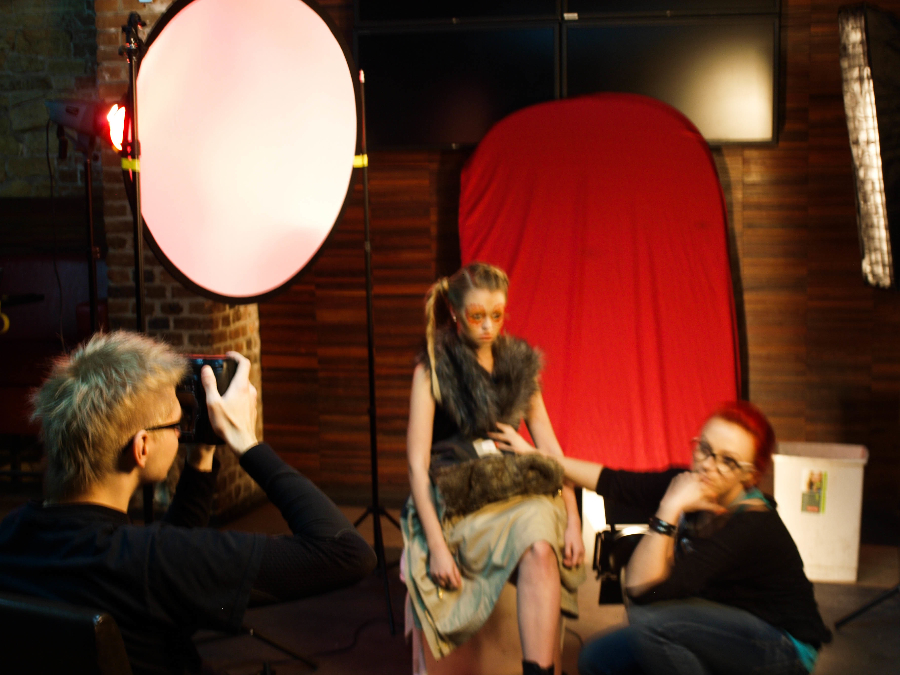
I started with something strange, because beauty photos in which you can barely see the face and the main light is somewhere behind the model are difficult to call normal... For the main light, I used a Powerlux VE 400 Ws fitted with a reflector. I also taped a red gel to it, and the whole thing fired through a diffuser made from a round reflector mounted on two stands (with adhesive tape, naturally...).


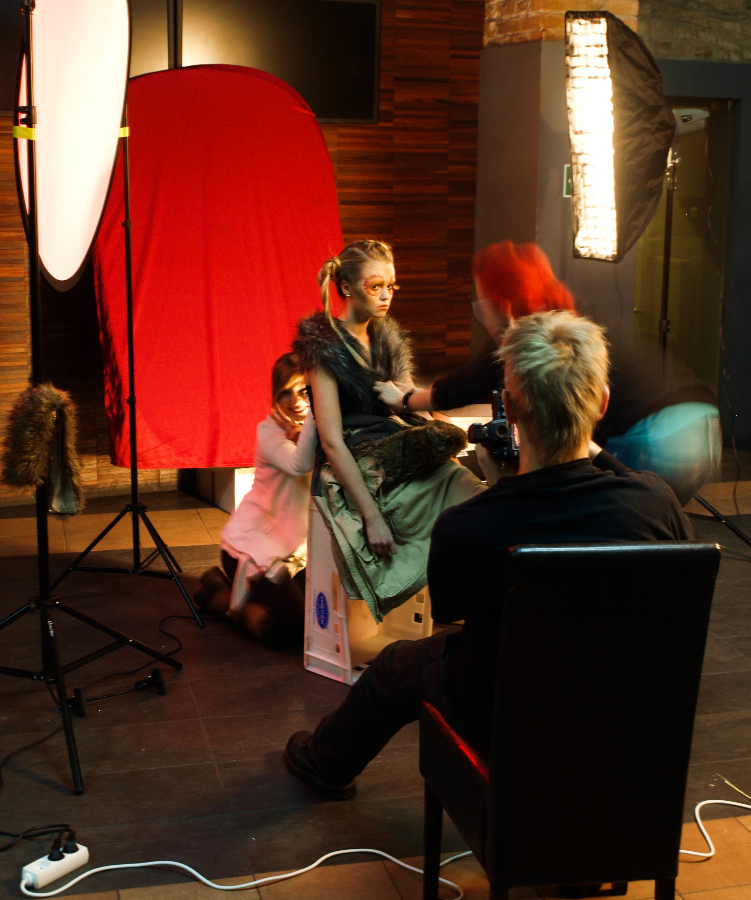
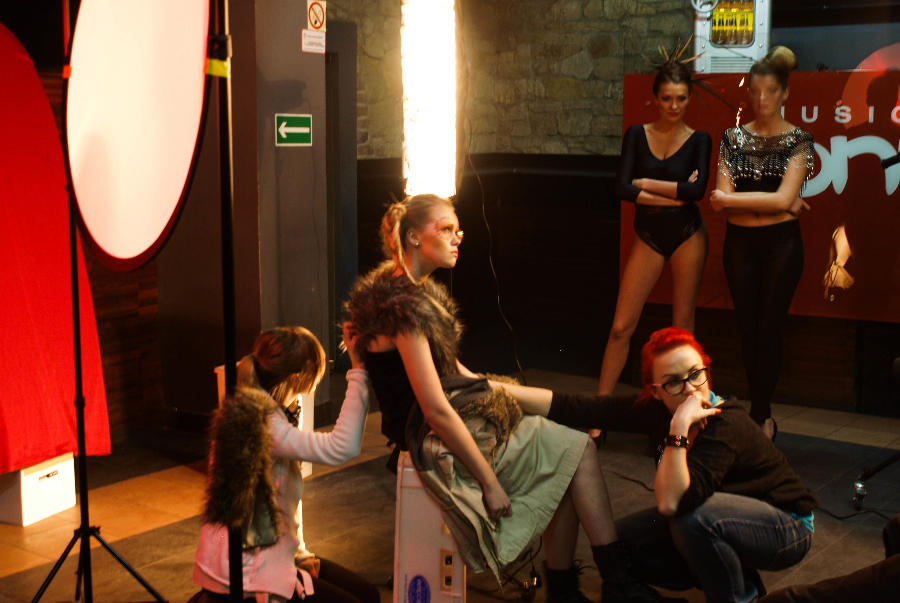
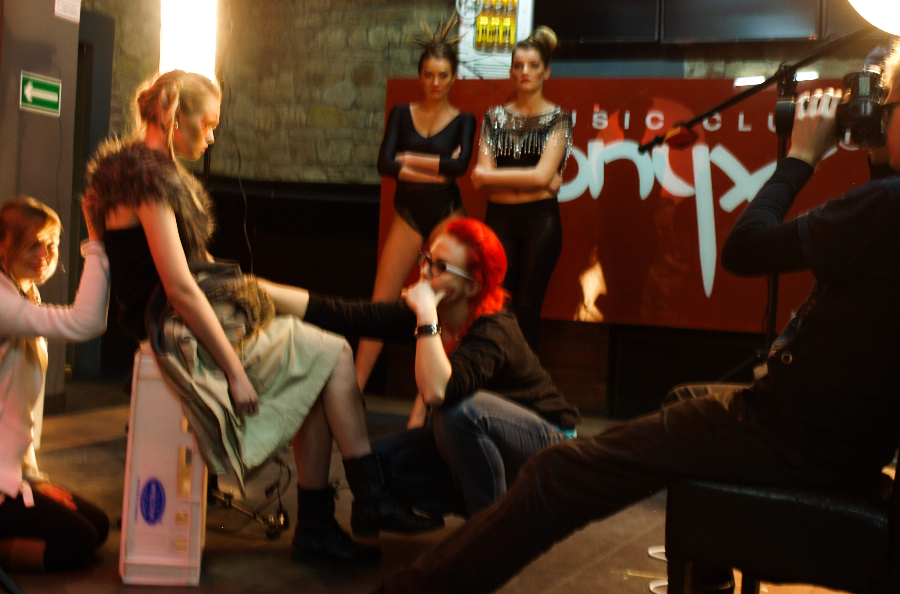
You can see the entire setup above. There was no Yongnuo flash in the first photo, while in the second it lit the eyes—details are in the post.
Fun fact: Adhesive tape emits X-rays when unrolled in a vacuum. They are strong enough to take an X-ray image. Here you can see an imaging device based on unrolling adhesive tape.
A red fabric that happened to be within reach served as the background, lit by a Powerlux VE 200 Ws flash. There was also a Powerlux EXL 22 x 90 cm strip softbox with a grid, placed behind the model on the right. It lit the hair slightly, outlined the face, and brightened the eyelashes. The final result looked like this:
Nikon D700 | Nikkor 135mm 2D DC | F/8 | 1/200 s | ISO 500
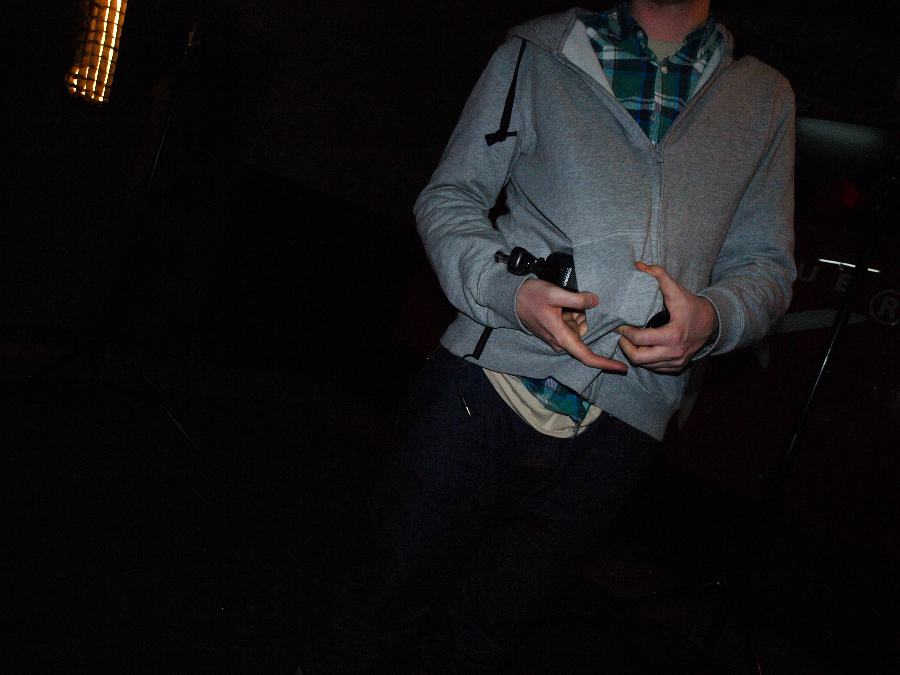
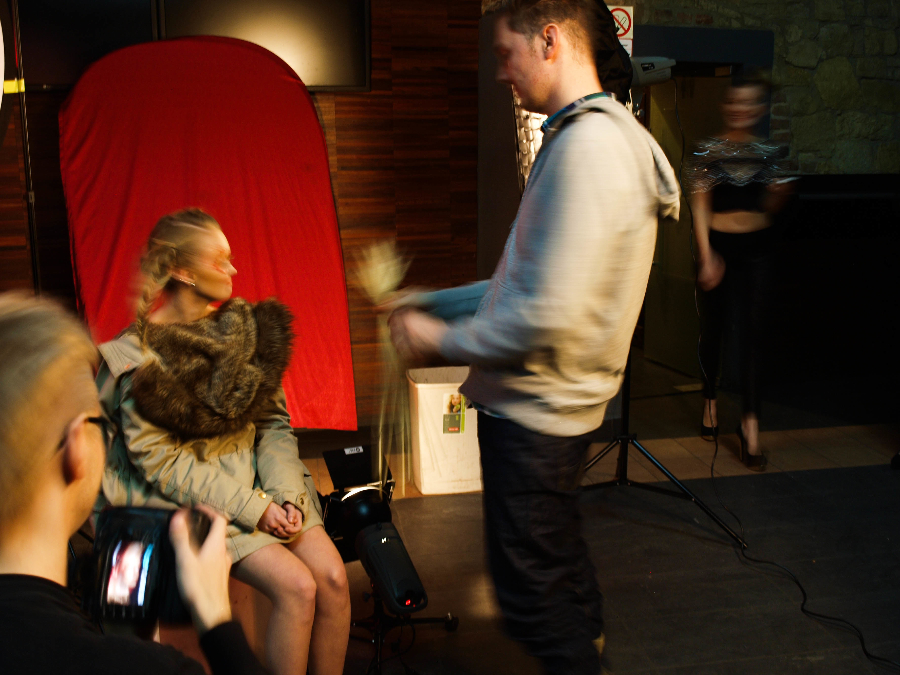
For the next photo, “Pro” also used a speedlight to create a subtle catchlight in the eye. He covered the flash with his sweatshirt because at these settings it was too bright even at minimum power.

Nikon D700 | Nikkor 135mm 2D DC | F/8 | 1/200 s | ISO 500
Powerlux VE Flashes (and Quantuum R+)
The Powerlux VE flashes I used during this shoot are designed for “normal people”—they were not built for professional, all-day studio work. They also lack a few other nice features, but they are not as heavy as top-of-the-range flashes either. They should be entirely sufficient for standard uses, and their price is in a completely different league from higher-end models (PLN 450–600, depending on power). The Powerlux VE competes, among others, with the popular Quantuum R+ Digital flashes (I have done quite a few shoots with one of those). Both use the popular Bowens mount, so a great many accessories are available for them, including inexpensive ones. I cannot say that one is better than the other; they are similar and aimed at the same buyer. The Powerlux units are more attractively priced, slightly lighter, and better equipped as standard, but their housing is plastic (the Quantuum’s is metal). Neither flash gave me any trouble; the only thing I could fault is that they dump their charge by firing. I often complained about Quantuum, but about the lower PT model. The R+ is much better. Still, everything I am writing about the R+ series will soon matter much less because it is due to be replaced by a new model in a few weeks. In any case, I can confidently recommend the Powerlux VE as an alternative to the R+; whether Quantuum’s new model will be better than its predecessor remains to be seen.
A few more technical details. Powerlux VE flashes are available in 200, 300, and 400 Ws versions. The modeling bulb is 150 W, although one of the flashes sent to me for this shoot had a 250 W bulb fitted and nothing went up in smoke. Modeling-light output can be adjusted in 1 EV steps with a button (or switched off entirely). Flash output is also controlled with buttons—it is continuously adjustable in 0.1 EV increments, shown on a simple but readable display. The minimum setting is 1/32 power. There is also a photocell and a ready signal—standard features. A radio trigger connects through a 3.5 mm jack.

The kit also included a sync cable, a 17 cm reflector, and a plastic flash-tube cover, useful during transport among other things (with the aforementioned Quantuum R+, the last item was an optional extra).
During this shoot I used one 400 Ws flash and two 200 Ws units. I normally use a different, more powerful model as the main flash, with the remaining flashes serving as additional lights—rim lights, background lights, and so on. This time, however, I used the VE 400 as the main light, so I raised the ISO to get enough power.
Concept 2
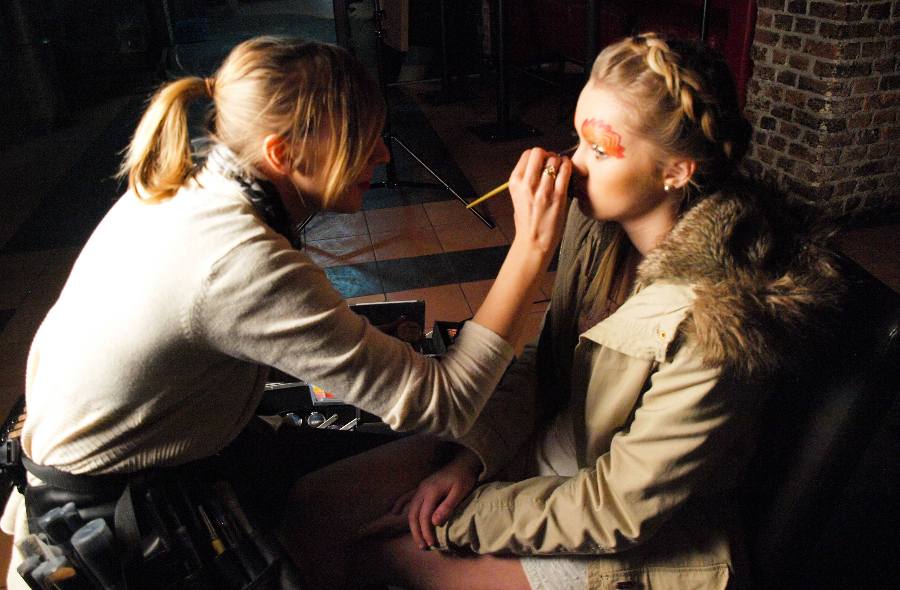
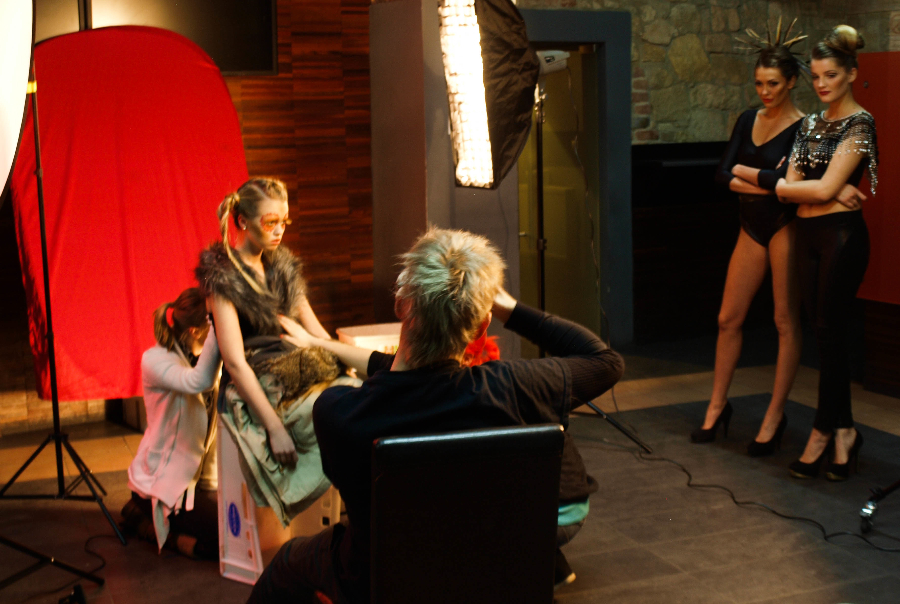
The second idea was that perhaps I should show the makeup after all, since that was the point of all this :). The red light changed from the main light to something between a rim light and fill light. “Pro” was no longer shining a speedlight into the model’s eyes, the strip softbox did not contribute to the exposure (you can see it in the backstage photo, but the flash was off), while the background remained unchanged. I added a 70 cm beauty dish with a grid, which now served as the main light.

The first frame was composed so that only the upper part of the outfit was visible. Karolina really went all out with the makeup—you will soon be able to read how she created it on her blog.

135 mm | F/8 | 1/200 s | ISO 500
With a wider shot, the outfit arranged this way did not look good—the bottom of the photo felt very heavy and needed to be changed. The clothes were replaced with something that could be arranged to create a neckline:

135 mm | F/8 | 1/200 s | ISO 500
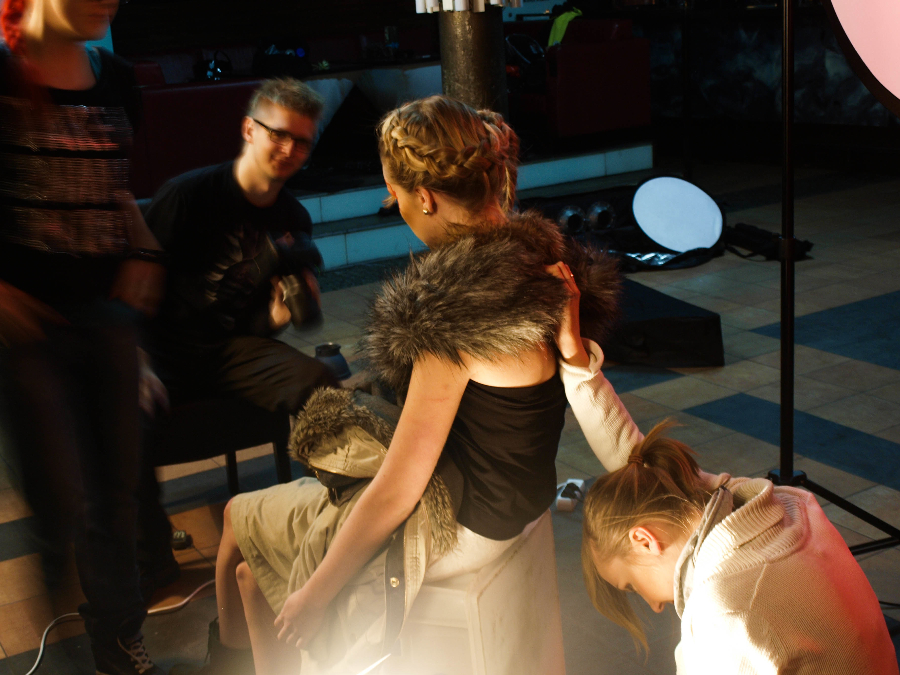
One person had to hold the fur at the back and another stretch it at the front to make it look the way it should:

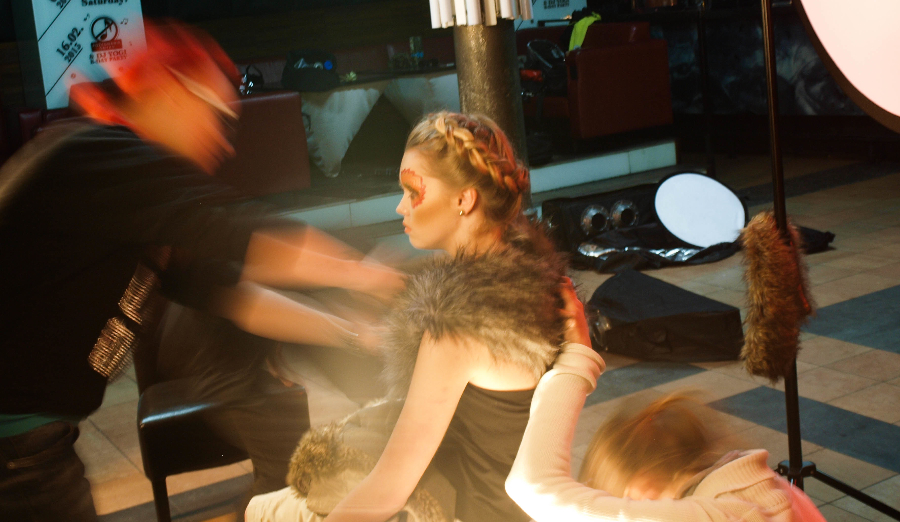
Backstage
Summary
I had been planning a shoot with colored gels for ages, so I am glad I finally managed it. Previously, I had only used them with speedlights or done tests with a colored gel on the background. The original plan was to light the model in red and also in green—from below. Unfortunately, that color looked rather bad on skin, so in the end I used only one gel. In any case, I will probably write more about effect gels in the future. The Powerlux VE flashes performed well; they would work both as additional and main lights, except that my work requires the level of power offered only by Powerlux’s top VC series. I will eventually write a post about the VC as well. Still, a great many people are looking for flashes around 300 Ws and will probably be happy with them.
The flashes were supplied for the shoot by the importer— Funsports.