Fashion beauty and Powerlux VT lights

This time, something between fashion and beauty. I did this shoot a few days ago, mainly using accessories from Powerlux. They included VT-series lights, the simplest, lightest and, just as importantly, cheapest models. In terms of price, Powerlux VT lights are comparable to Quantuum PT lights. I also used other lights, but today's post will focus on these basic models.
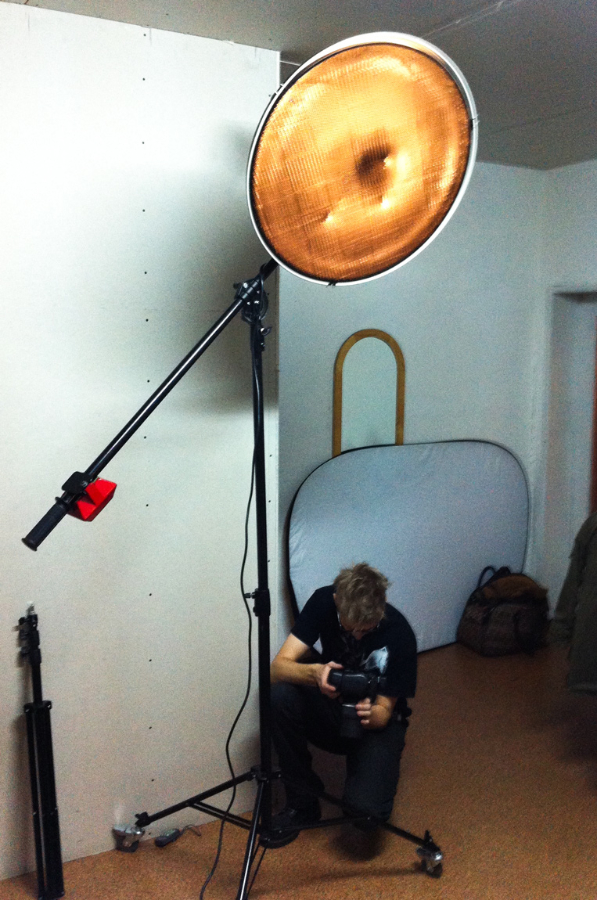
This is one of the shoots where Vanessa Gabriela Zalewska did the models' makeup. I hadn't worked with her before, but we'd recently been doing a lot together, and this time she handled the makeup. Julia Poloczek posed for me for the first time, though probably not the last. I usually shoot close-ups during sessions like this, but the jewelry worked so well here that I preferred shots taken from a little farther away. The main light used for every shot, as usual, was a 70 cm beauty dish with a grid. I mounted it on a Powerlux VC-800LR, a light from the company's top-of-the-line series that can be controlled wirelessly with a remote. I won't go into detail because I'll devote a separate post to this series someday. I also used two strip softboxes and a translucent umbrella. There was one more light fitted with a standard reflector.
Light
I started as usual, setting everything up for a shot taken straight from the front:

135 mm | F/10, 1/200, ISO 200
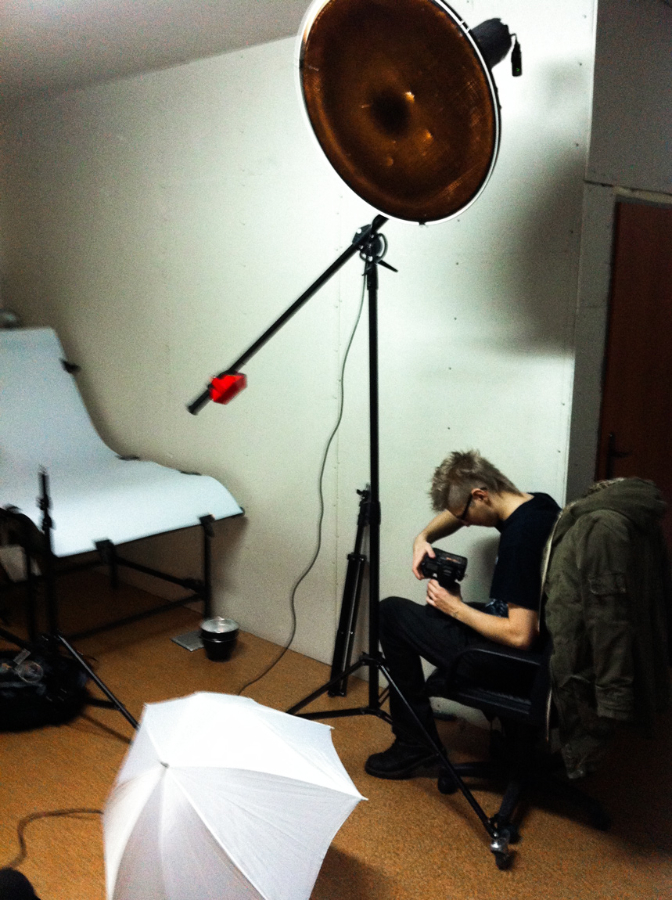
The beauty dish was on a boom, hanging just below the ceiling. It was quite far from Julia, so the flash wasn't coming from a very steep angle above. I don't like placing lights close to the model.

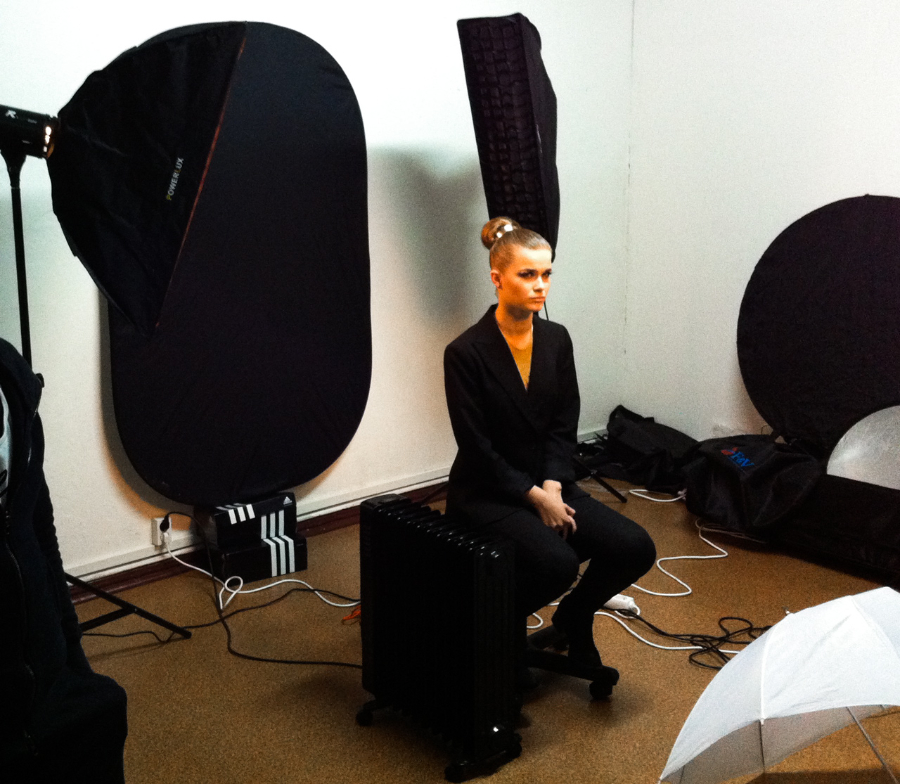
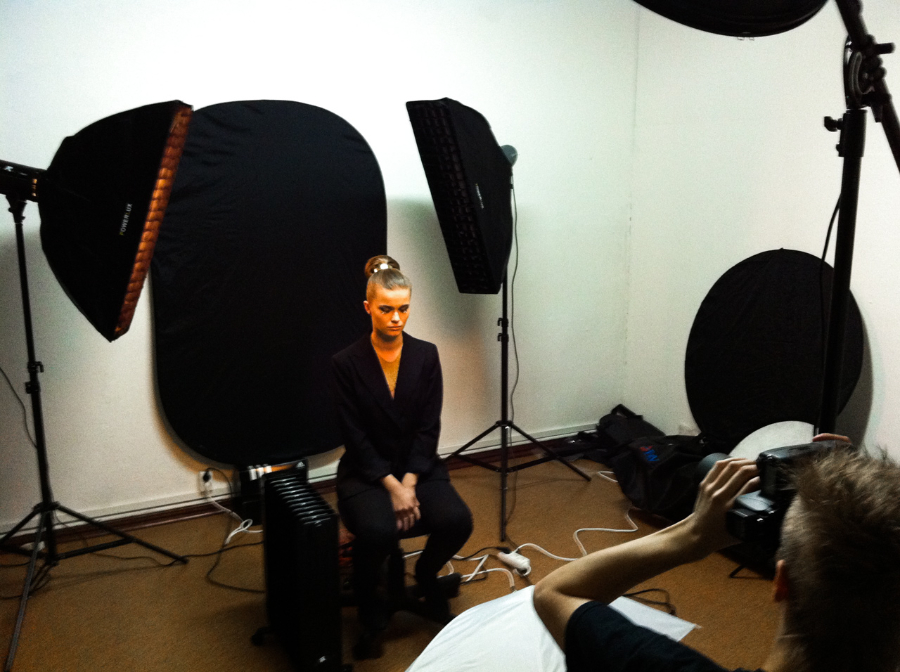
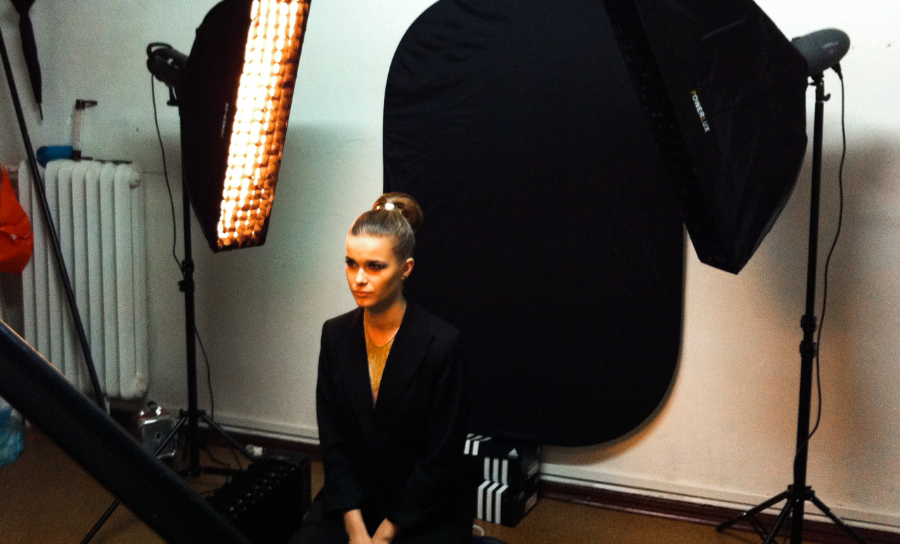
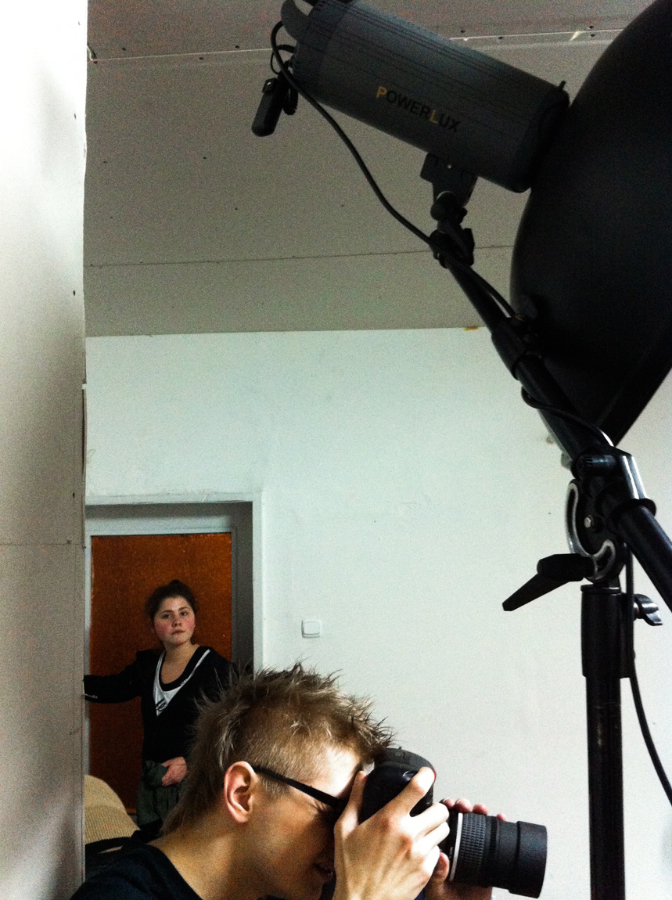
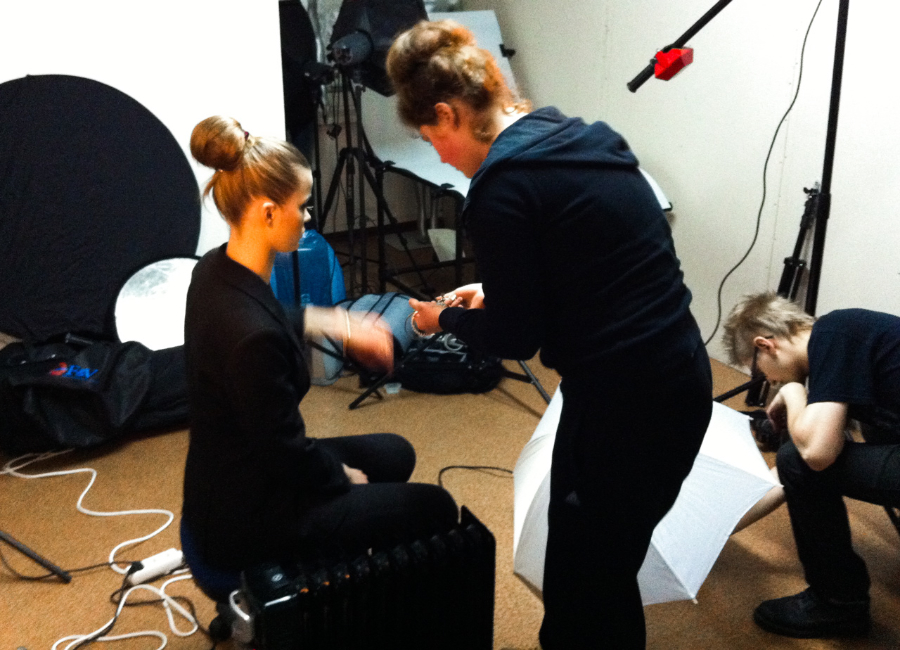
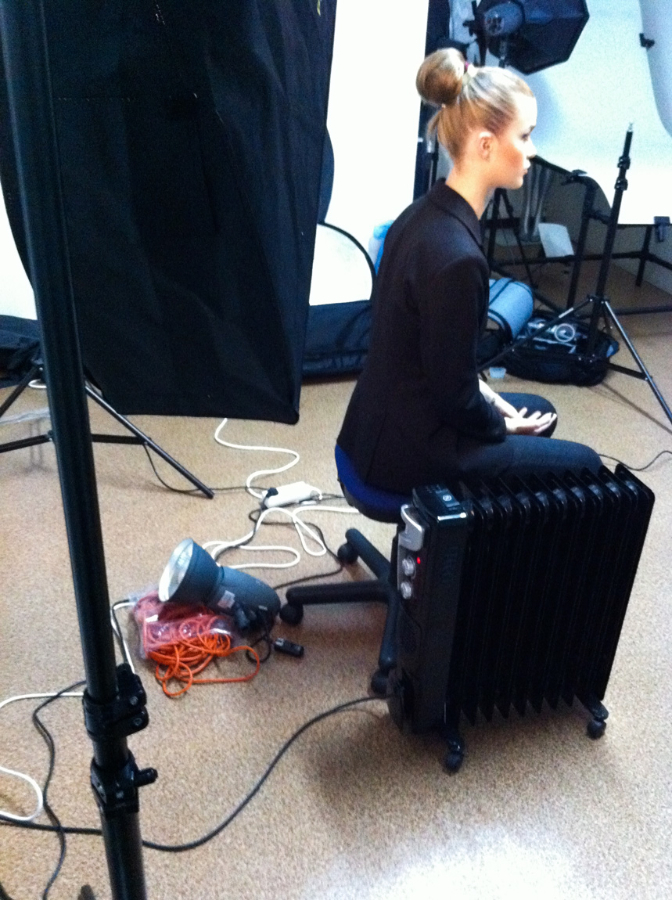
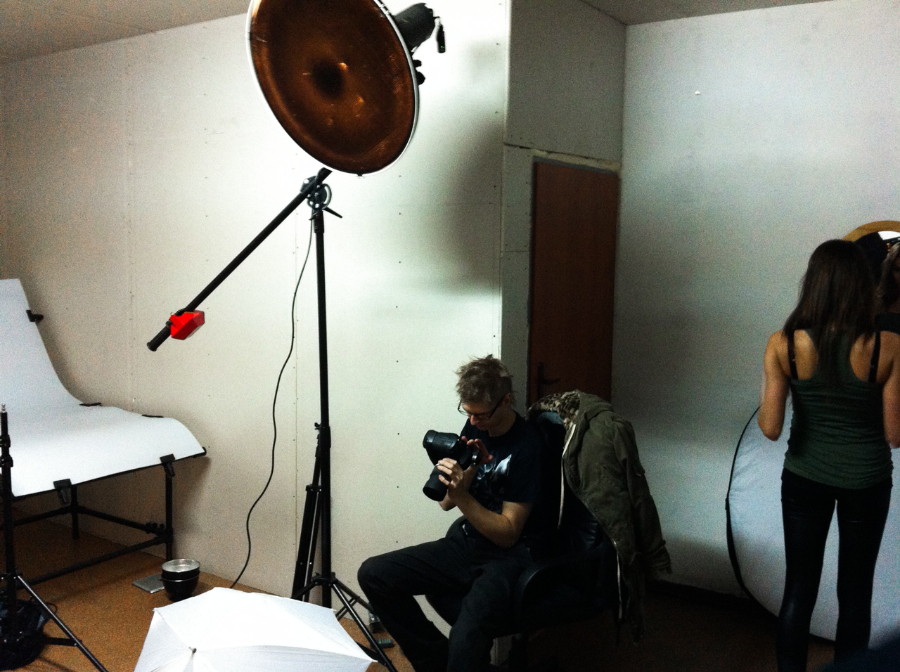
I used Powerlux 22 x 90 cm strip softboxes with grids as rim lights. One held the Powerlux VT-300 mentioned earlier. A translucent umbrella placed on the floor lit the eyes. It's a little broken, which explains its strange appearance in the behind-the-scenes photos. The ever-reliable Yongnuo YN-460II fired through it. I used a black 120 x 180 cm reflector panel as the background, lit with a Powerlux VT-200 fitted with a standard reflector. The light was lying on the floor, angled slightly upward to brighten the background a little.

I didn't shoot the next frames head-on, although the model was still facing in exactly the same direction as before. I was the one shooting from a different position. We also moved the background. That's much simpler than turning the model and repositioning the main light and rim lights. Turning the model alone, without changing the lighting, was out of the question because the photos would have looked completely different.

135 mm| F/10, 1/200, ISO 200
The rest of the setup was the same as before, except that I turned off the right rim light.

For this shot, the umbrella on the floor was especially important. With her head tilted this far down, her eyes would have been black patches without it. I used the same lighting arrangement for the next two shots:

135 mm | F/10, 1/200, ISO 200

135 mm | F/10, 1/200, ISO 200
For the final frame, I moved the rim light farther forward so it would light more of the neck and brighten the cheek.

135 mm | F/10, 1/200, ISO 200
Powerlux VT
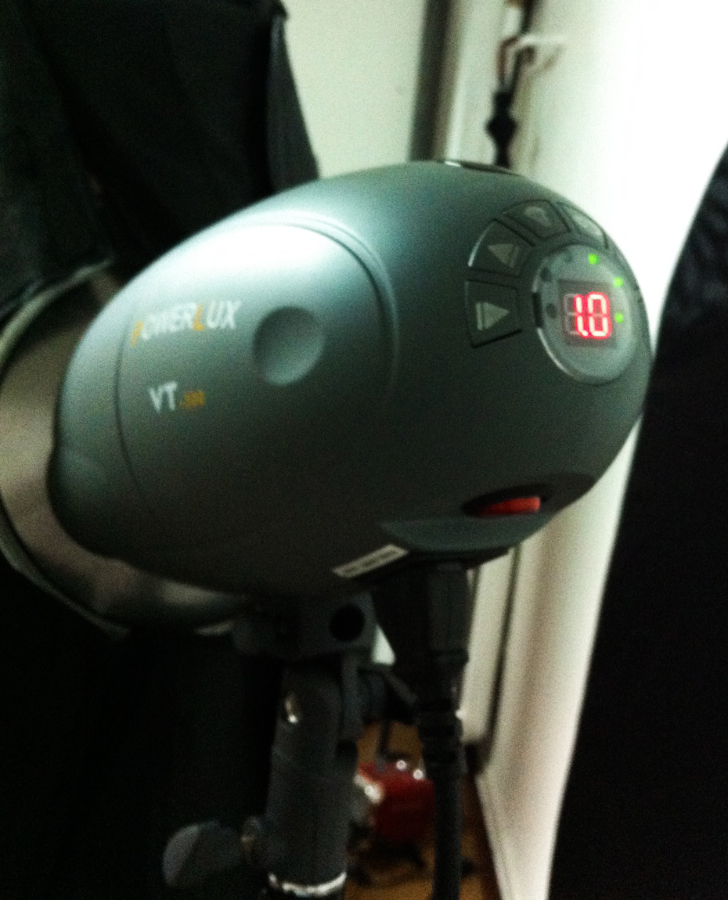
Now, more about these lights. Powerlux VT lights come in four versions, from 100 Ws to 400 Ws. The weakest costs around PLN 280 and the most powerful around PLN 460. These aren't professional lights and don't pretend to be. They look completely different from what we've become used to. They're very small. You can easily pack two VT units in the space of one professional light, which is a huge advantage. The same goes for weight. They're very light, and I wouldn't hesitate to mount them on stands I normally use only with speedlights, provided I didn't fit them with huge modifiers. The 100 Ws version weighs 750 g, while the 400 Ws version weighs 1,100 g. The manufacturer is well aware of their portability and also sells them as location lights with a dedicated power supply. A 75 W halogen bulb provides the modeling light, and its output can't be adjusted.
The rear panel has a display showing the current power setting, which is adjusted with buttons rather than a dial. The range is 1 to 1/32 in 0.1 EV increments. Powerlux VT lights have a built-in optical slave that can be disabled with a button. There's also a button to turn off the modeling light, one to disable the audible ready signal, and another to fire a test flash. A radio trigger connects through a mini jack. The location version has an additional DC power socket and a different power switch.

Still, the VT isn't a light I could use as the main light with a beauty dish for these photos. That's what the VE and higher series are for. First, it doesn't have enough power. I shoot at narrow apertures and prefer not to move the light very close to the model. Second, I need a much more powerful modeling light to make it through the grid in the dish.
Behind the scenes
Summary
I was a little concerned about how this outfit would look on poor monitors, since that's what 90% of people use. The outfit is dark, and I didn't brighten it. The shadow detail will certainly be visible in prints, but on the worst panels it'll probably turn into a black patch. Oh well. This was the version I liked best. If you have any questions about Powerlux VT lights, ask in the comments. When I start doing outdoor shoots in the spring, there's a good chance I'll take Powerlux VT lights with me, but in the version with portable power, or the regular versions connected to a universal location power supply.
The Powerlux equipment was supplied by the official Polish importer, Funsports.