Photography workshop at the Fomei studio in Warsaw

Here is a short workshop post, because recently I had been taking photos only during training sessions. I was planning a series of shoots for late autumn, though, and plenty of new material would appear then. The workshop described this time took place in Warsaw in July. Another would happen the next day, but it would also be the last one in the capital. Unfortunately, no places remained, so please don’t write about joining it unless you wanted to attend the workshop in Silesia. I would probably organize something else in Warsaw the following year, but in a different format. Returning to the main subject: during the workshop I shot beauty and fashion photos. This post covers those images and the fundamentals worth remembering when creating this type of photography.
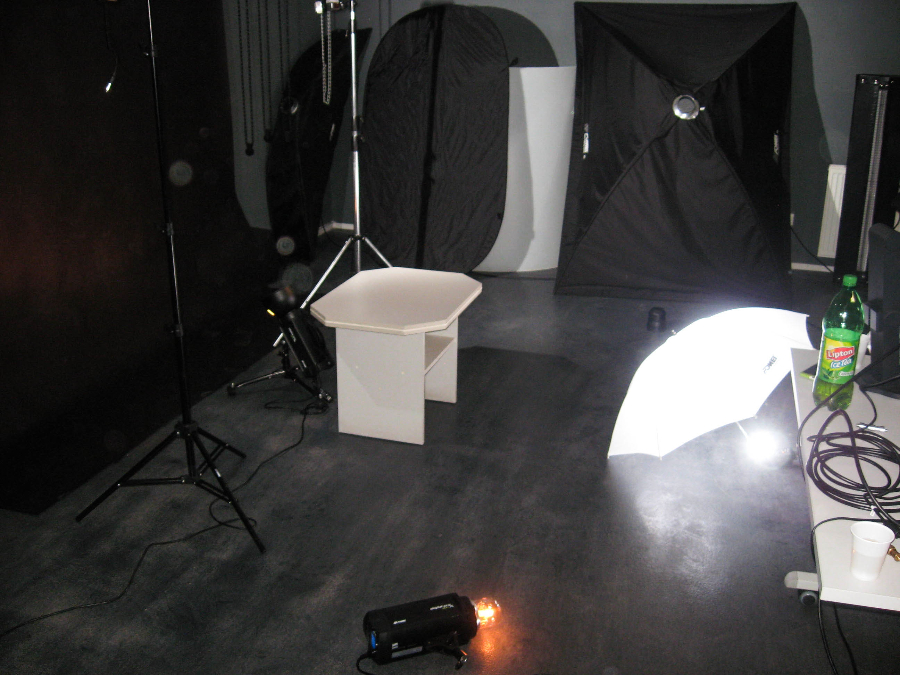
We were in Medikon’s studio. The company handled the Fomei brand in Poland, so plenty of good equipment was available, including the professional Digital Pro X lights we used. A lower series would easily have been enough, but I had already used the Pro X before and described it during the Summer Time shoot, so I reached for it almost automatically. Every backdrop in the studio was paper rather than the plastic sheeting I hate that is sold as polypropylene. This is fundamental. That perforated rubbish causes more problems than it solves, while paper works brilliantly as long as it isn’t creased. Several colors were available, including my favorite: black. You can make it gray or even white in a photo if that’s what you want, but I prefer the first option—or, more precisely, gray fading into black. An evenly lit background is definitely not my style.
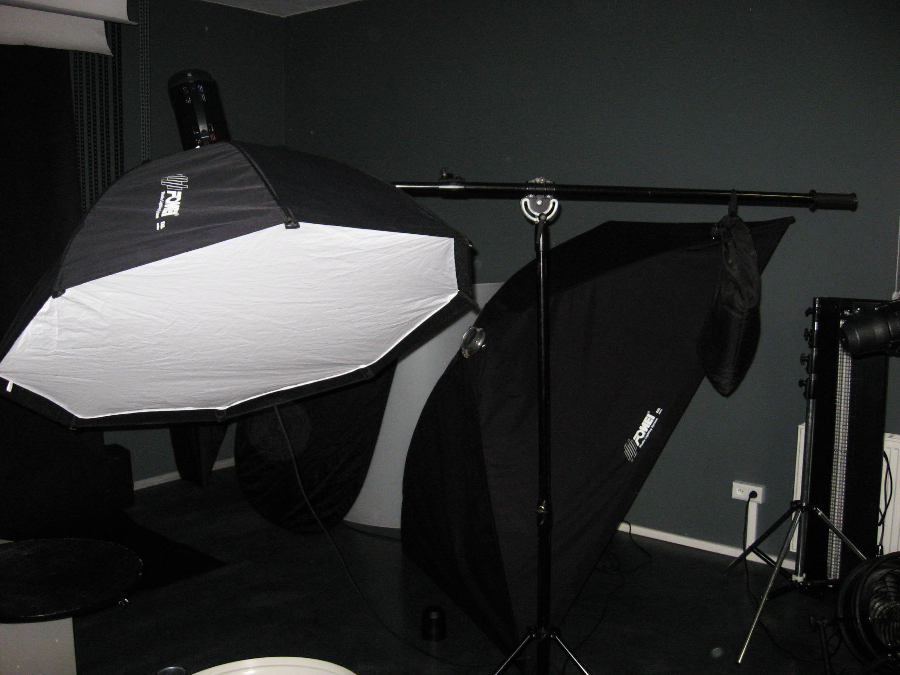
I began the workshop by discussing lights and modifiers. Fomei lights have excellent modeling lamps: 600 W as standard, with support for bulbs as powerful as 1,000 W. Cheap Chinese modifiers are a bad idea with that kind of light. Inexpensive strobes use modeling lamps of no more than 250 W, and the difference in heat output is enormous. Powerful modeling lamps require modifiers designed for continuous light. I had written about this several times, but it was worth repeating before somebody burned down a studio :). That is an extreme example, but yellowing diffusers and damaged reflective silver lining are normal when powerful modeling lamps are used with softboxes not designed for them. If you buy good lights, saving money on modifiers makes no sense, particularly because proper ones don’t have to cost a fortune. Fomei even offered an Eko series with the same resistance to heat, although these models were slightly heavier than the more expensive ones.
After discussing lights, modifiers, and other subjects—more than an hour of theory—it was time for the first straight-on beauty shot. I still hadn’t begun retouching it by the time I wrote this, although perhaps I would post an update one day. After that came a photo taken from another angle:
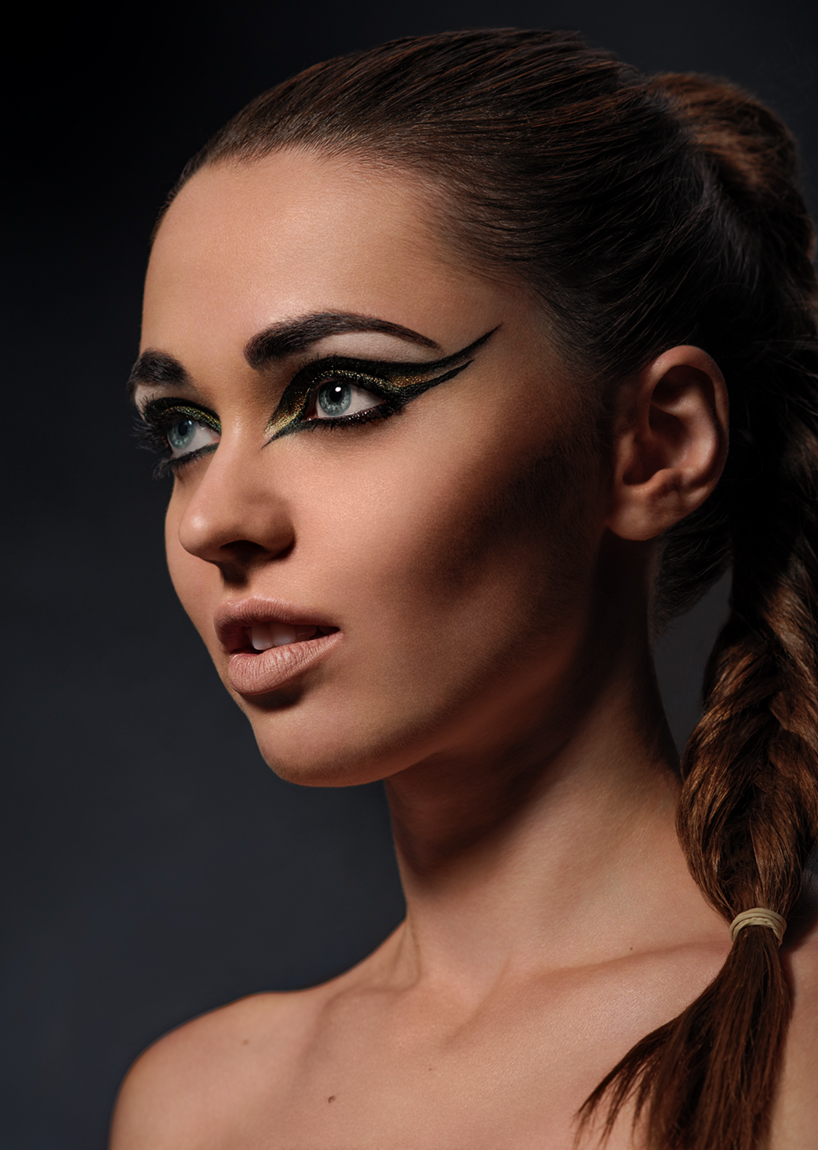
Nikon D700 | Nikkor 135mm 2D DC | f/7.1 | 1/200 s | ISO 200
When I change the framing, I don’t reposition the model; I move myself. The main light can then remain where it is, which matters because arranging that light requires the most work. The rim lights also stay in place, although I usually turn one of them off—the one shining into the lens. Changing the camera angle also changes the background. This is why I love using a black reflector for this purpose: it can be moved instantly so that it sits behind the model again. It’s worth having something available to raise the reflector slightly. A height of 180 cm is usually insufficient, and for beauty photos there is no need for it to begin at floor level.
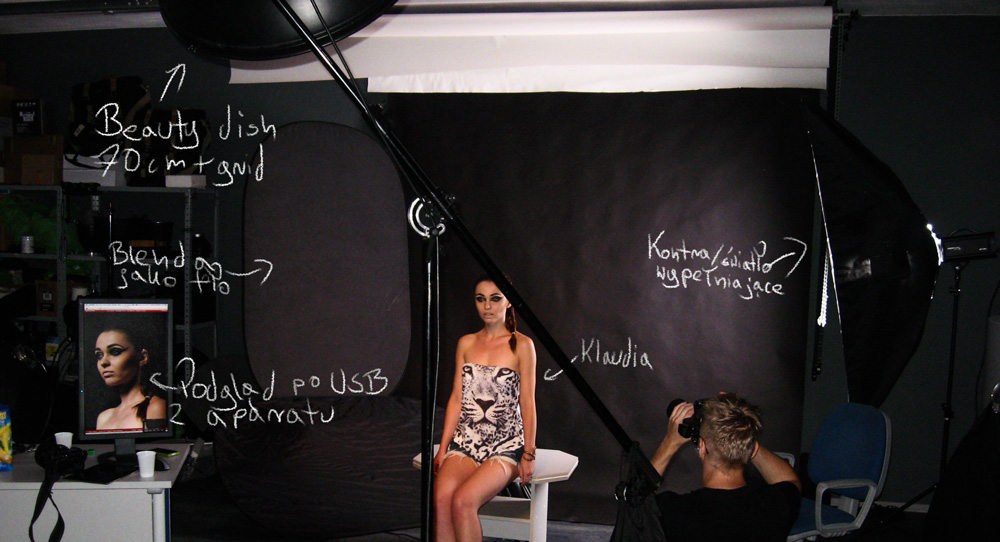
I light the backdrop with a lamp placed on a floor stand—an extremely low stand sometimes called a dog. Mine has wheels, which is tremendously convenient. I move the stand and adjust the light for the new frame. It takes a little time because the position needed for a conventional shot differs from one taken from below, where the light must be aimed much higher. This is another reason a 180 cm reflector is too short.
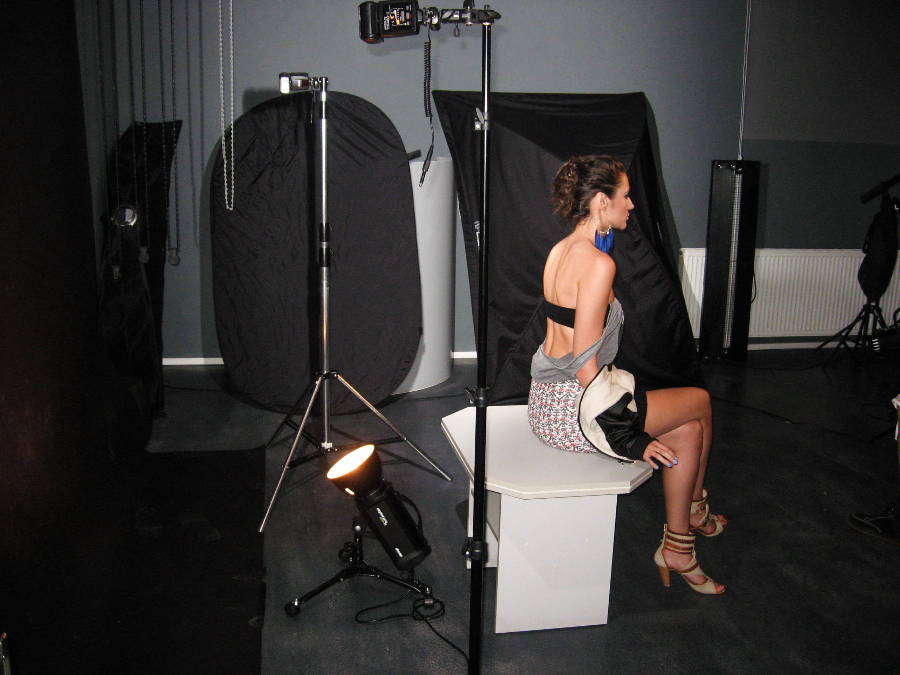
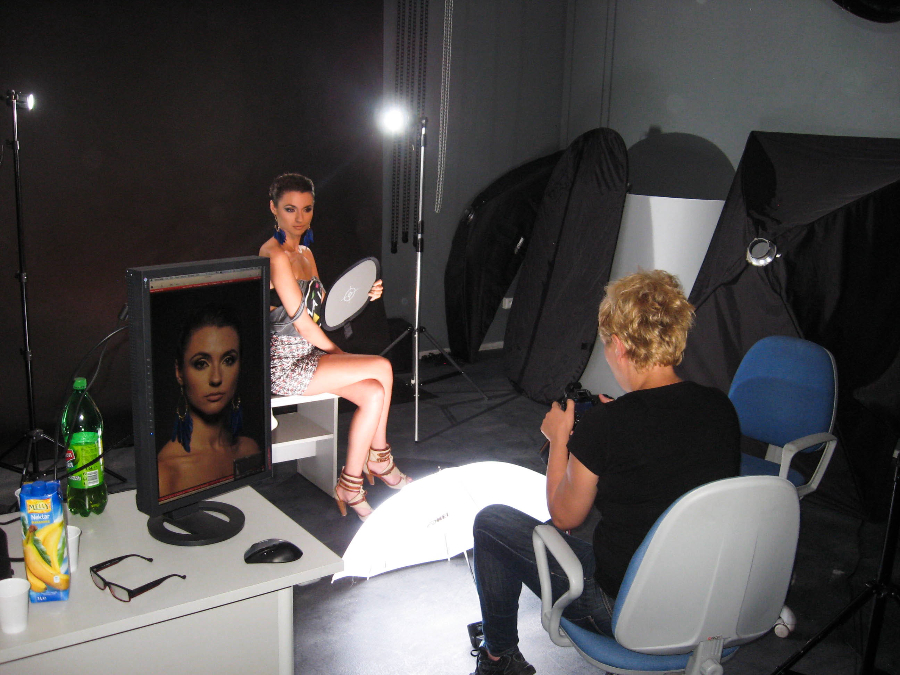
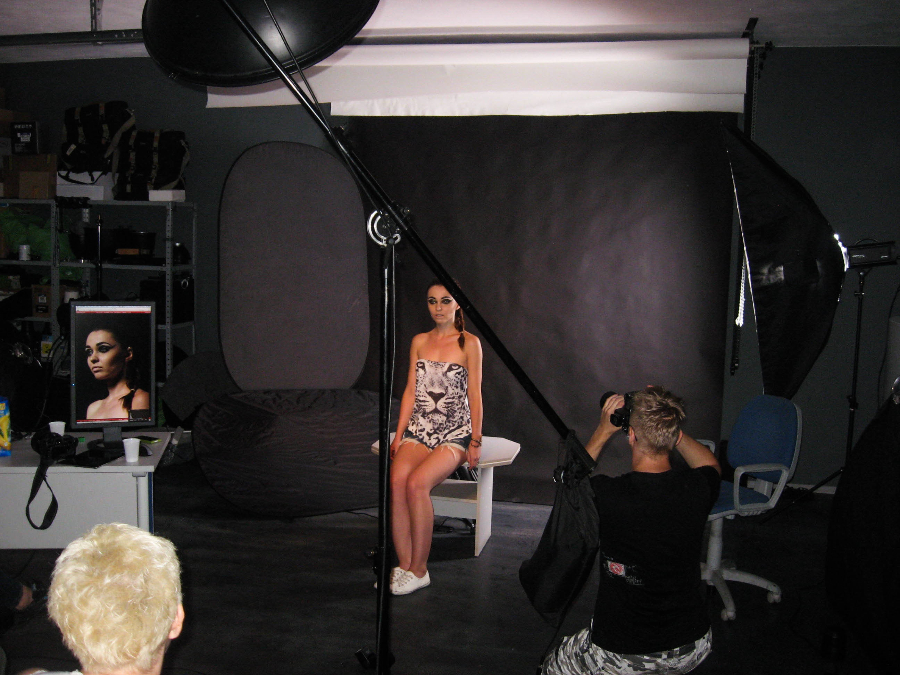
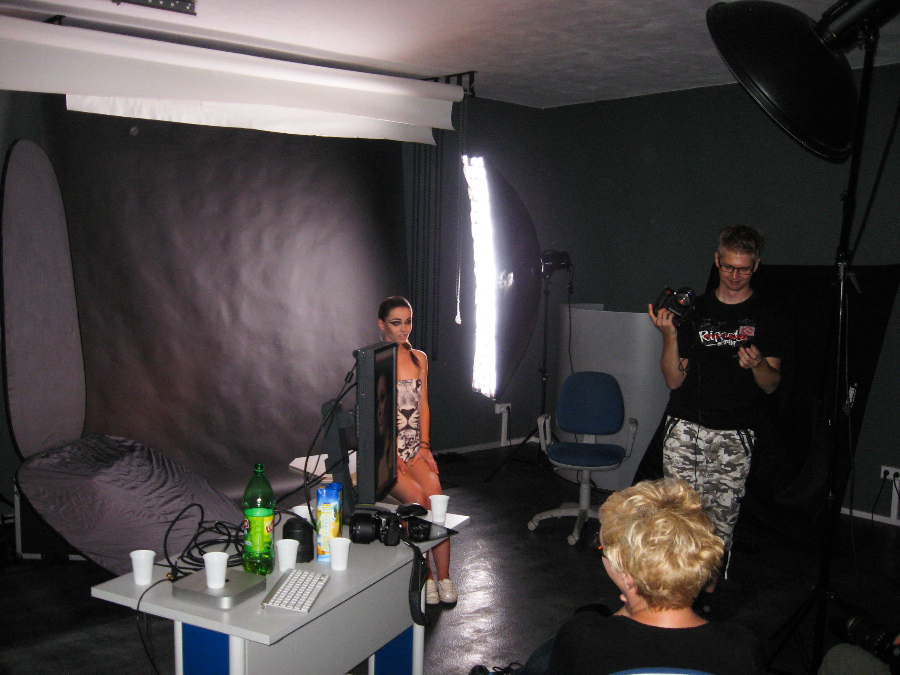
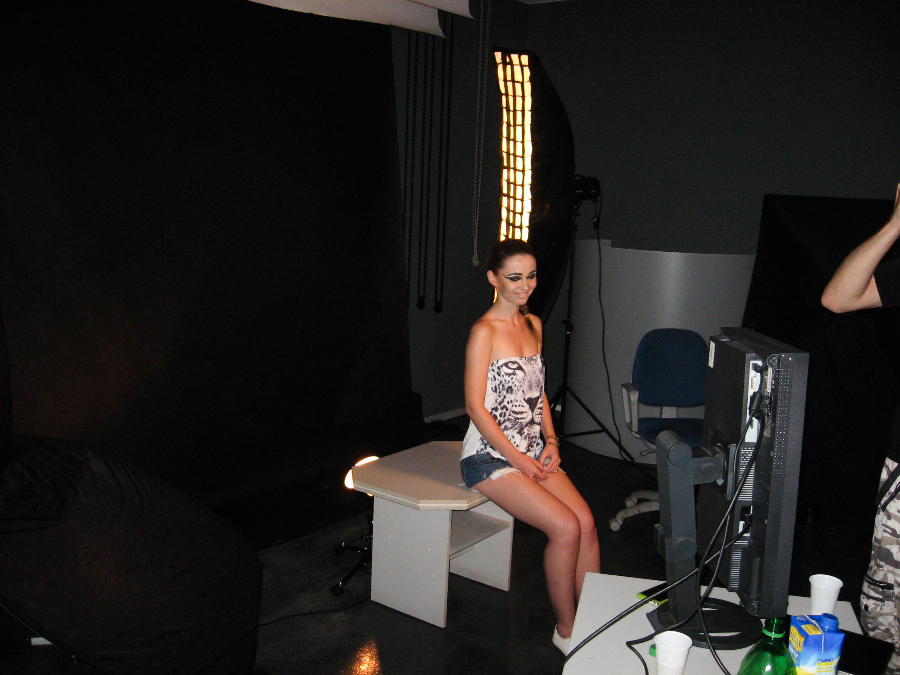
The setup was fairly ordinary; I use something like it almost every time. A Fomei Digital Pro X 1200 Ws with a gridded 70 cm beauty dish sat high and directly in front of the model, as you can tell from the shadow beneath her nose. A gridded stripbox aimed at the hair provided a rim light. Without it, the hairstyle would have become a black patch. I’ve already discussed the background.
Fashion
My fashion photos on a white background never work because I light for plenty of shadows, which creates a completely different atmosphere. Perhaps one day I’ll develop my own style for this kind of lighting, but I had a long way to go. I therefore moved as quickly as possible to my favorite color: black.
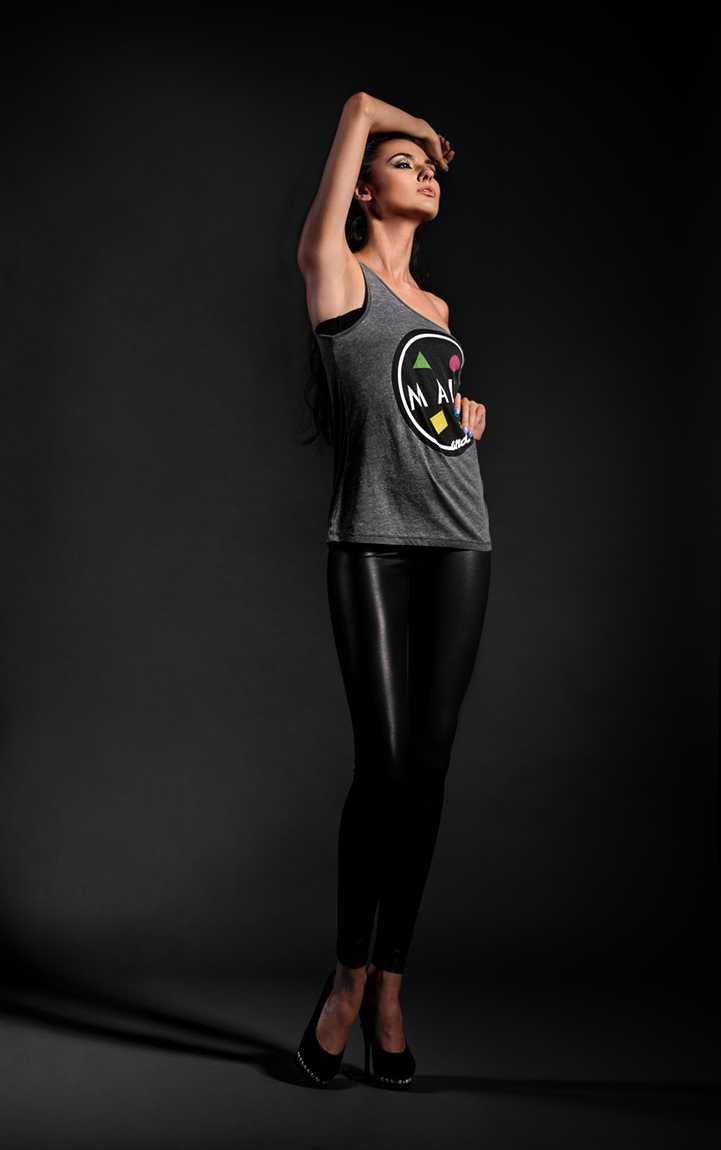
Nikon D700 | Nikkor 85mm | f/5.6 | 1/200 | ISO 200
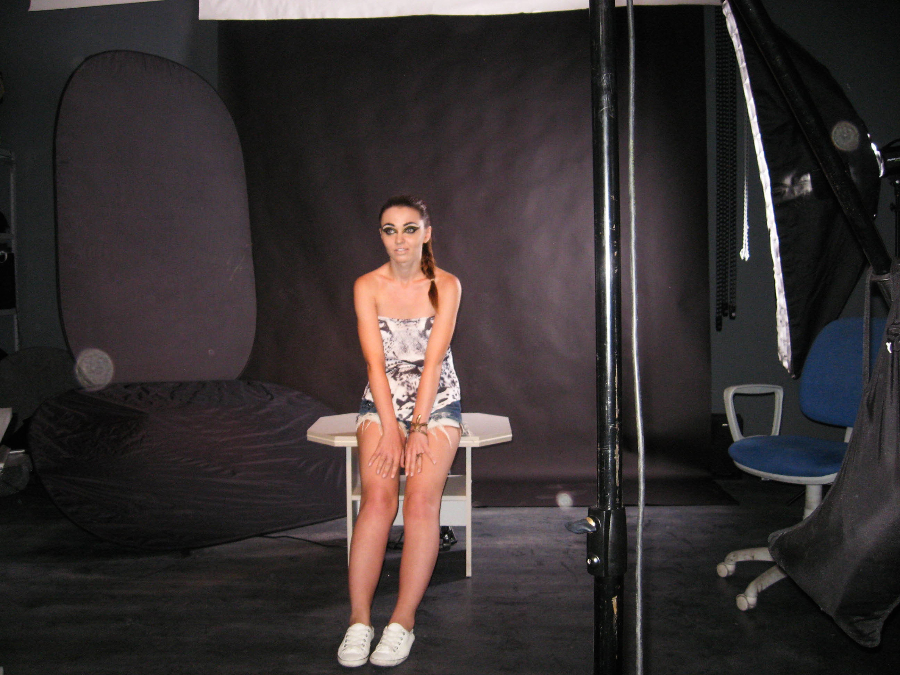
The main light was a Digital Pro X 1200 Ws fitted with a gridded 70 cm beauty dish. This is a fairly difficult modifier for photos like these because it requires enough floor space and height. If I wanted to take this photo in an ordinary apartment, I probably couldn’t move the light far enough away. When the light is farther from the subject, it also has to be high, making the ceiling another obstacle. The Fomei studio had exactly enough room. Thanks to the grid, the backdrop remained dark. Almost only the model was lit, while everything else received a faint amount of light. Without the grid there would have been much more light gray, and the contrast would have been weaker, mainly because of the brighter shadows. The light itself would have been somewhat softer, although still nowhere near the softness of a softbox.
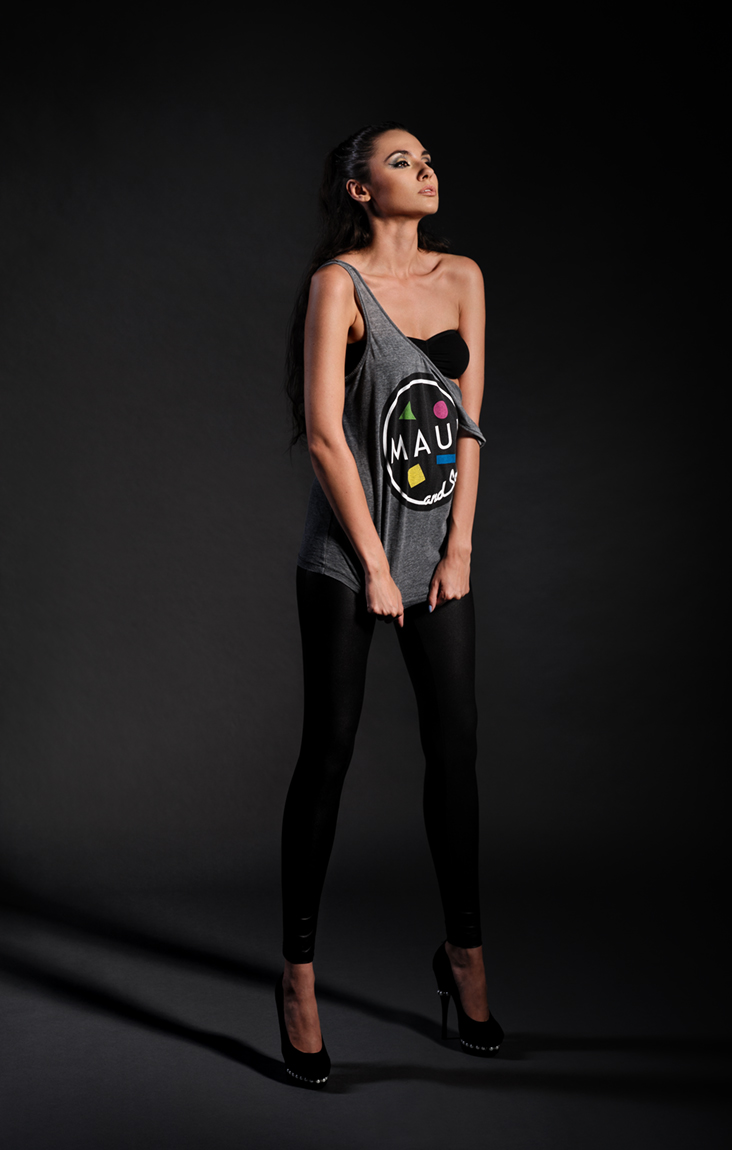
Nikon D700 | Nikkor 85mm | f/5.6 | 1/200 | ISO 200
If I had used a softbox of around 90 cm or larger, almost the entire background would have been gray. The shadows would still have been visible but softer, which in this case would have been a considerable disadvantage for me. As before, I used a gridded stripbox for the rim light.
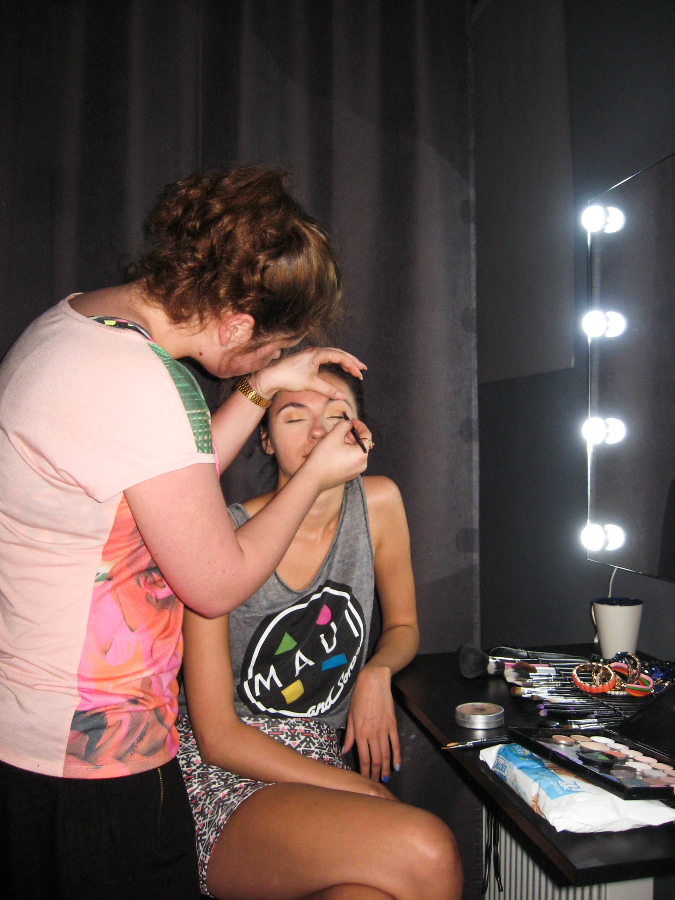
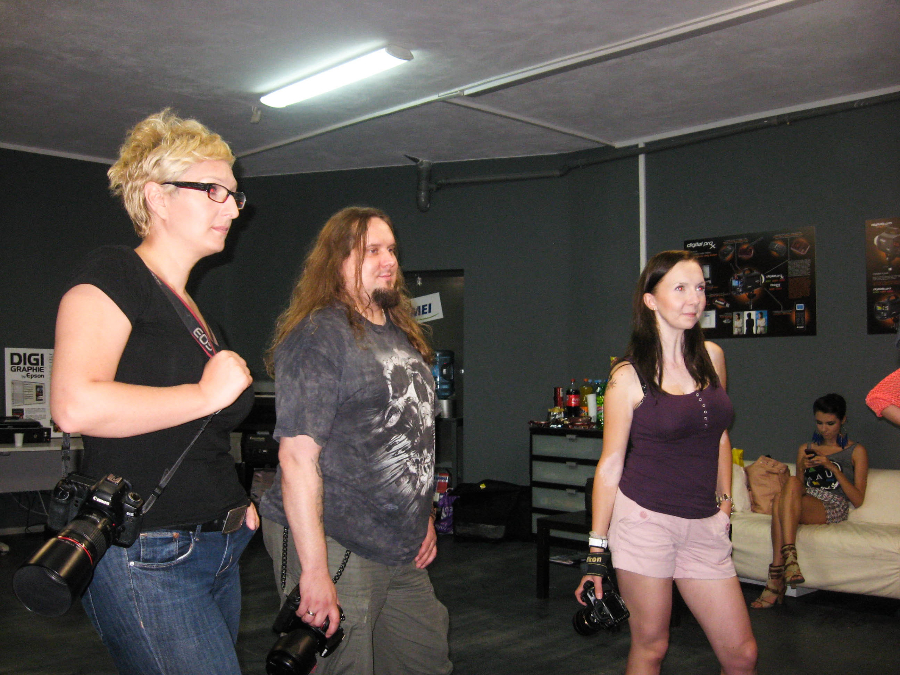
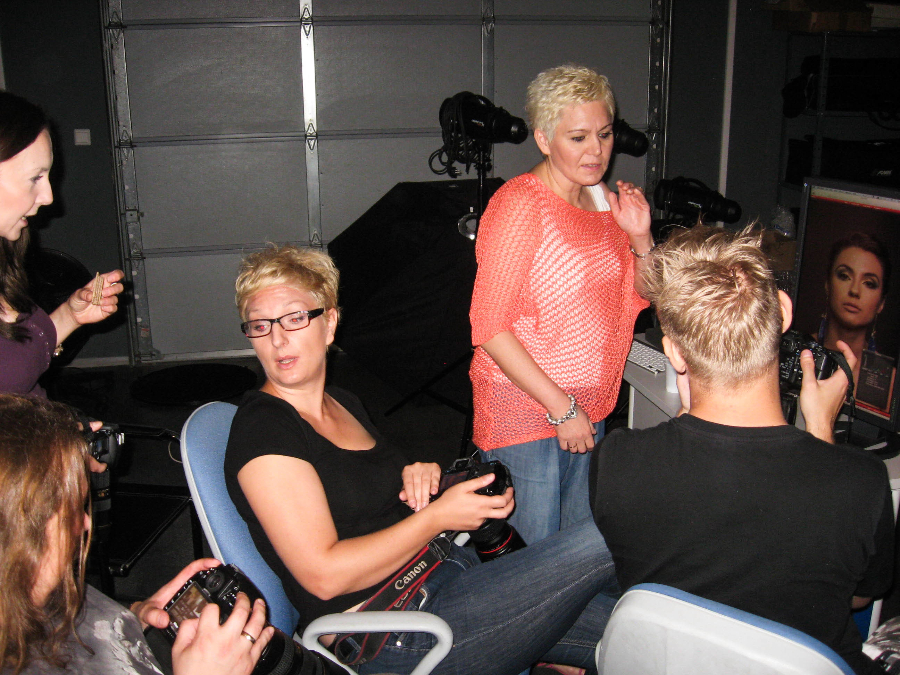
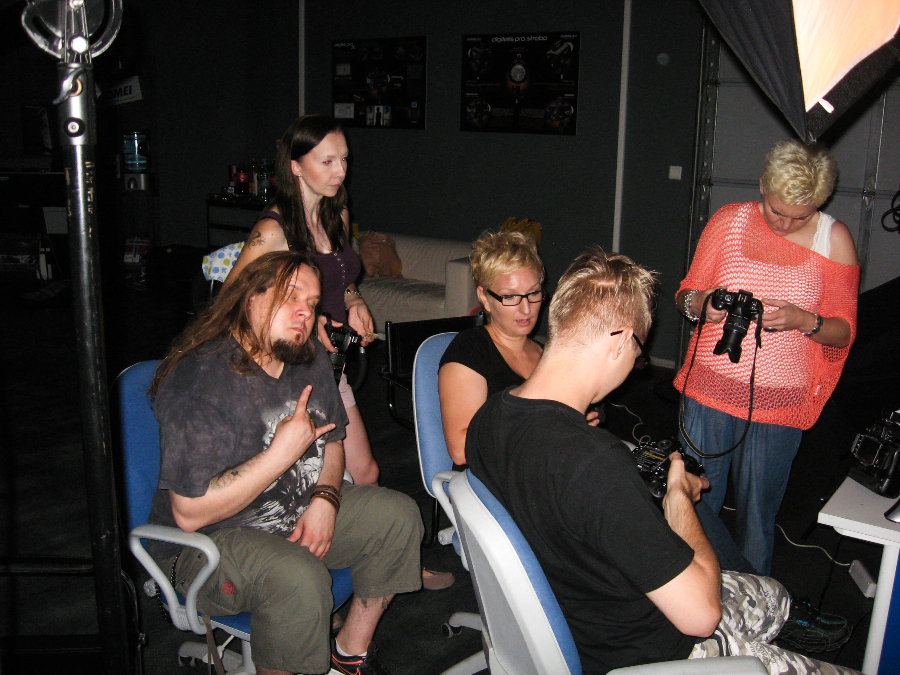
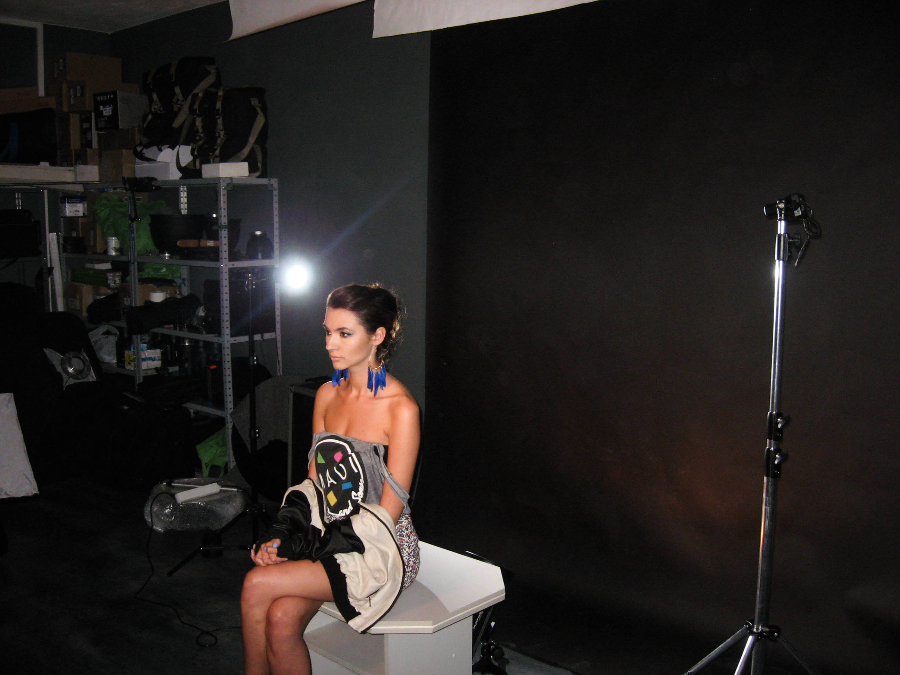
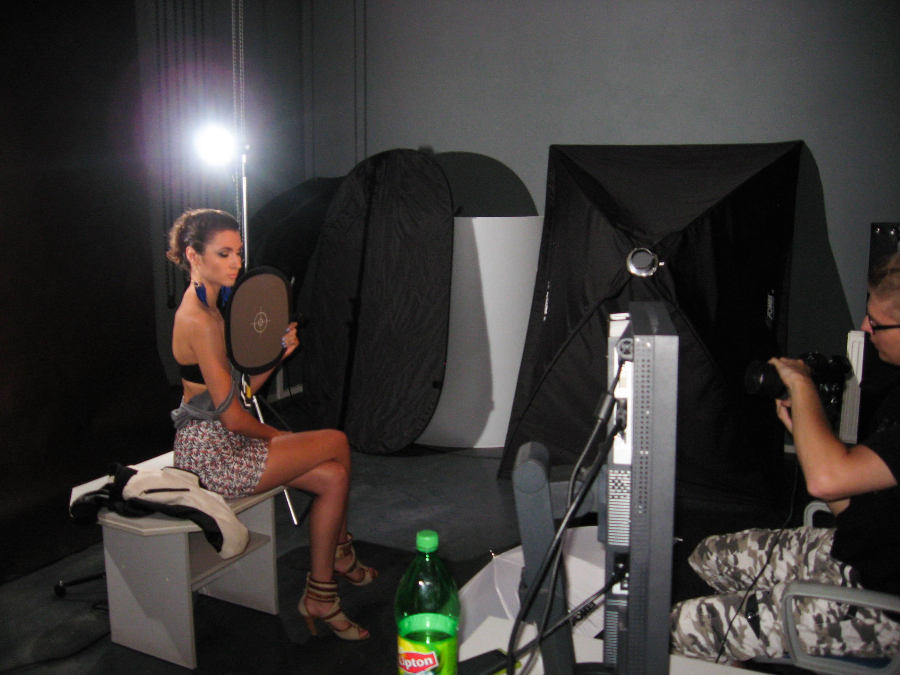
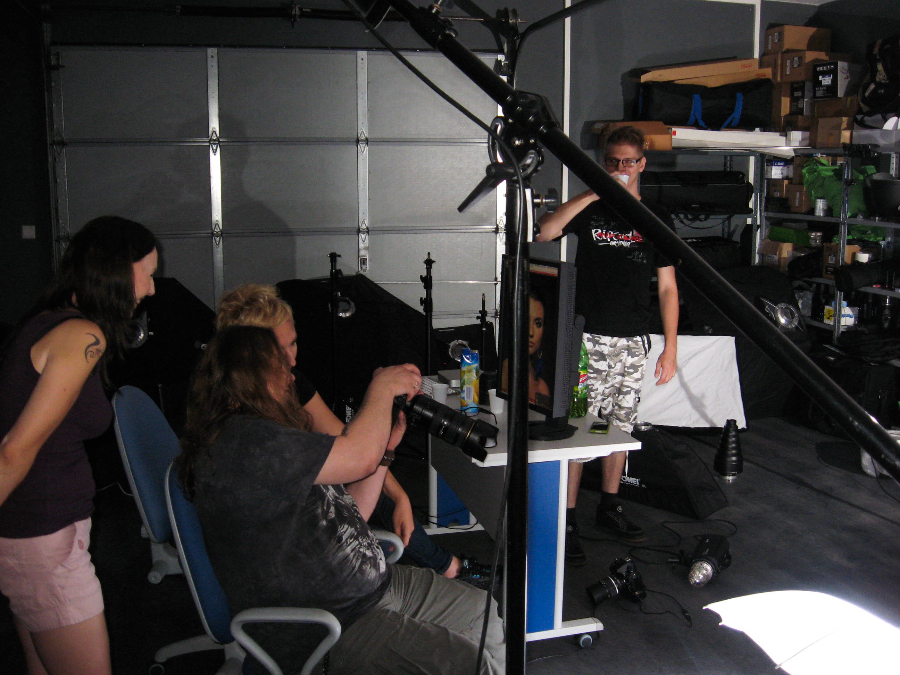
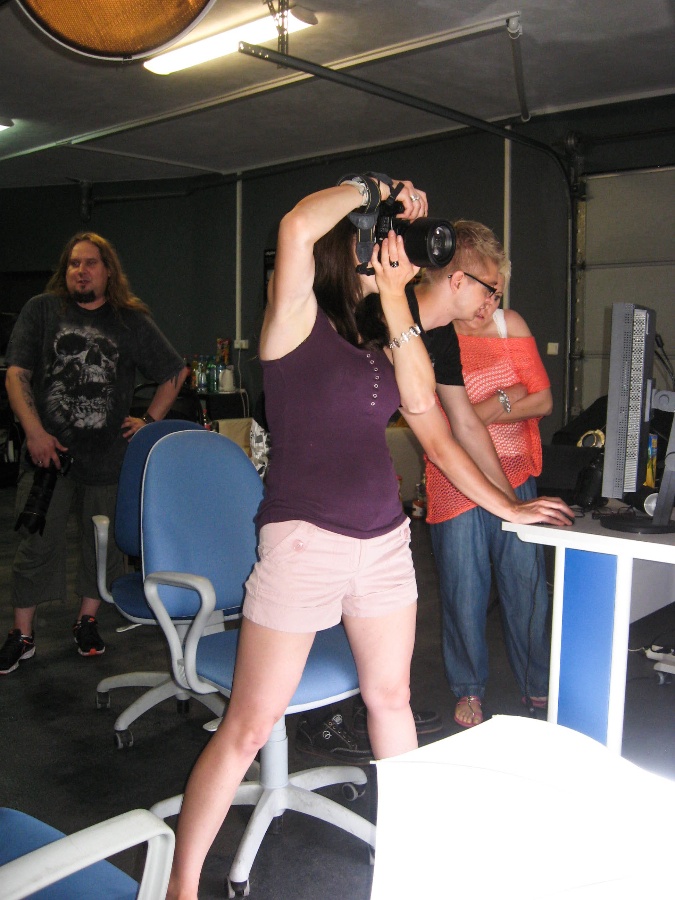
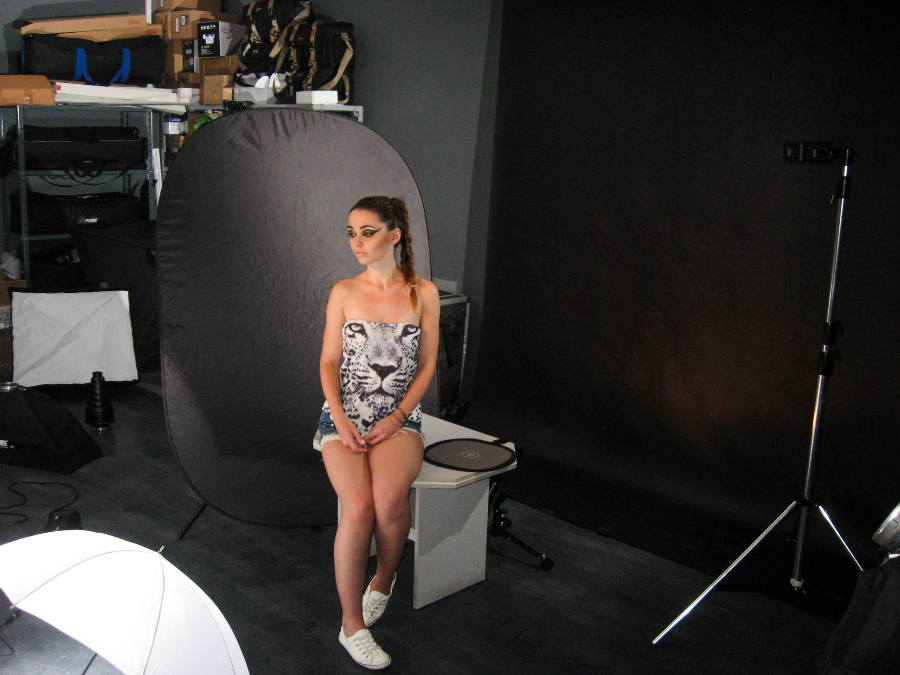
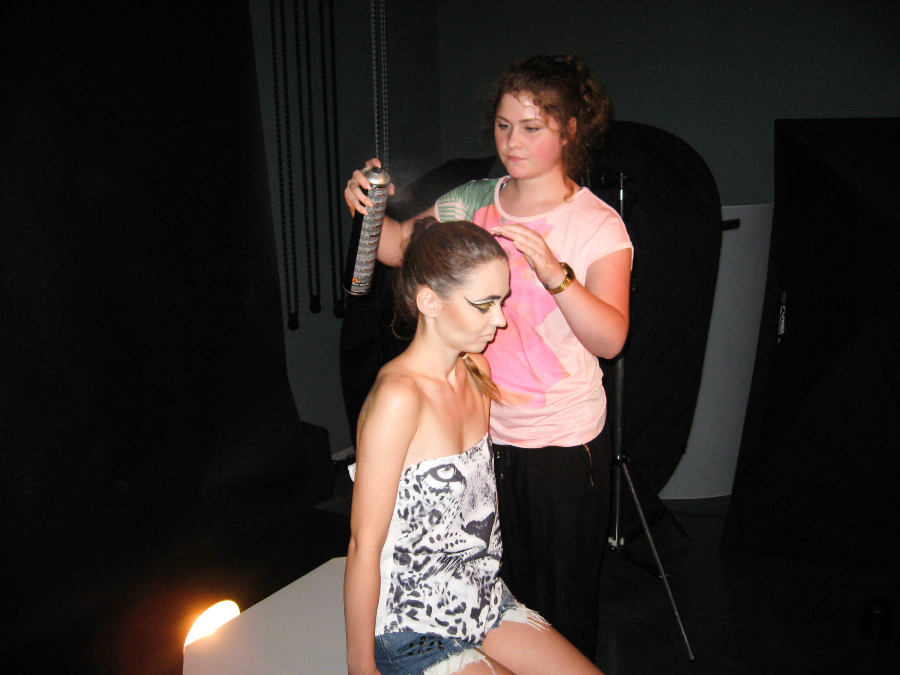
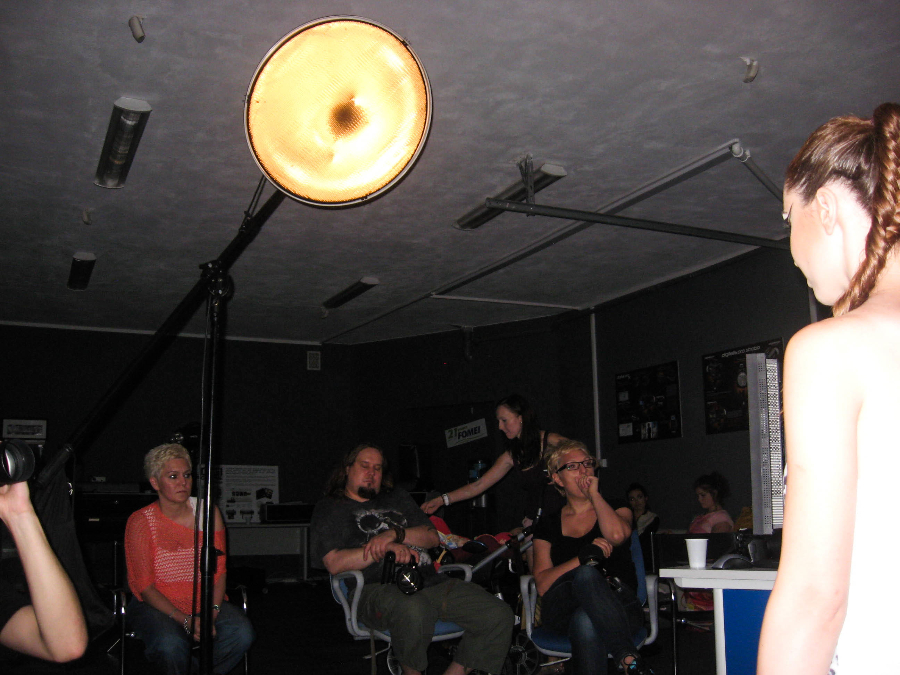
Behind the scenes
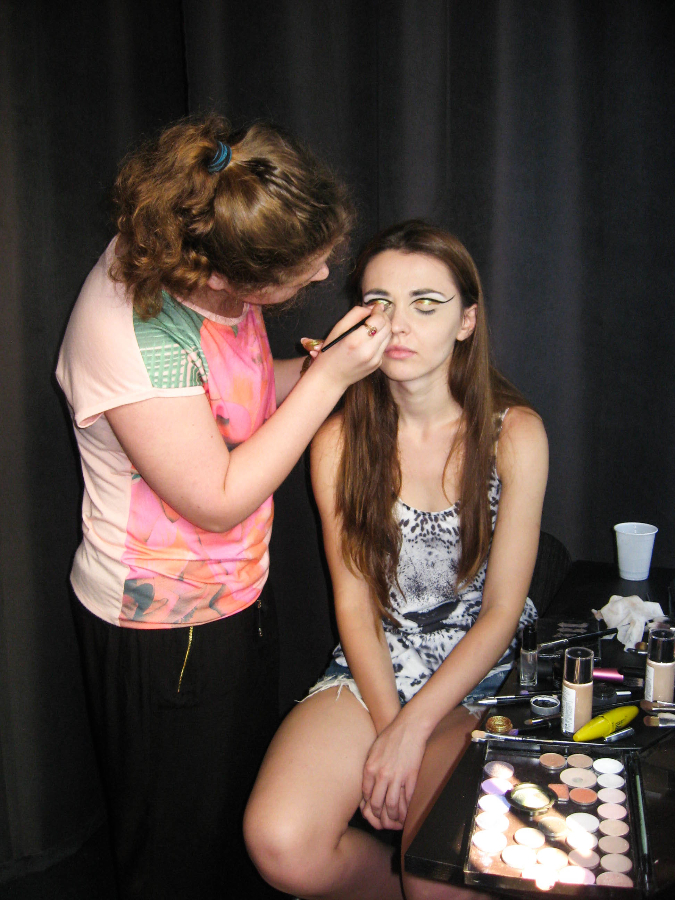
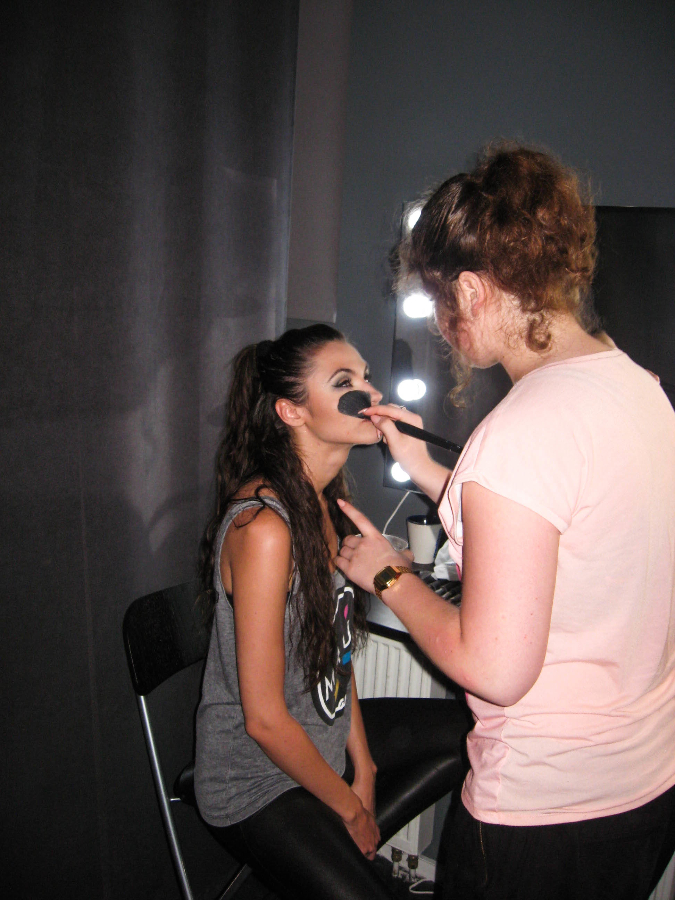
Makeup was done by Vanessa Zalewska, assisted by Pro.
Summary
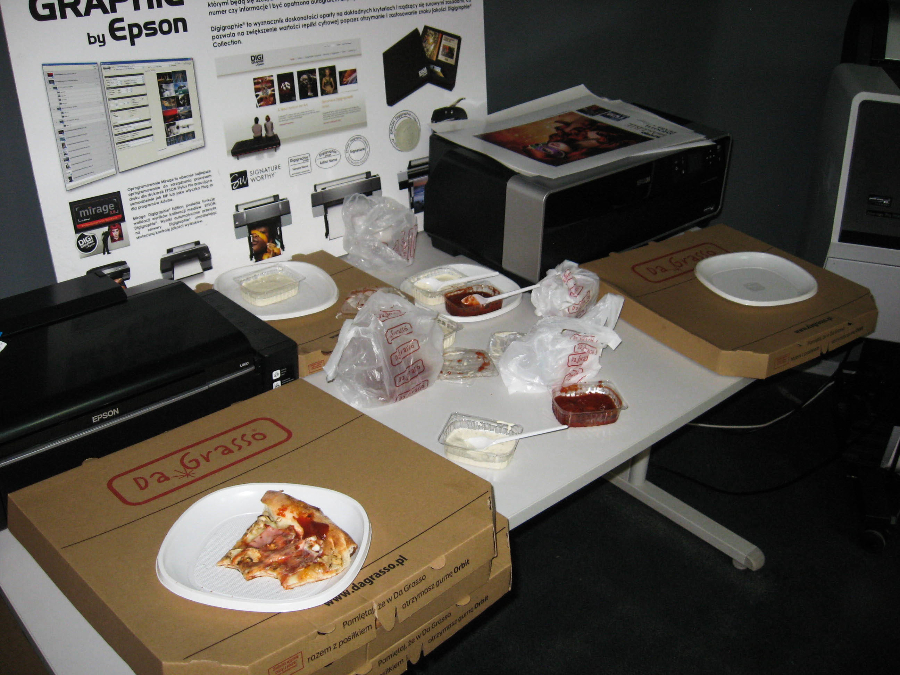
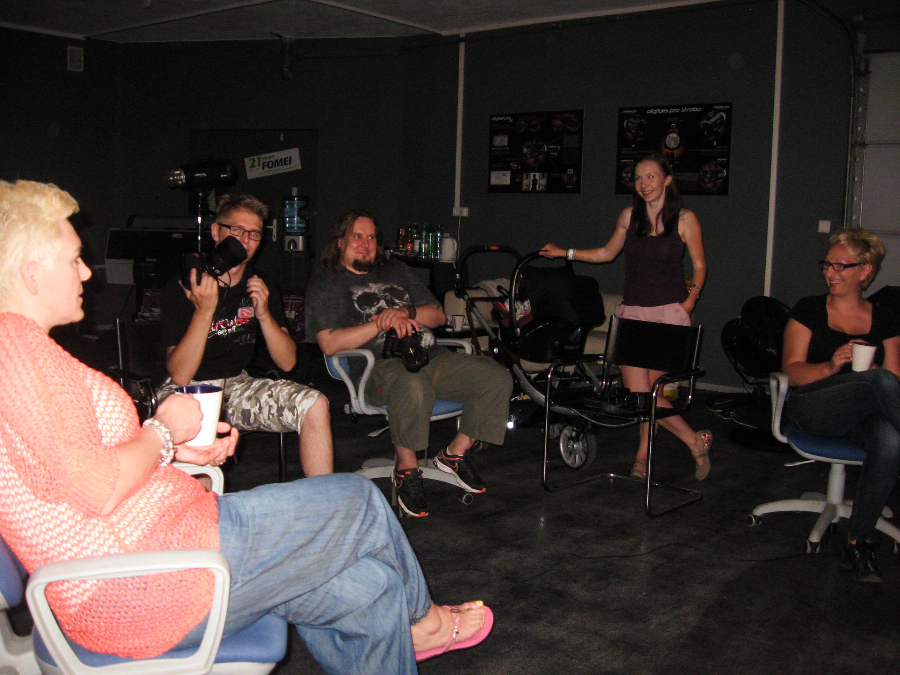
The part of the entire workshop that probably went worst was… ordering food :). One pizzeria didn’t answer, another wouldn’t deliver, and there was always some other problem. Eventually we succeeded! As I had already mentioned, this was the last workshop of this kind in Warsaw. One more would take place in Silesia, and that would be everything for the year. I would also organize workshops in different parts of the country in October, but these would mainly be group retouching sessions. At the end of October, I would finish every workshop planned for that year. Changes were coming! :)