Summer Time: Masterful Styling and Fomei Digital Pro X Lights

Last Saturday, November 24, the 11th National Extravagant Makeup Championship took place. The theme was "Summer Time." Of course, I wasn't the one competing. It was the makeup artist I work with on almost every shoot, Karolina Zientek. She won, though I doubt that surprised anyone. We did a beauty and fashion shoot to capture the championship-winning styling, subtitled "Dream Journeys." You can read more about the makeup and styling here.
My only job was taking the photos, so I didn't need any special preparation. Karolina had much more on her plate. She had to choose the right location for a shoot like this and plan makeup that would blow away the competition. She sewed the outfit herself too. It had to work perfectly with the styling. Once again, the women at Le'Prestige in Tarnowskie Góry did the hair, and Klaudia Danch modeled.
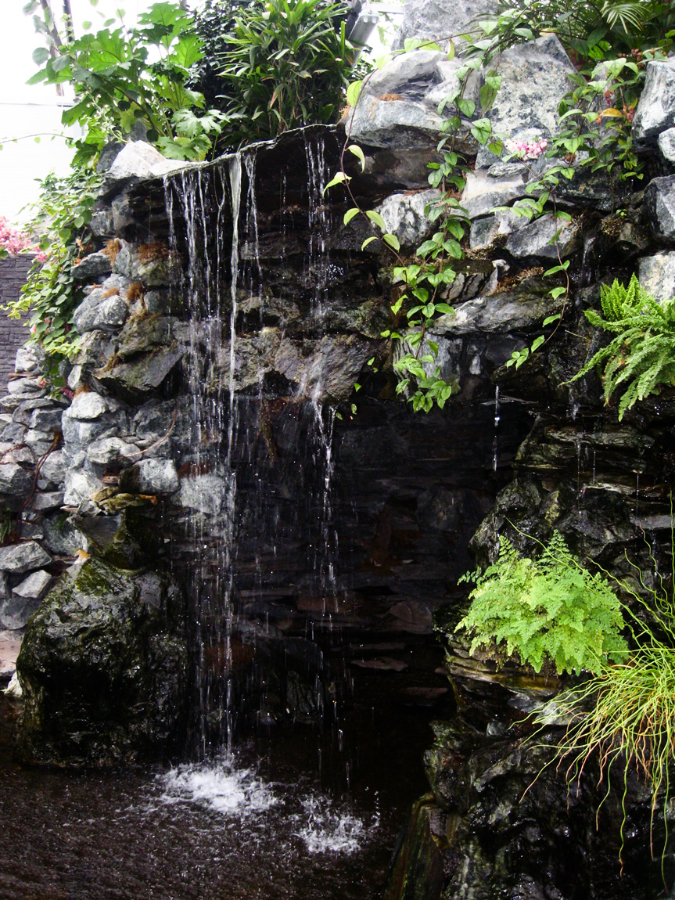
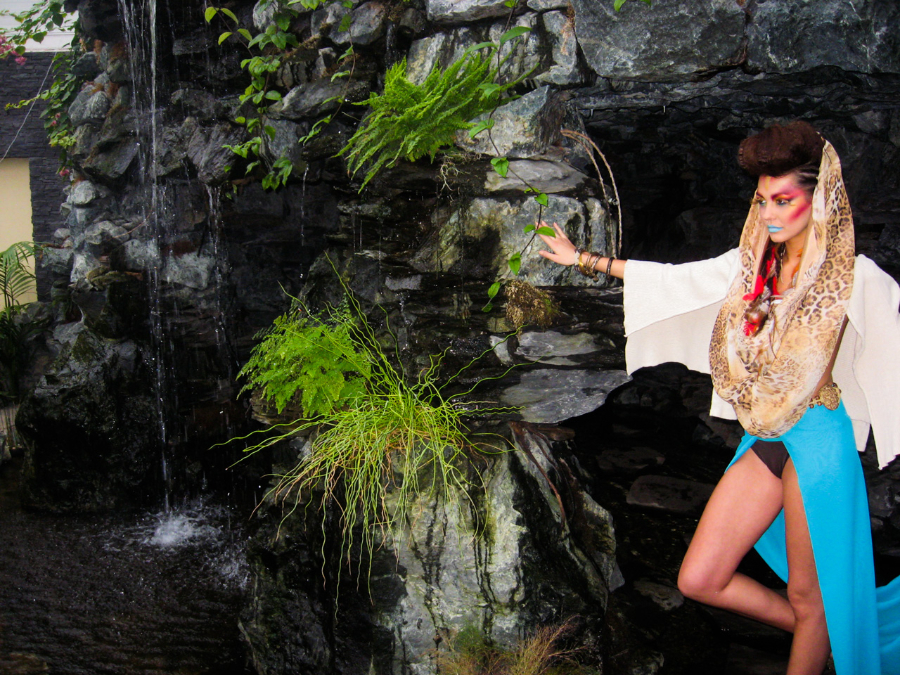
We shot the photos in Brazil. Less officially, we shot them in the tropical garden in Świerklaniec. But it looked like Brazil, except it had power outlets for the flash lights. I'd only seen the place in photos before and expected something huge. It turned out there was very little open space. The plants had been placed close together, and there was nowhere to set up the lights without leaves blocking them. Meanwhile, the wide-angle lens I'd sold because I never used it would have come in very handy. In the end, I had to change the concept completely, and the frame had rocks and a little water instead of greenery.
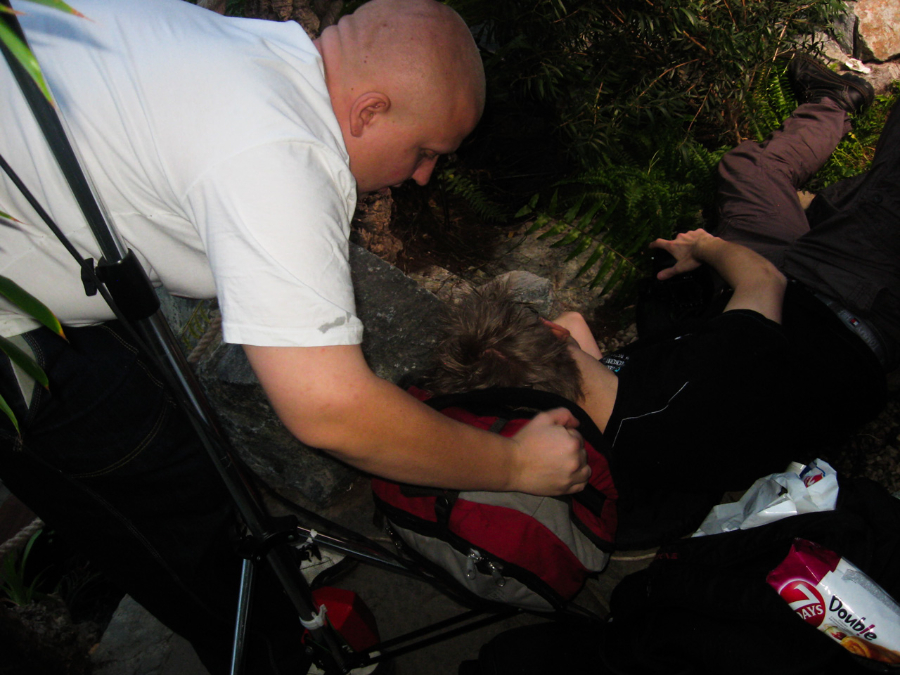
My studio lights are lousy and underpowered, so I borrowed quite a bit of gear for this shoot from Medikon, the Polish importer of Fomei. I'll write more about it when I discuss the setups. There was so much gear that, besides the already familiar Mateusz "Pro" Prociak, who assisted me, we also had his assistant, Marcin Zimny, known as "Zimny."
Light

50 mm | F/5,0, 1/200 s, ISO 200
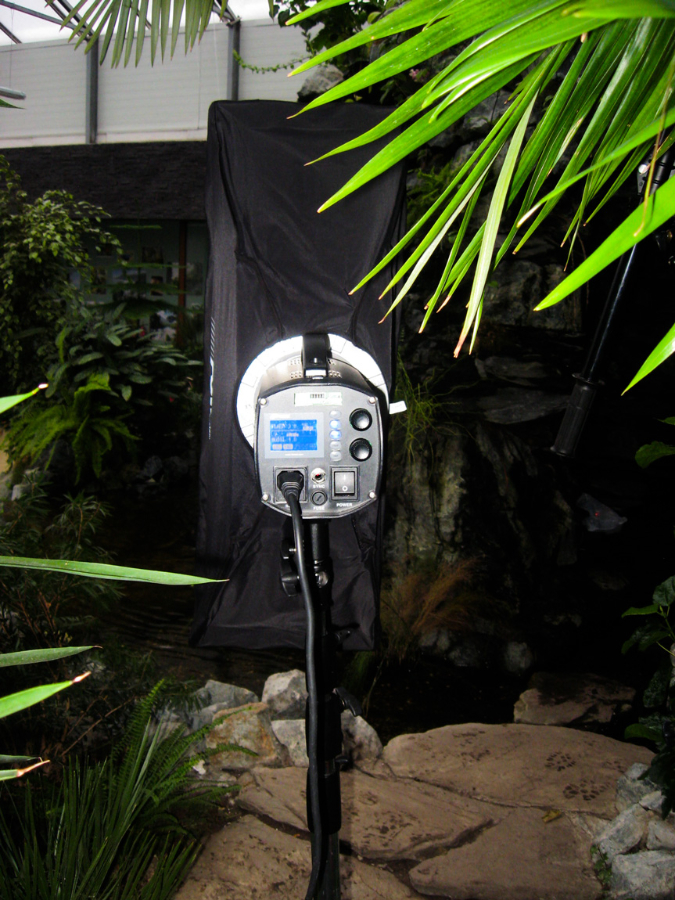
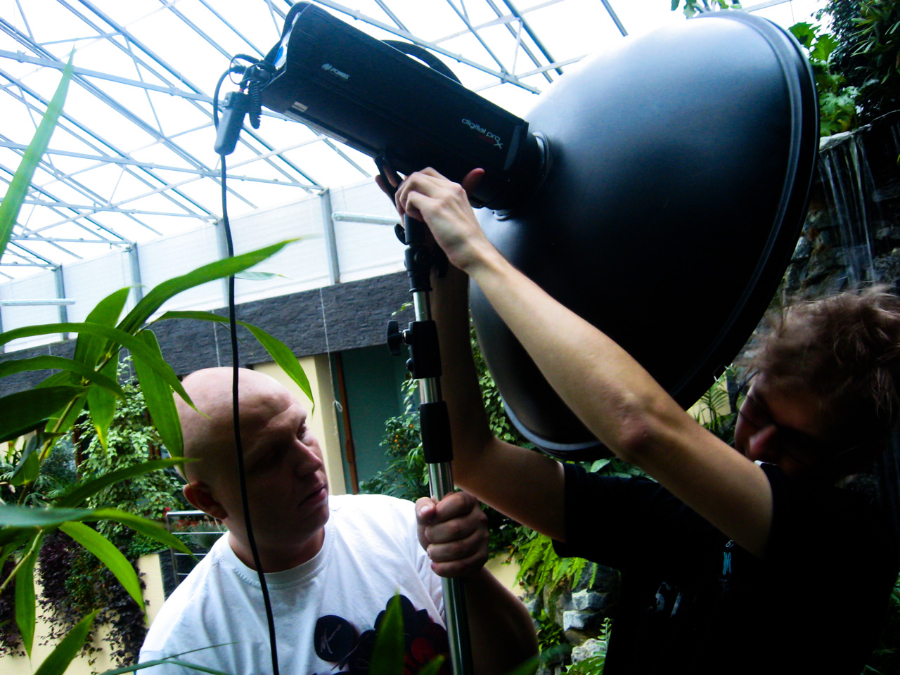
I wanted to eliminate the ambient light completely (the roof was glass) so I could have full control over the light. ISO 200 and a shutter speed of 1/200 s took care of that. My light was definitely too weak to accomplish anything with photos like these. As I've mentioned more than once, it needed to be replaced with something more powerful. This time, I used a Fomei Digital Pro X 1200 Ws as the main light. Fomei is a Czech company known for its good balance of quality and price. It makes lights for professionals, but not exclusively. The model I used comes from its top series and is the most powerful version available. It can also be used as a continuous light. It comes with a 650 W modeling bulb, but you can install one rated as high as 1000 W. You don't have to keep running over to the lights to change their settings either, because you can control them with a remote or laptop (unfortunately, I didn't have the USB transmitter required for that during this shoot). Fomei is also preparing tablet controls, so I'll probably write about how well they work someday. The control panel has the usual components: several buttons plus dials for adjusting flash power and the modeling light (with a noticeable click at every 0.1 EV). The whole panel is on the back, with all the settings shown on a backlit LCD.
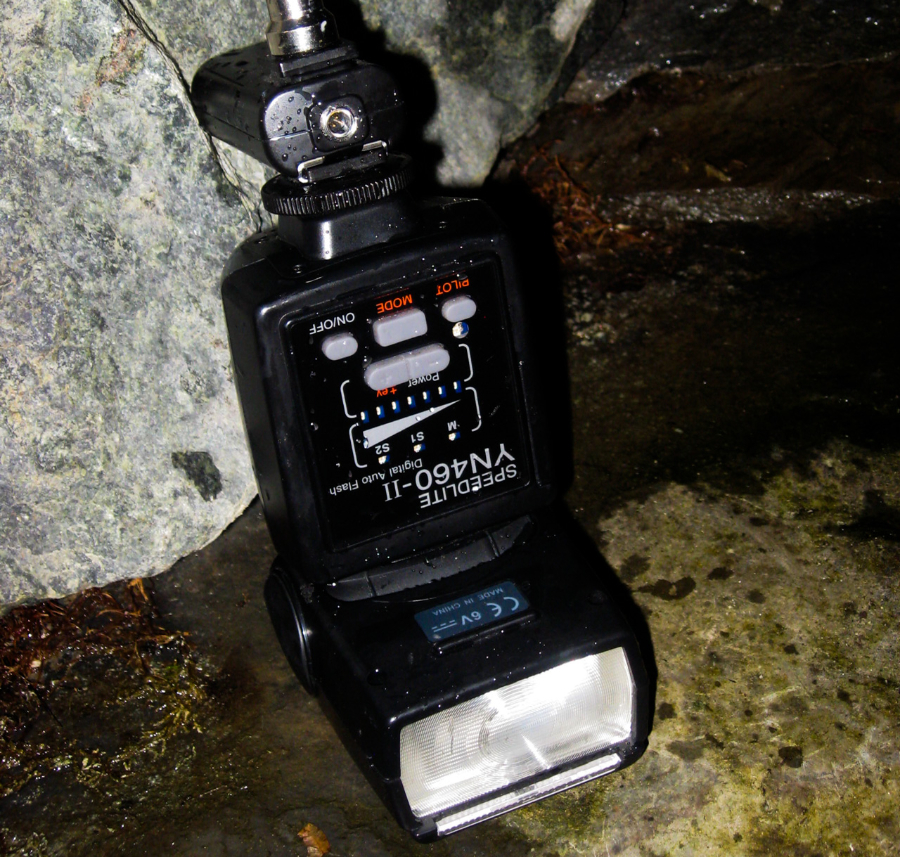
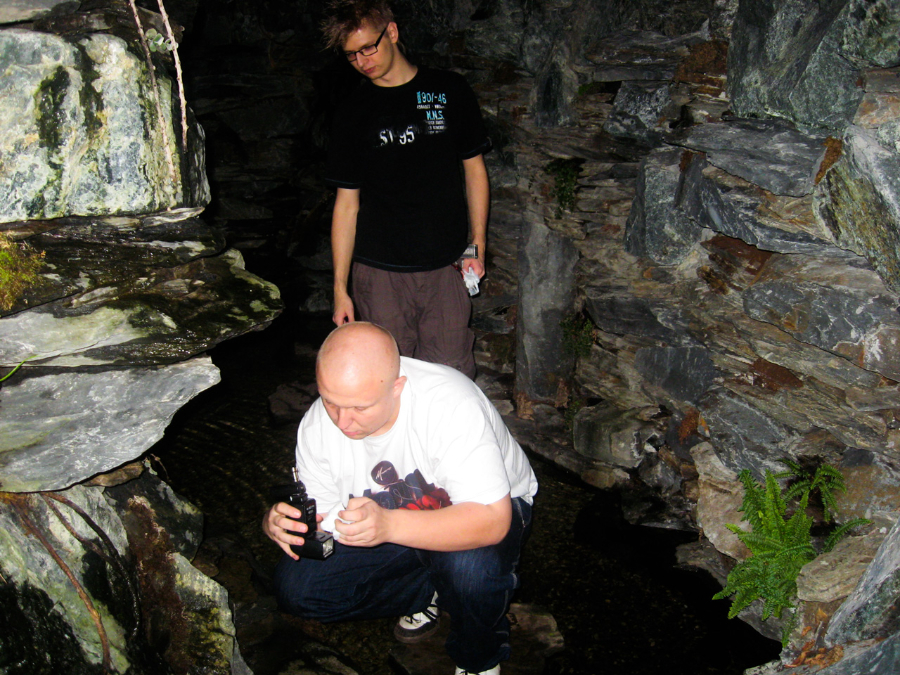
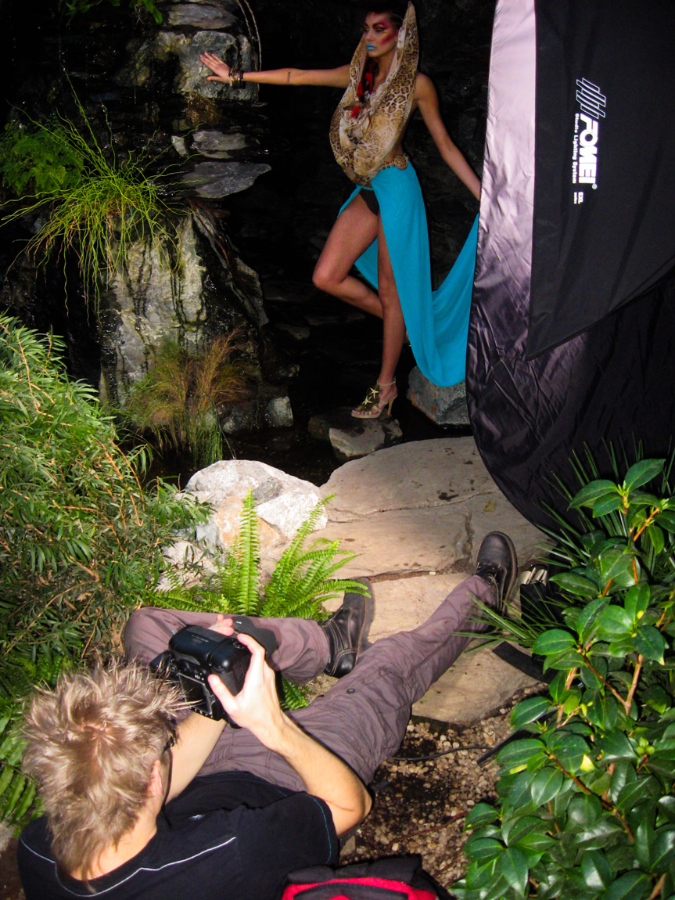
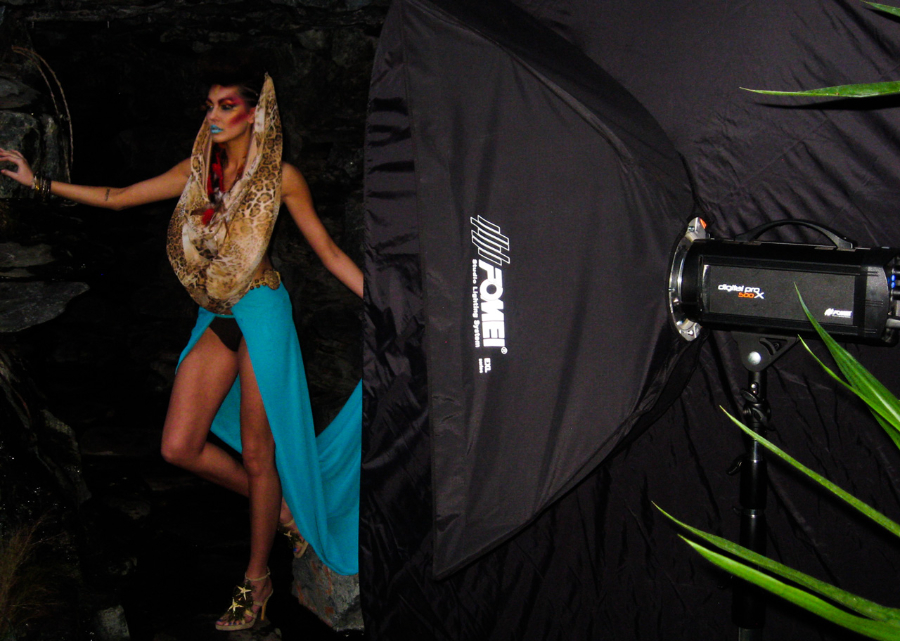
I attached a 70 cm beauty dish with a grid to that light. I also had a 43 cm Fomei dish, which is quite different from the mass-produced Chinese ones. It's very deep and looks a little like a combination of a standard reflector and a dish. Its official name is the "Fomei 43 cm Softening Reflector." I didn't use it during this shoot, though. I needed to light the model's entire body, so I needed something bigger. I also used two Yongnuo YN-460II speedlights to light the inside of the cave behind the model (the ceiling and wall). Water was pouring over one of them, so we put it in a white shopping bag, which also worked as a small diffuser. The fourth light was a Fomei Digital Pro X studio light from the same series as the one with the beauty dish, but this one was rated at 500 Ws and fitted with a Fomei 30x90 cm strip box. Unfortunately, it didn't have a grid, so I couldn't position the softbox in a way that kept all of its light off the model. I used a 180 cm black reflector to solve the problem. I'll also add that this modifier is designed for continuous light, so even extremely powerful modeling lights don't bother it. I didn't have the large jack adapter required to connect my radio trigger to the Fomei lights (I only had one for the main light), so we had to find another solution. The light from the other flashes wasn't reaching the photocell. We used another YN-460II for the sole purpose of firing directly at the studio light when triggered by radio, which in turn triggered the studio light. This is what the whole setup looked like:


50 mm | F/5,0, 1/200 s, ISO 200


N135 mm| F/8,0, 1/200 s, ISO 400
The 1200 Ws light with the gridded beauty dish was still the main light. This time, the model stood directly in front of it. A piece of the dress, held up by someone standing behind the model, served as the background. It was right behind her head, so I didn't need a separate light for the background. Some detail was getting lost in the shadows, so Pro held the same 30x90 cm softbox/strip box we'd used earlier above the model. This time, a Yongnuo YN-460II fired through it.

Why did I raise the ISO to 400? We had very little time, and changing the light's power above a drop wasn't particularly comfortable. To avoid wasting time, we decided to leave it as it was, especially since there is no difference in image quality between 200 and 400 anyway.

135 mm | F/8,0, 1/200 s, ISO 400
The next photo shows the strip box positioned as it was for the first beauty shot (from above), but the face isn't pointed directly toward the main light. It's turned slightly to the left, which you can see clearly from the shadow on the neck. I also took this photo from a much lower position:

135 mm | F/8,0, 1/200. ISO 400
Finally, here's a test photo that shows how the light is distributed when the setup stays the same but the face is turned in the opposite direction:

135 mm | F/8,0, 1/200. ISO 400
Backstage
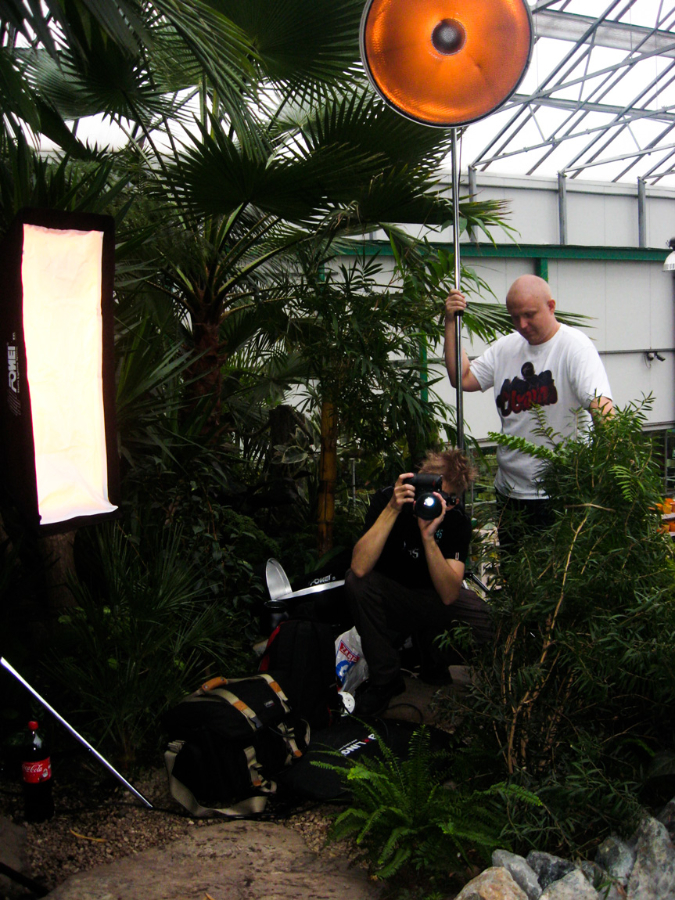
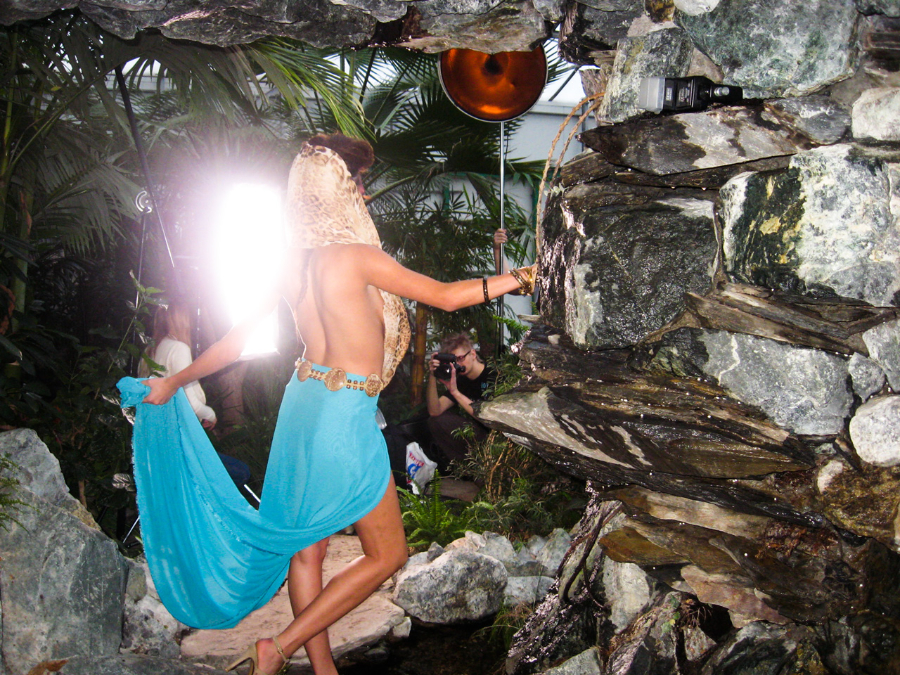
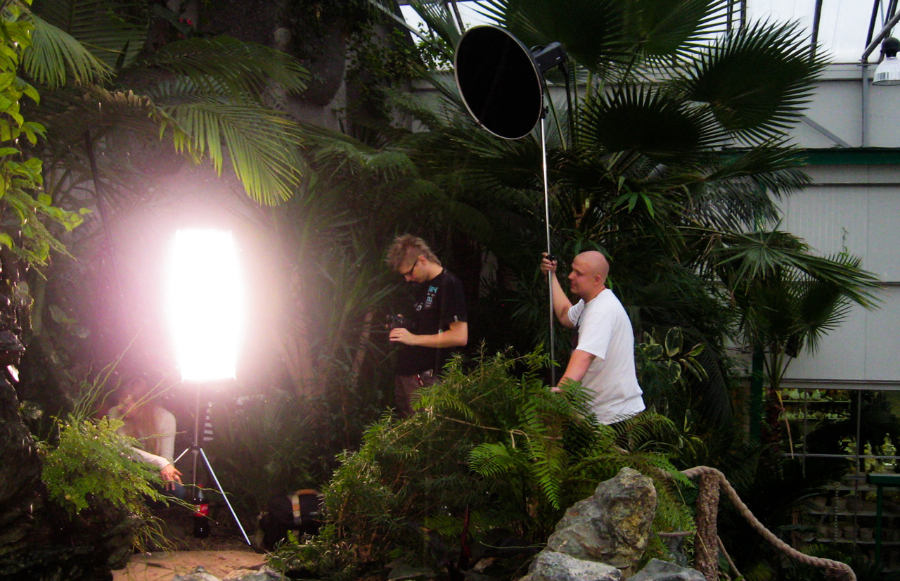
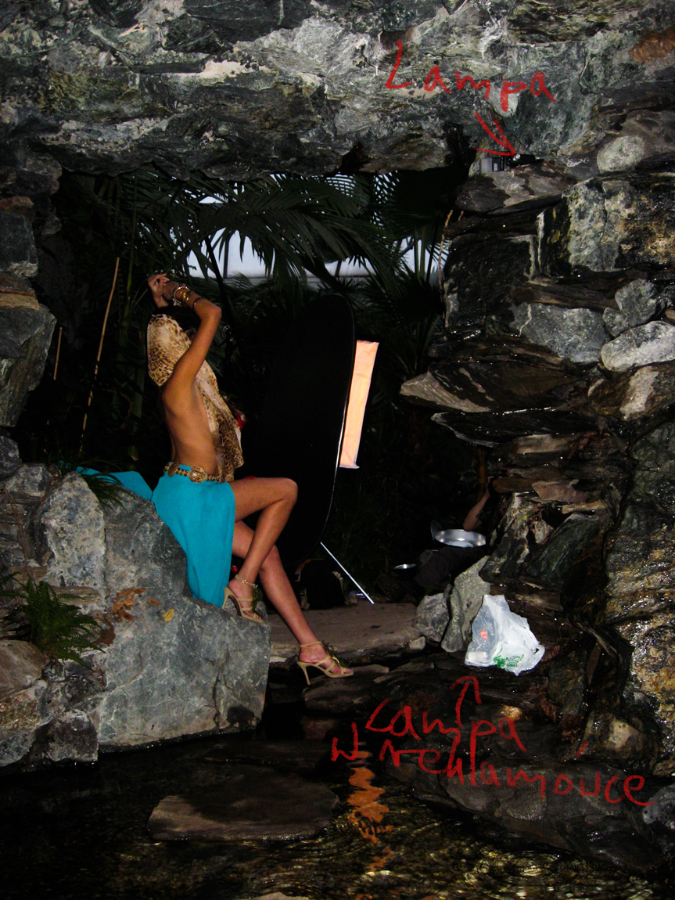
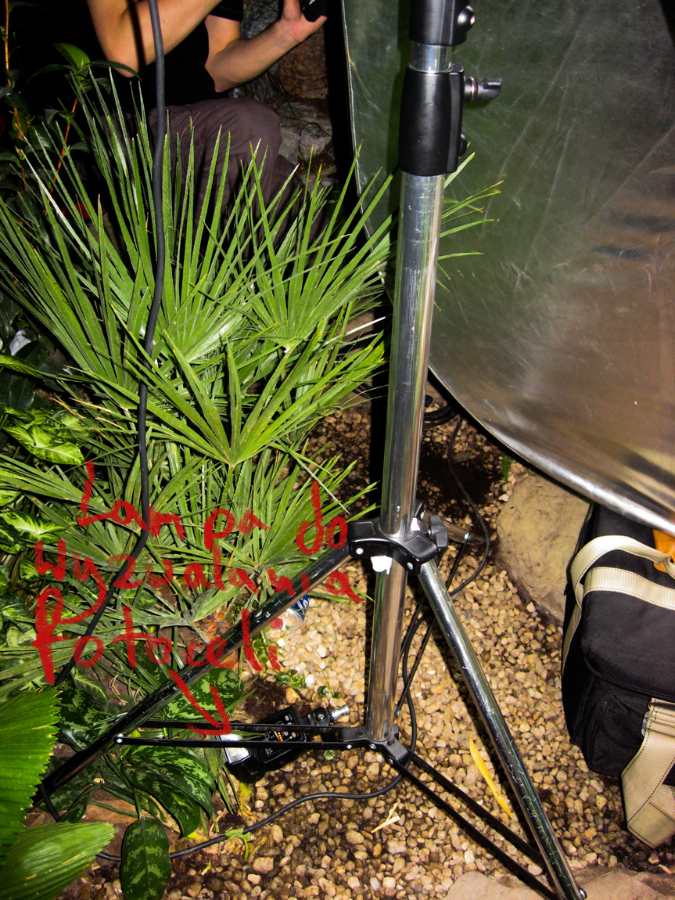
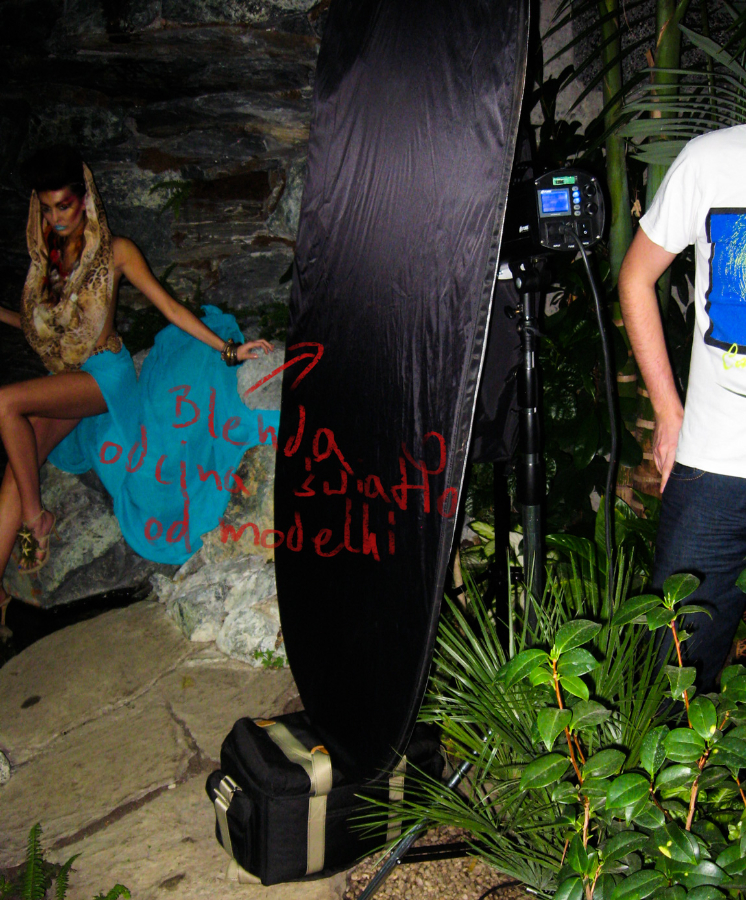
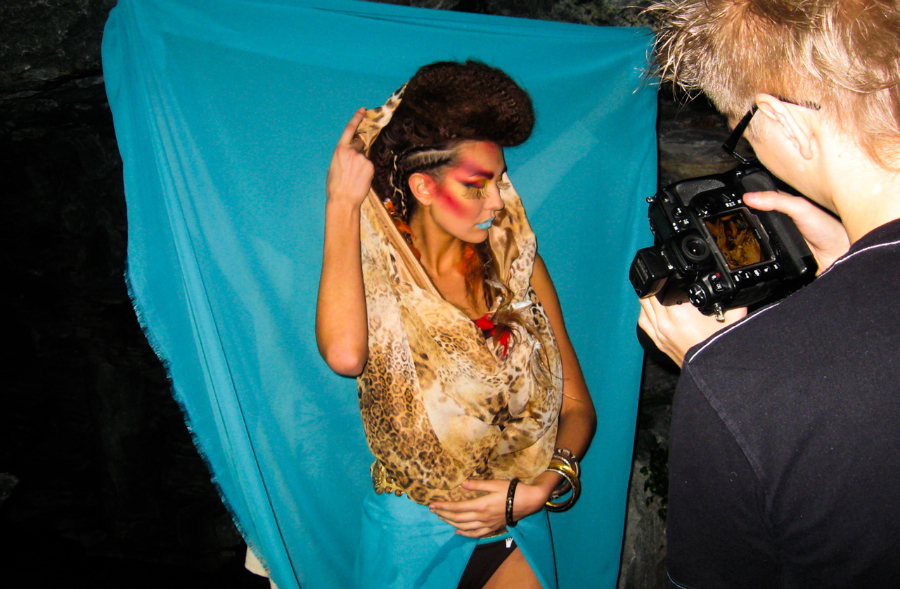
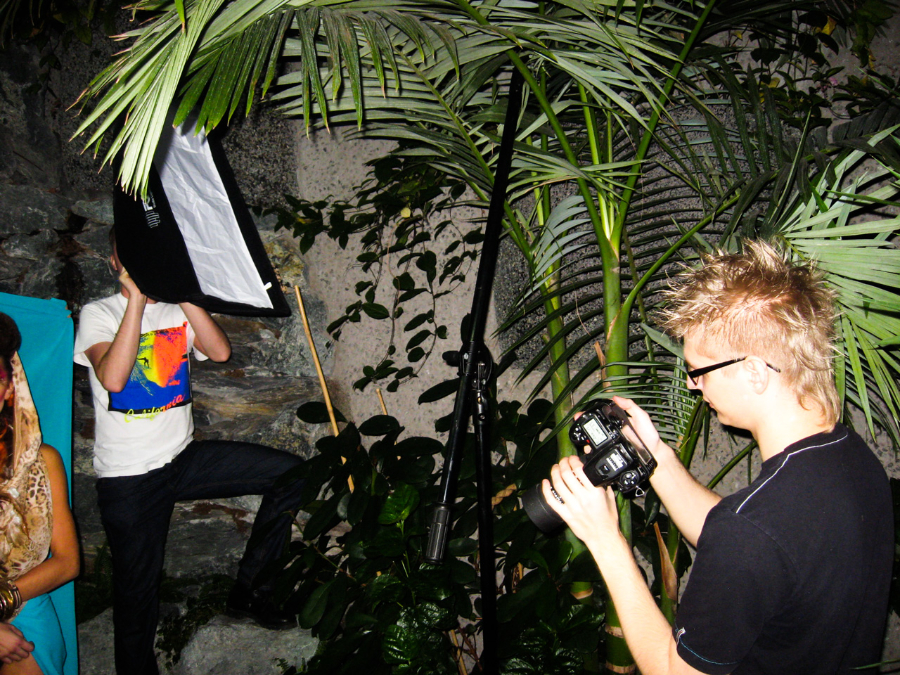
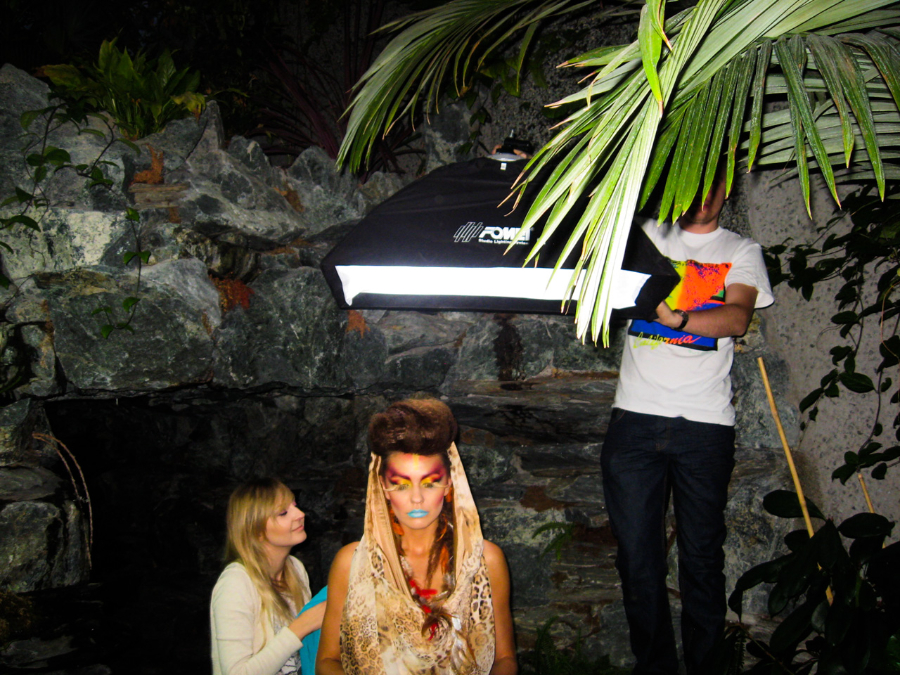
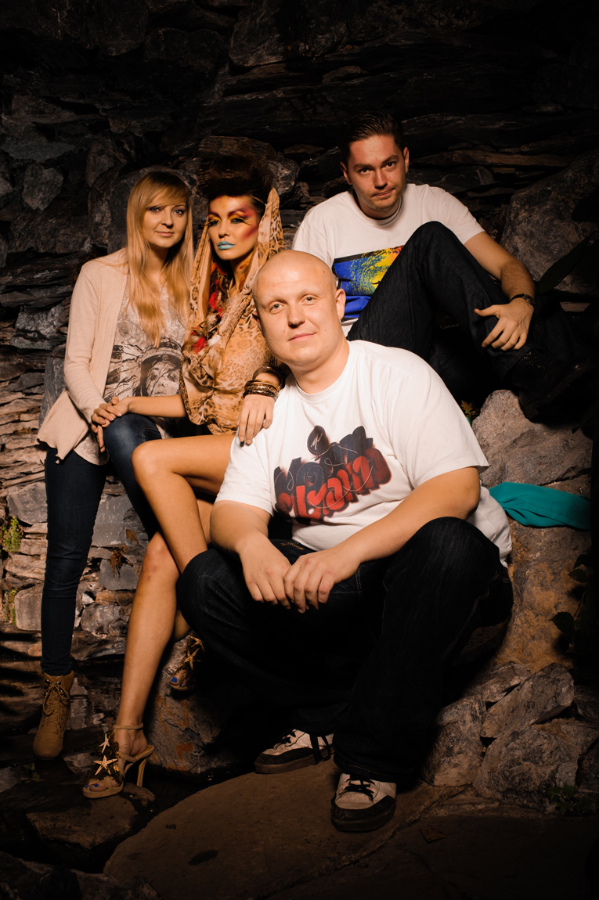
Summary
I really missed having a wide-angle lens. I also definitely didn't make full use of the location where we shot these photos. Now that I know what it looks like, I can plan specific shots. I'll probably go back there someday with a 35 mm lens. The gear Fomei sent came in handy because my 300 Ws light wouldn't have done much when trying to light an entire person with a gridded dish. As I mentioned, I wanted to eliminate the ambient light completely, so raising the ISO at that aperture wasn't an option. I had a similar problem during the "Snow White" shoot, and it cost me one shot. Fomei Digital Pro X lights, however, are made for professionals who use them for many hours every day, require excellent flash consistency, and so on. I don't do eight-hour shoots every day, and I don't use continuous light for anything other than modeling lights, so I won't take full advantage of these lights. Even so, a modeling light this powerful would have been useful to me many times because a grid on a dish kills everything fitted to cheap lights. I only wonder whether my Chinese beauty dish can handle the same temperatures (powerful modeling bulbs) as these lights. Given its price and build quality, I have serious doubts...
Fomei equipment was supplied by the official Polish importer, Medikon.