Beauty and Fashion, Plus First Impressions of the Jinbei MSN II Lights
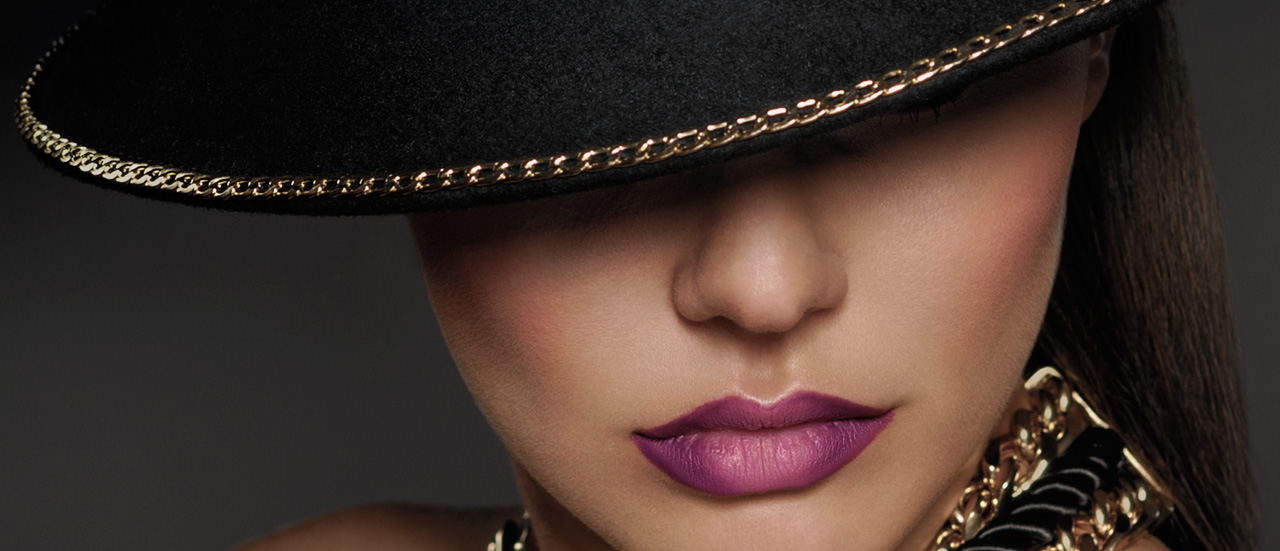
As some of you probably already know, I flew to Poland a month earlier than planned and decided to spend some of that time on photo shoots. For them, I chose studio lights I hadn't had a chance to use before: the Jinbei MSN II. They're easy on the wallet, but they also have some features that are very rare: built-in radio triggering and power adjustment down to 1/128.
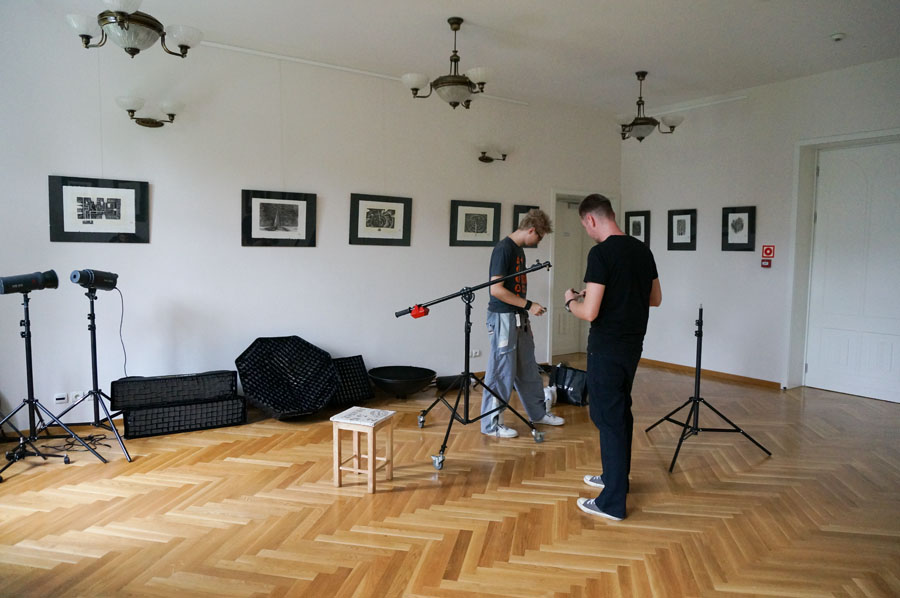
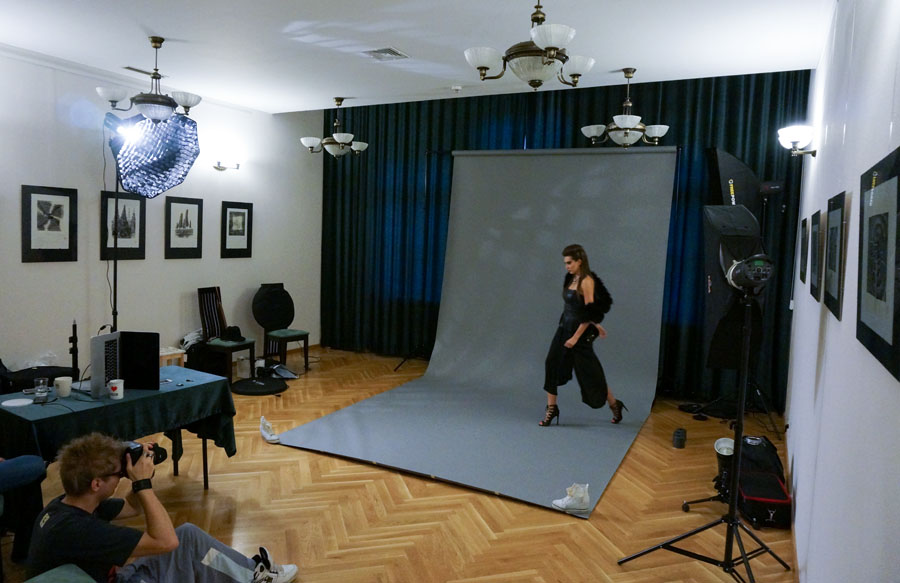
I usually brought the "studio" to the makeup artists, but that wasn't an option this time. There's no room to set up a studio backdrop when shooting in a standard apartment, and I was also planning some fashion shots. Those require plenty of empty space and a high ceiling. After an unsuccessful search for a suitable place, I finally found a reasonably spacious room. It isn't perfect, but so far it's the best one I've come across.
Equipment
I no longer have any of my own studio gear in Poland, so it all had to be arranged. The only exceptions were a boom stand and reflectors. Everything was supplied by Fripers.pl, the same store you already know from many of my previous posts (they're the ones who sent all my gear to Asia). I'm not going to describe every technical detail of each piece of equipment here, because that's not the point. Anyone interested can click the link and read the details.
I wanted studio lights I'd never used before. I still think testing different models is a good way to add some variety to the blog. I chose the Jinbei MSN II at 800 Ws (for the main modifier) and the 400 Ws version for the additional lights.
The lights were only the beginning. I needed a few other things too… A 70 cm Beauty Dish with a grid is essential, because a shoot without one is a rarity for me. I also got an Aurora Firefly XL 90 cm octa with a grid and a deflector that turns it into a beauty dish. That's for full-body photos, where a 90 cm diameter often works better than 70 cm, especially in small rooms. I wrote everything about the Firefly XL in the post about the Zombie shoot. I generally avoid anything larger than 90 cm. All my octas of 120 cm and up usually sit unused, although large modifiers would make more sense if I started shooting against bright backgrounds.
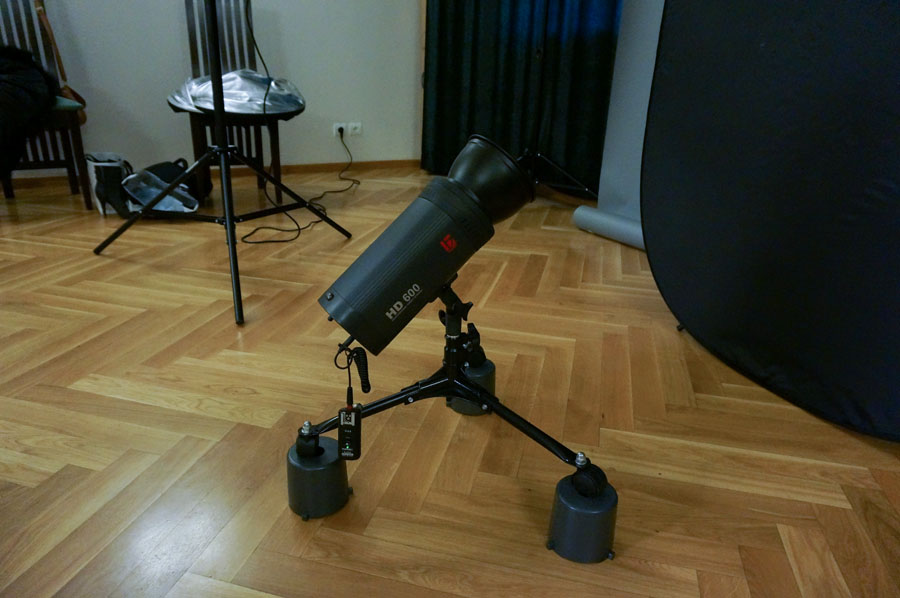
For rim light, I almost always use 90 cm stripboxes with grids. I also took a 40x40 cm softbox (these FreePower models include a grid). I've only used it a few times in my life, but I still consider it essential equipment. When I do need it, there's no messing around. I just put it on and it's ready. All of this has to stand on something, so the equipment package also included light stands and a backdrop support kit (also stand-mounted). With this gear, I can do every shoot I'm planning in the near future. Outdoor shoots are the exception. For those, I chose the Jinbei HD600 Ws, but more on that another time.
The shoot
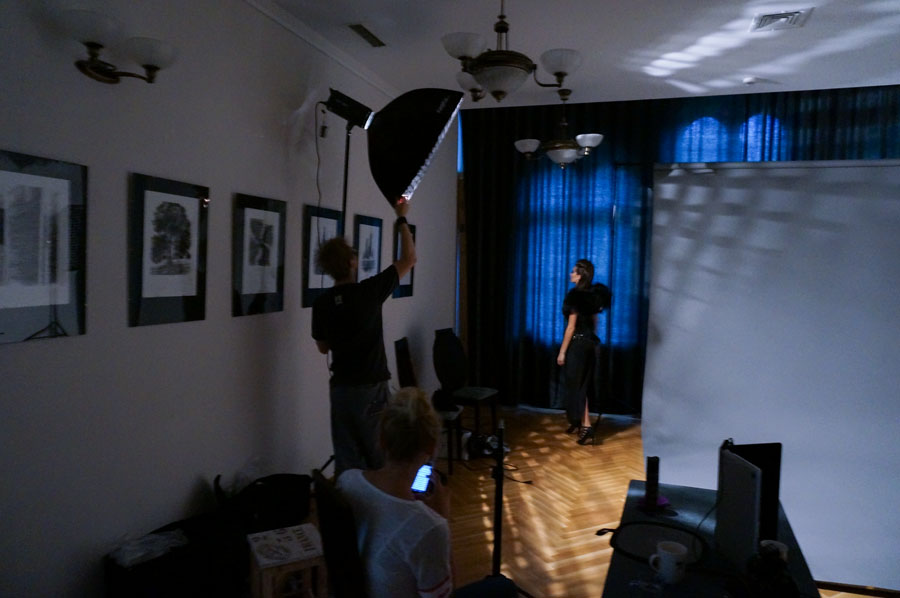
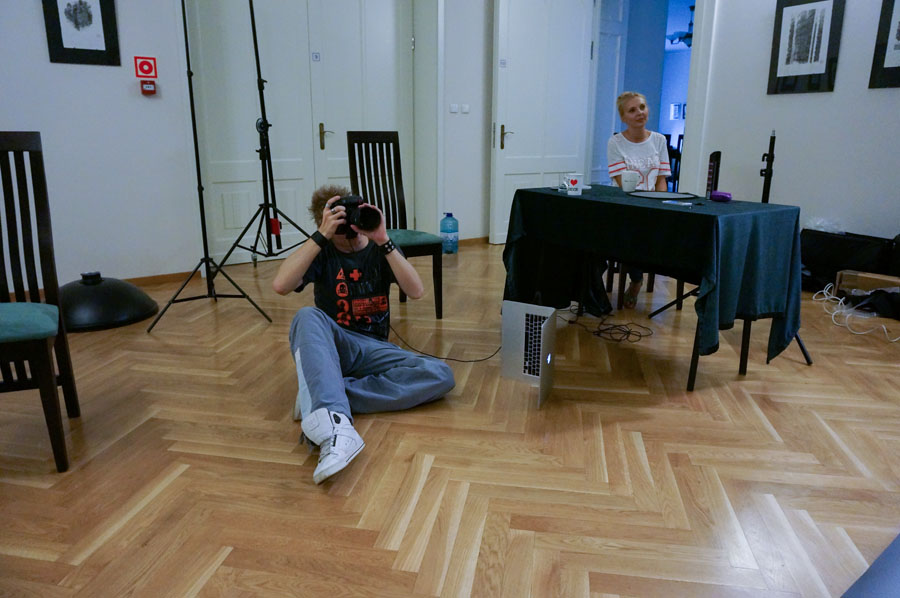
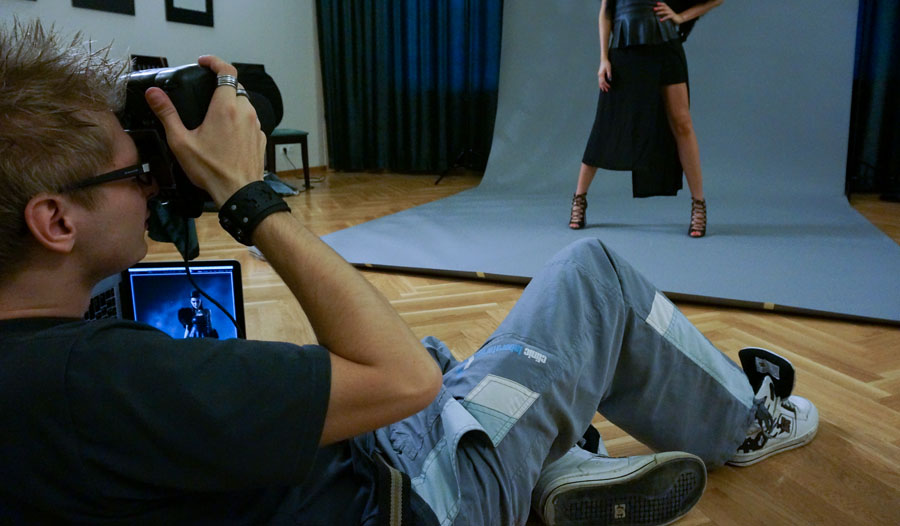
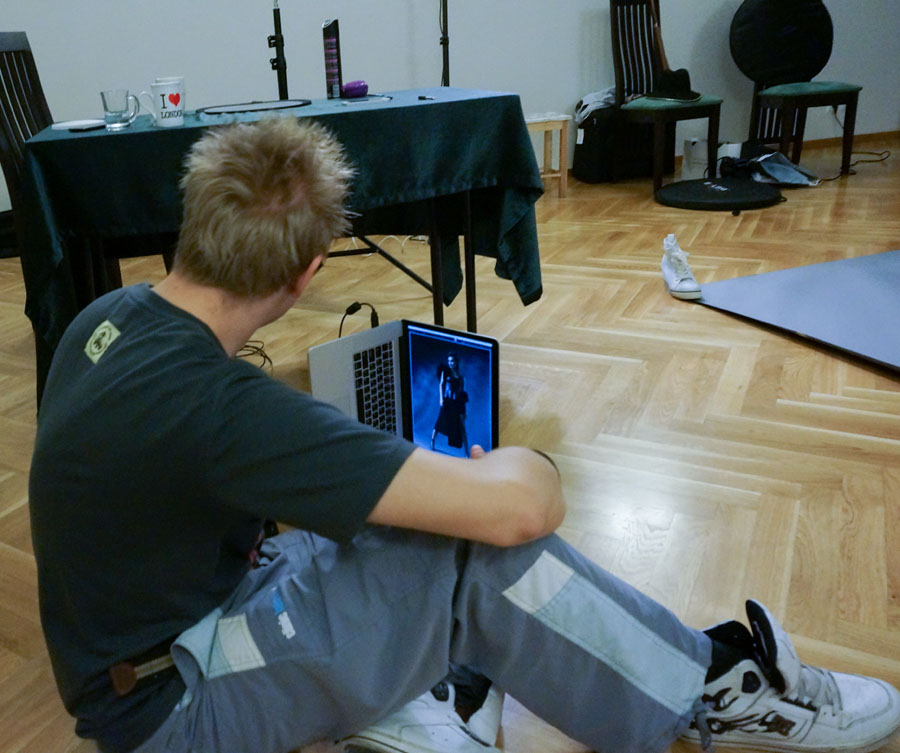
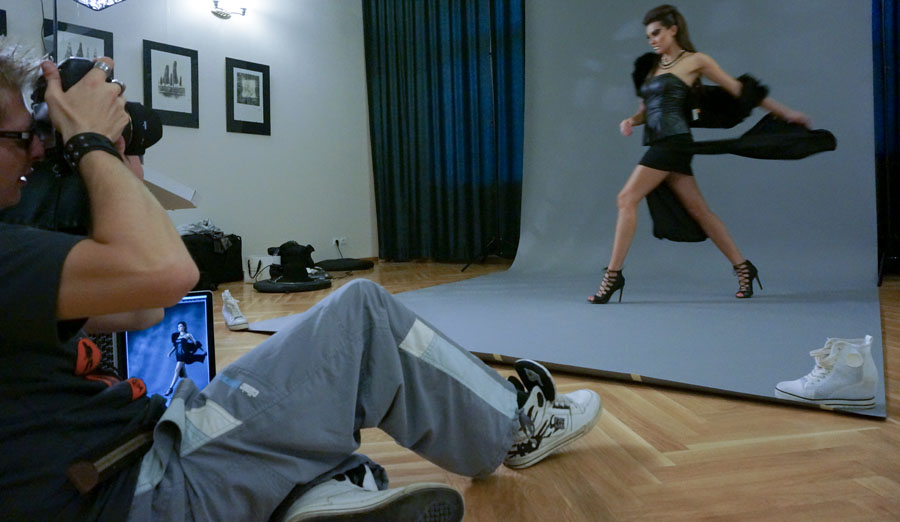
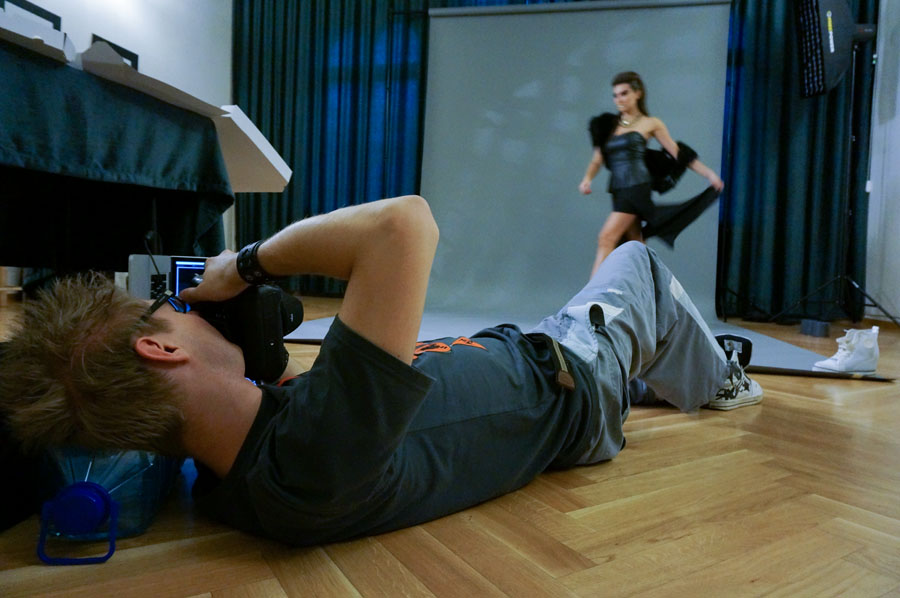
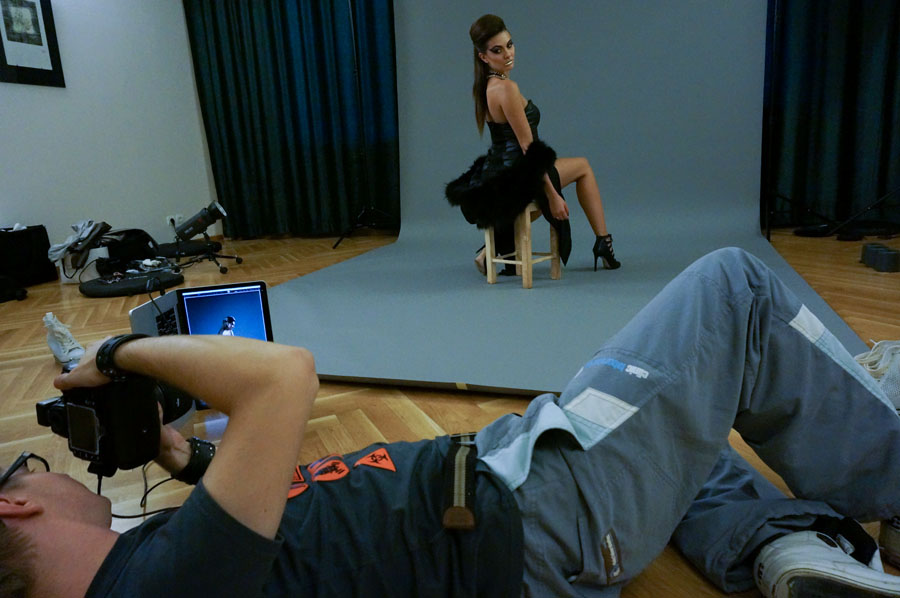
The plan was short and simple: "we're doing beauty and fashion." That was basically all the planning. We'd figure out the rest on location, as we almost always do. Klaudia Danch modeled and brought clothes from Egoistin.pl. That was a big step forward for us, since the clothes usually came straight from someone's closet :). Karolina Zientek handled the makeup and the behind-the-scenes material, together with Mateusz "Pro" Prociak, who also assisted as usual. I can't count how many shoots I've done with this team. In fact, I shot my very first beauty photos with them.
We started with portraits. The setup was so overused that it hardly seems worth describing, but I'll try to sum it up quickly anyway.
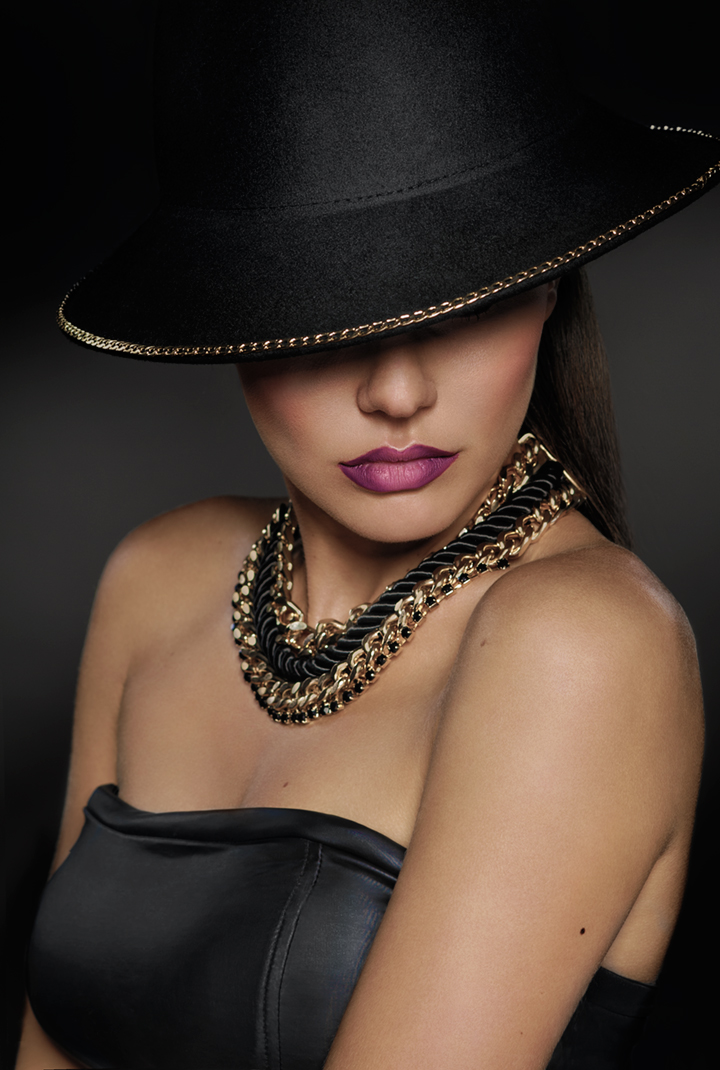
Nikon D700 | Nikkor 135mm 2D DC | F/9 | 1/200 | ISO 200
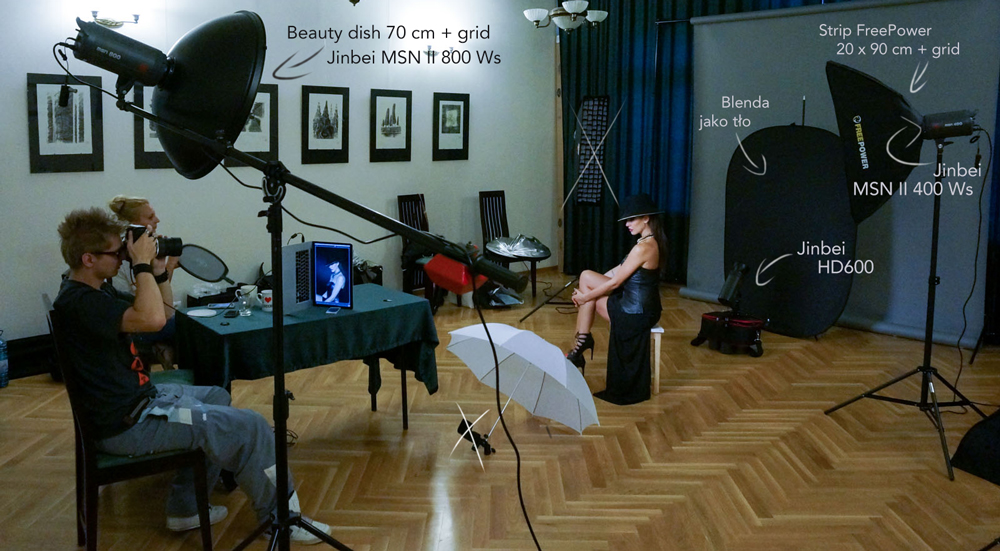
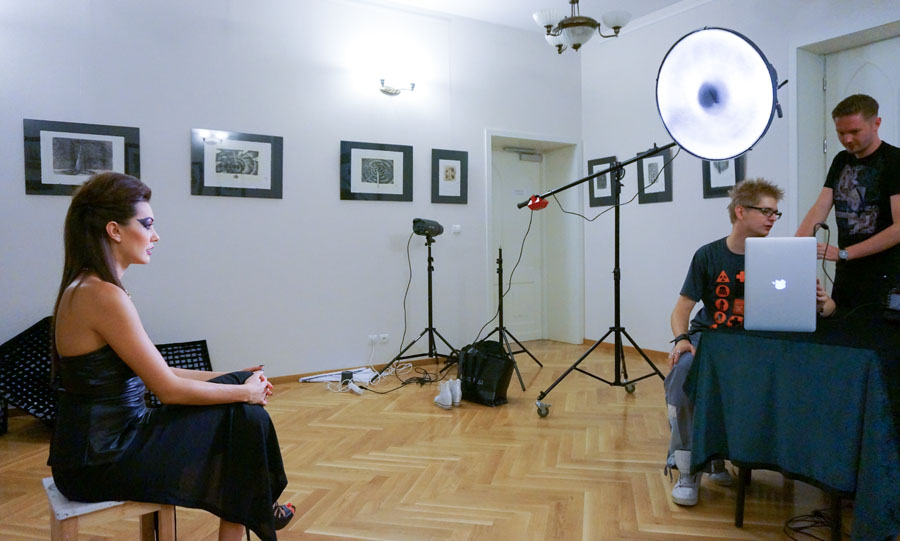
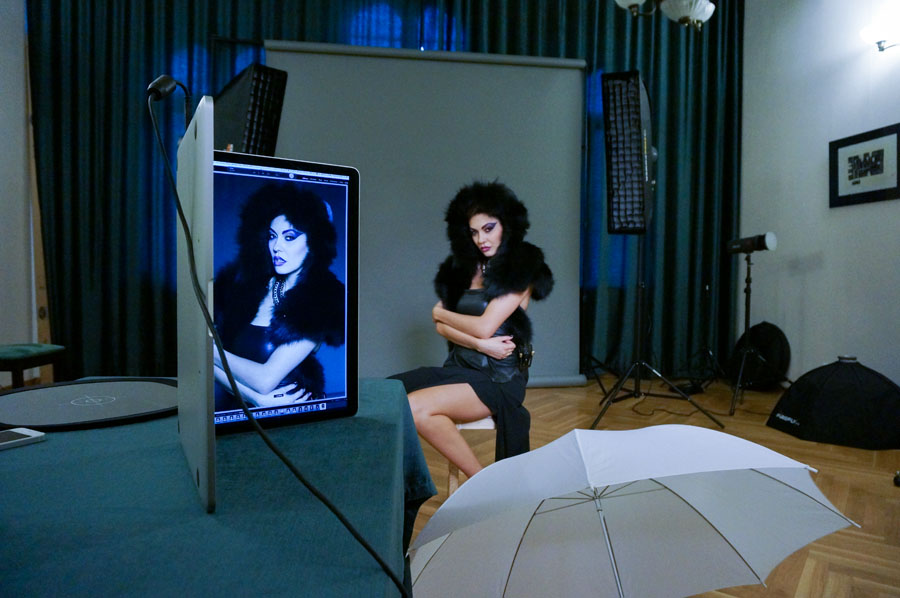
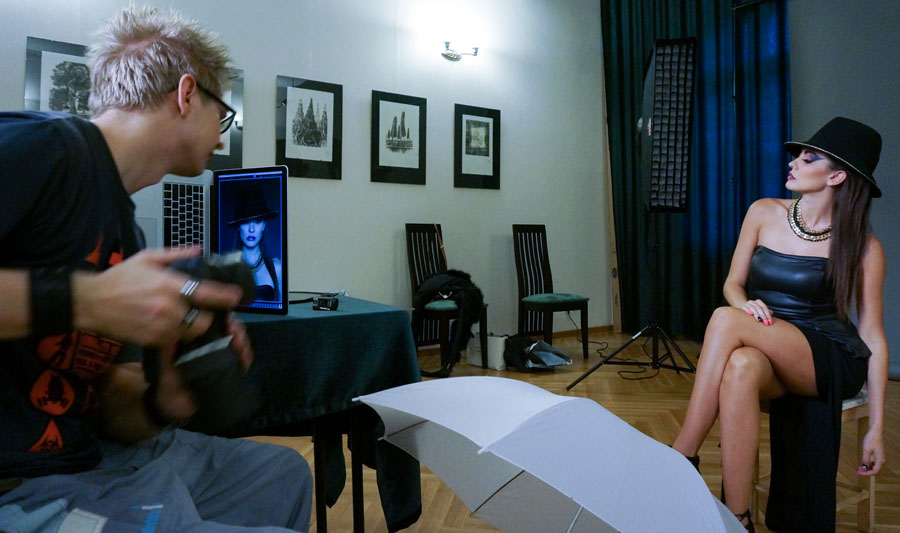
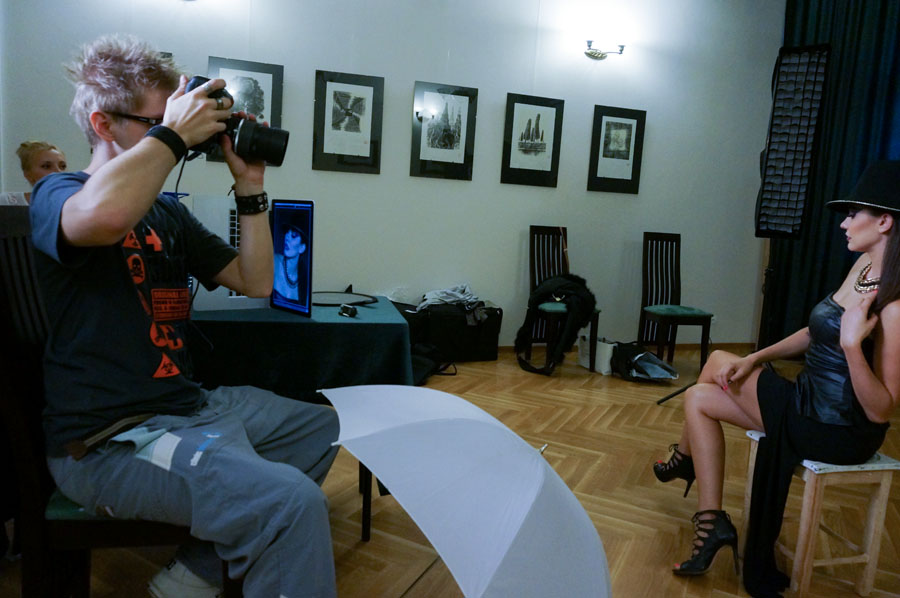
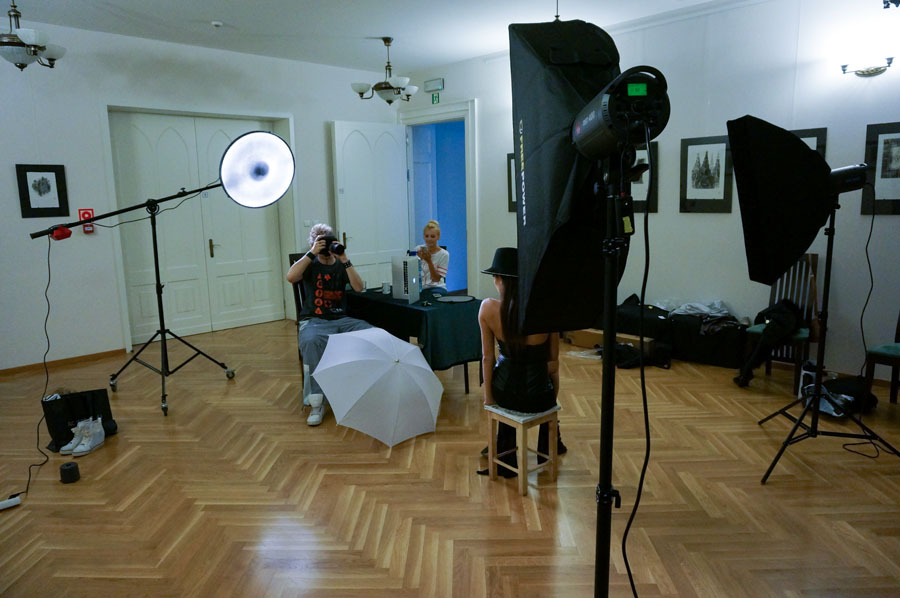
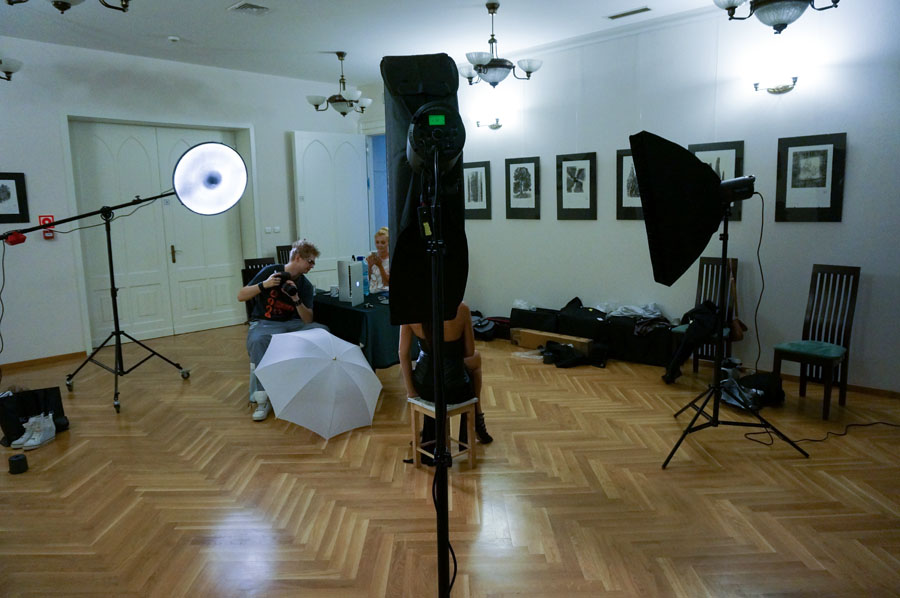
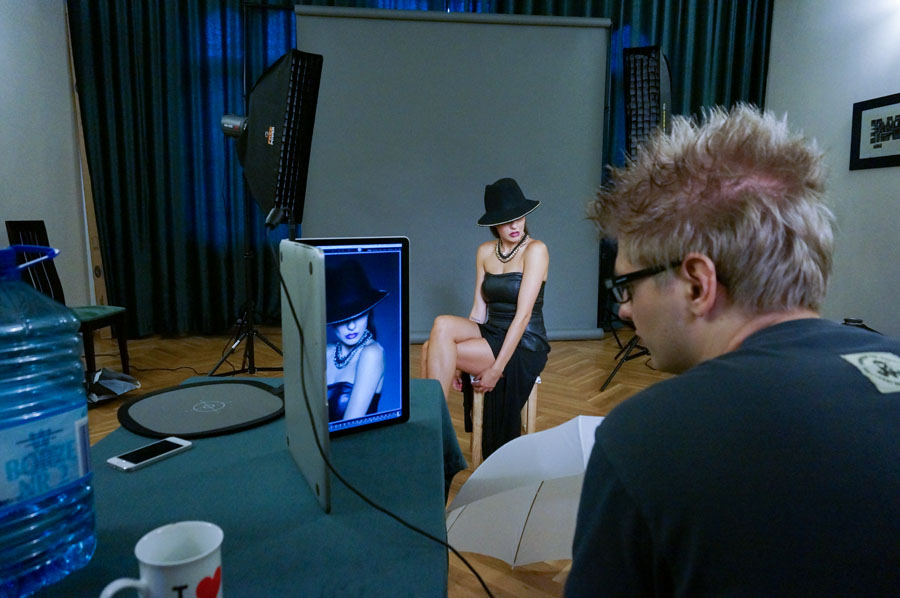
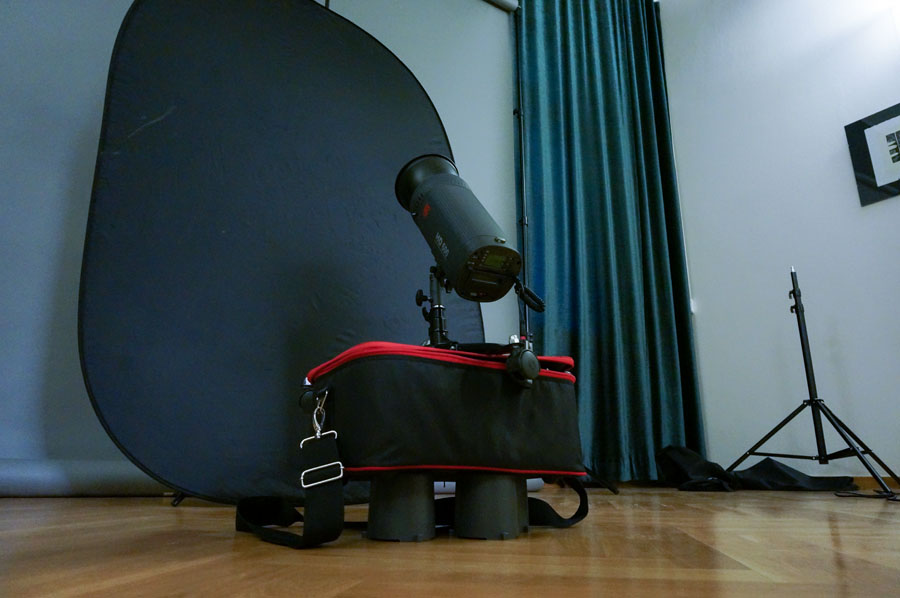
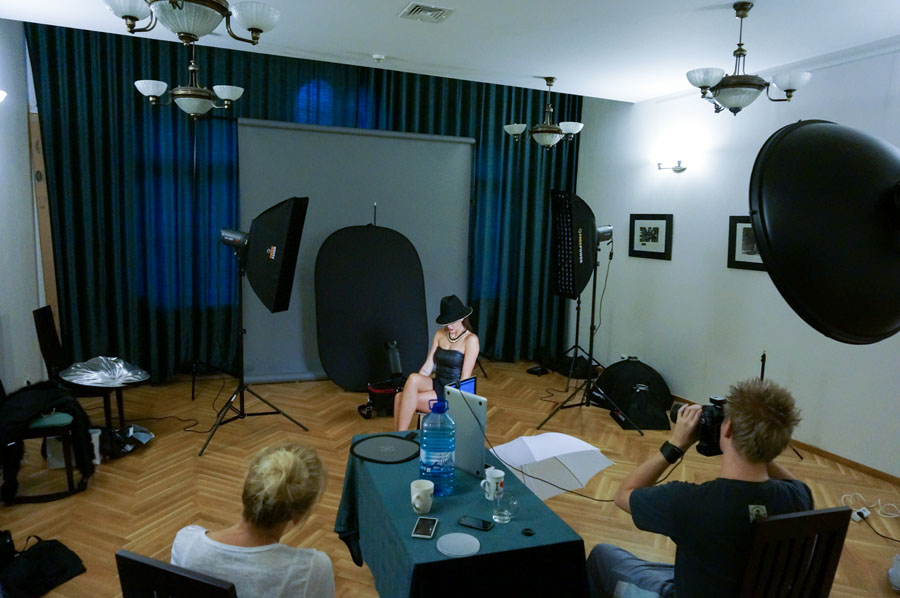
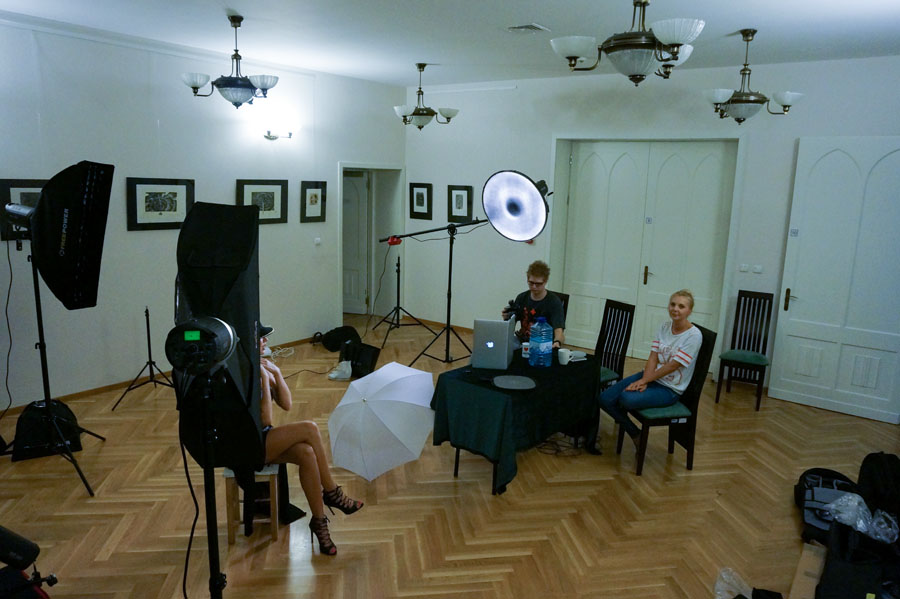
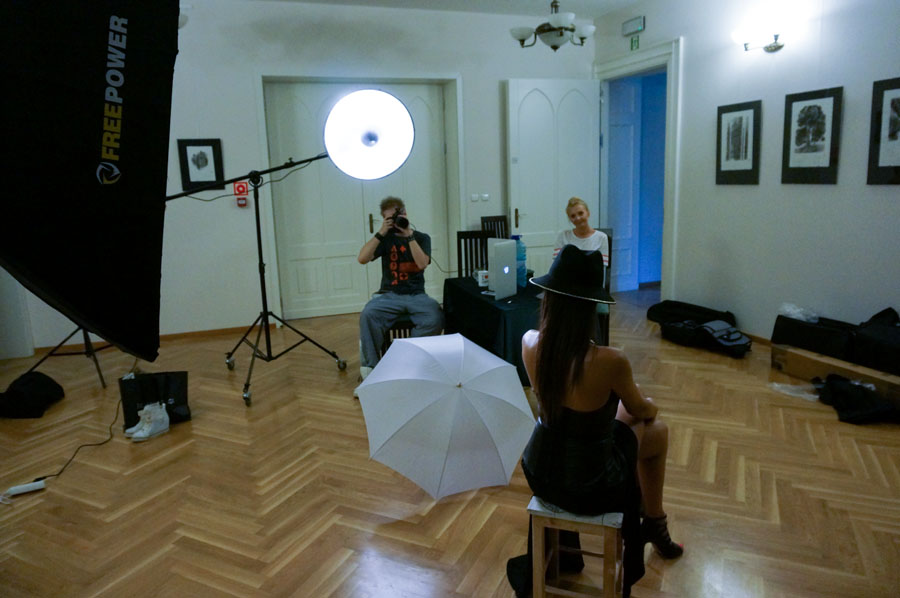
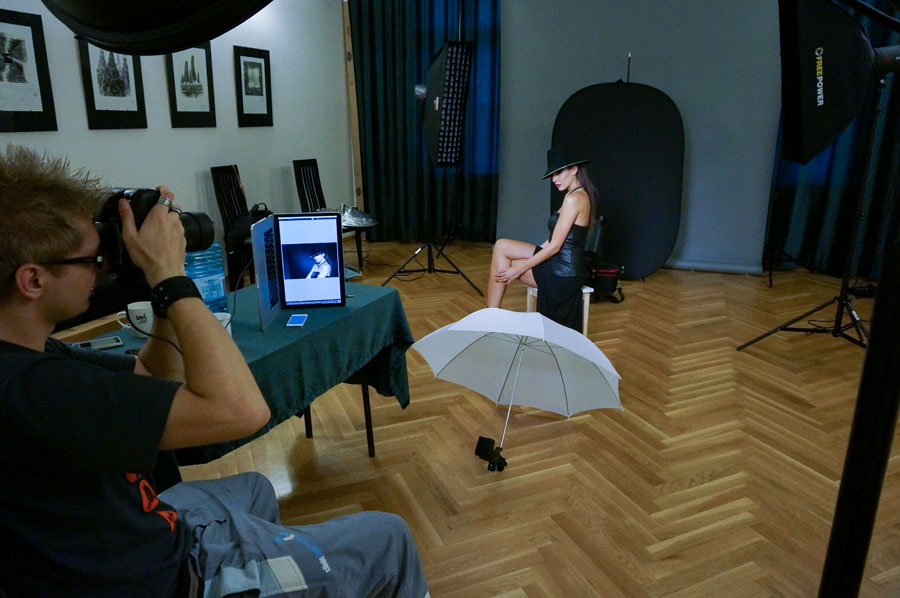
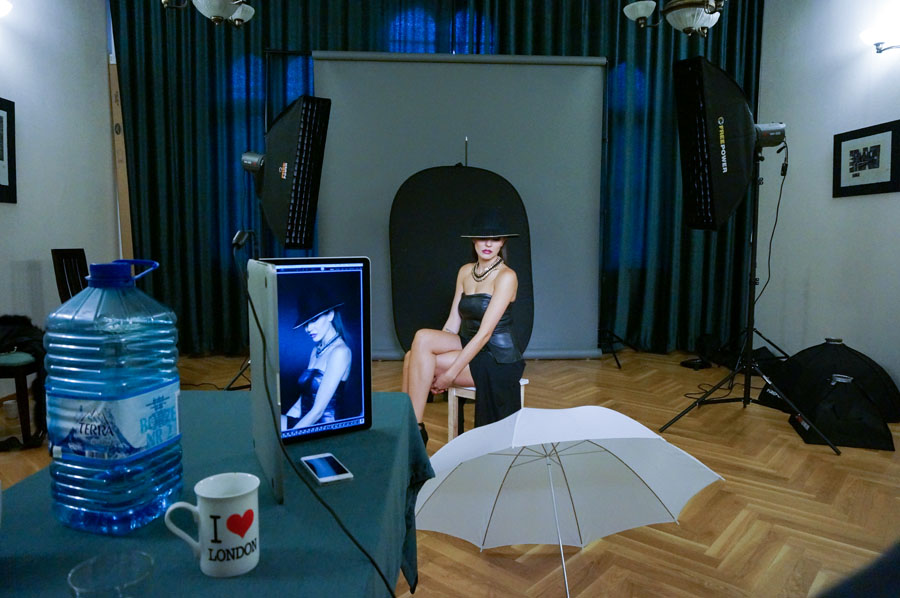
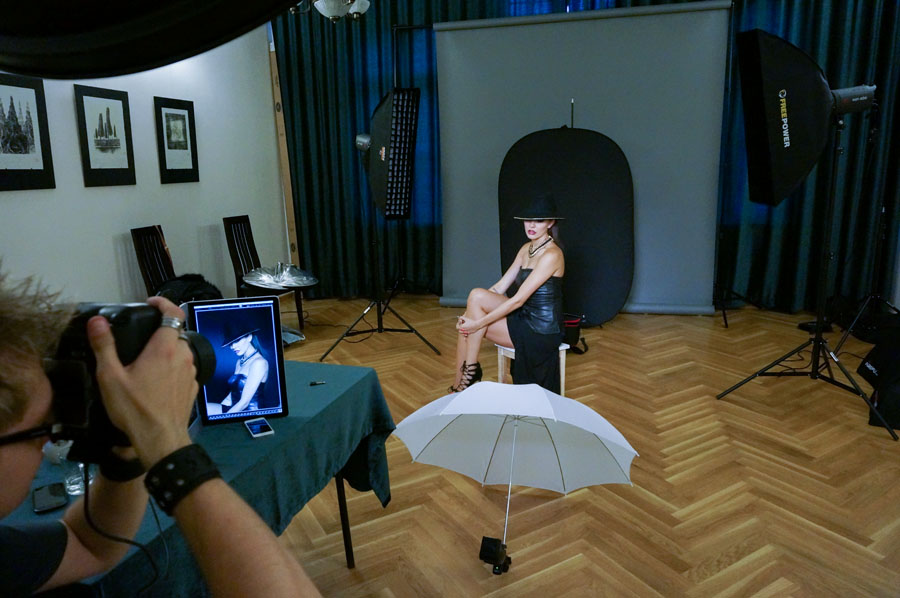
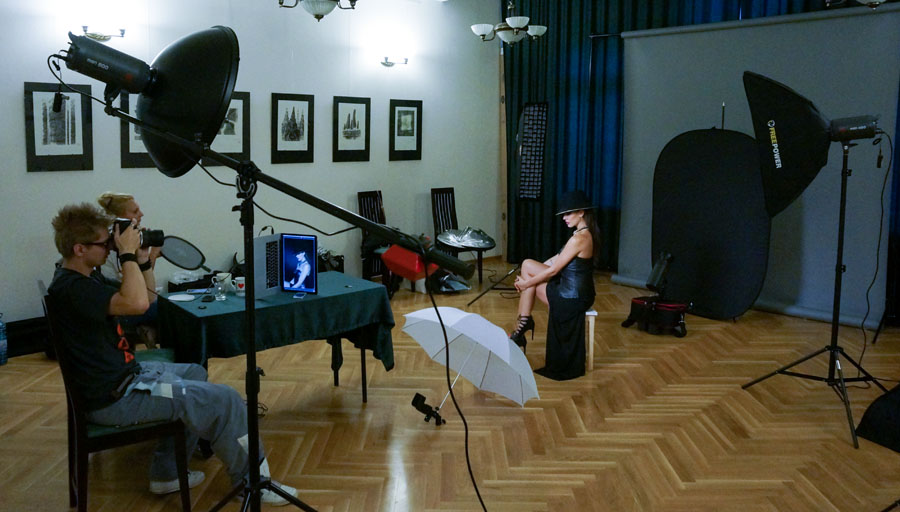
I used a silver 70 cm beauty dish fitted with a grid, aimed at Klaudia from the front. In other words, it was hanging somewhere above my head, waiting for a chance to hit me when I stood up. The light connected to it was the Jinbei MSN II 800 Ws I mentioned earlier. There were theoretically two rim lights, but only one contributed to this particular shot. It adds a little light to the hair and shoulder. It may seem like a minor detail, but it's very important. I normally also place one light below the model for beauty shots, but it made no sense here. Its only purpose is to add a catchlight and brighten the irises, neither of which is visible in this shot. Some people use a light below the model to brighten the shadow under the neck, but that wouldn't have added anything good here. Quite the opposite. The background was a black reflector lit by a Jinbei HD600. It's the outdoor model, but nothing stopped me from using it in the studio. The advantage is that you don't need to look for an outlet because it runs on a battery :).
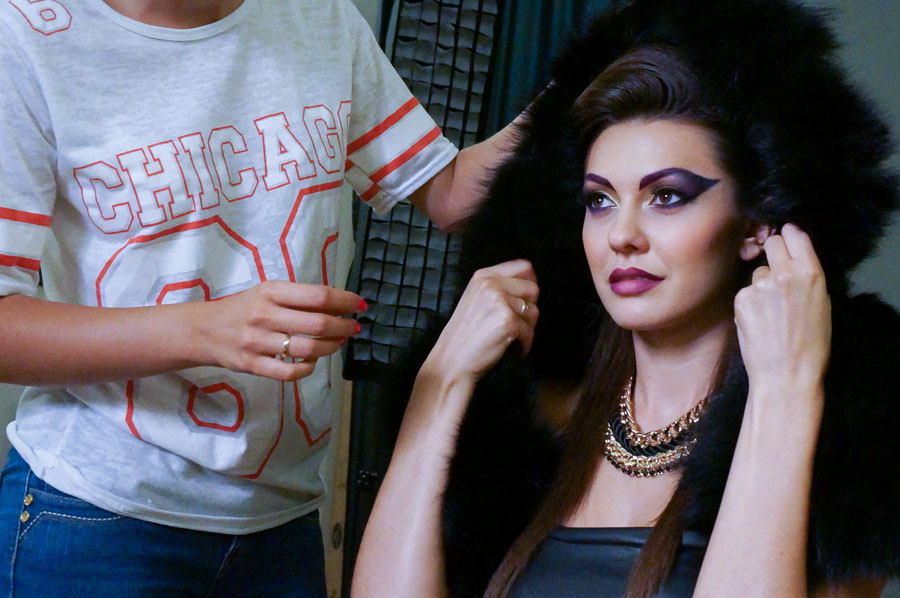
The next shot was basically a test: "put on that fur and we'll see how it looks." We saw how it looked and dropped the idea, leaving me with only one photo from that "series." At home, I cropped it a little differently from the original, and it looked completely different than it had at first. Since there was only one frame, I didn't have to wonder which one to choose :).
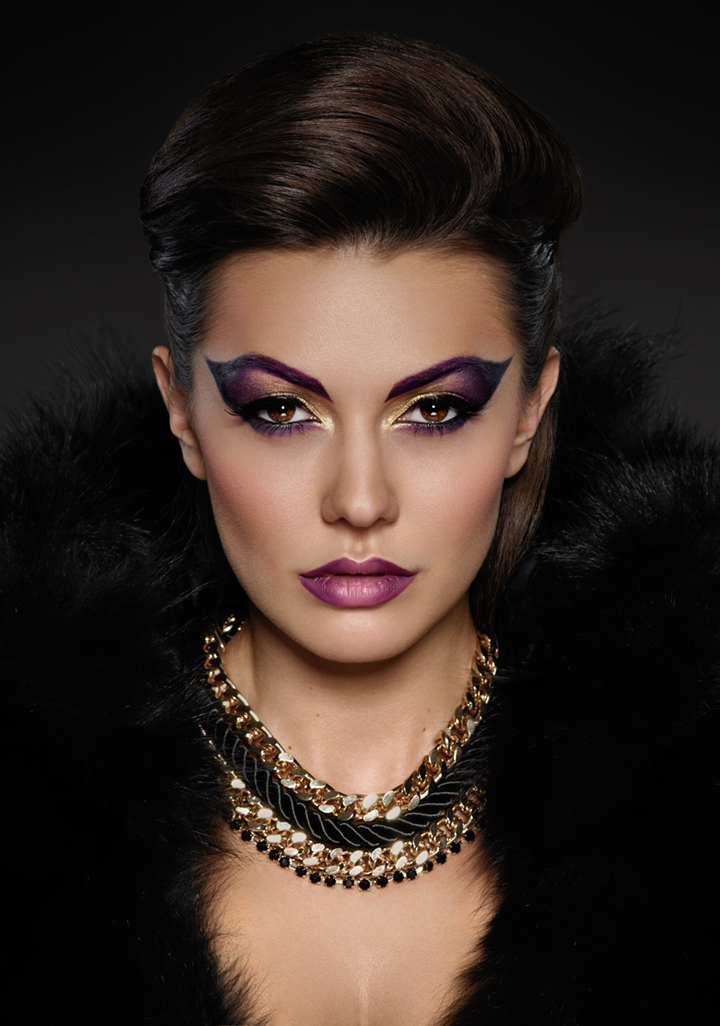
Nikon D700 | Nikkor 135mm 2D DC | F/9 | 1/200 | ISO 200
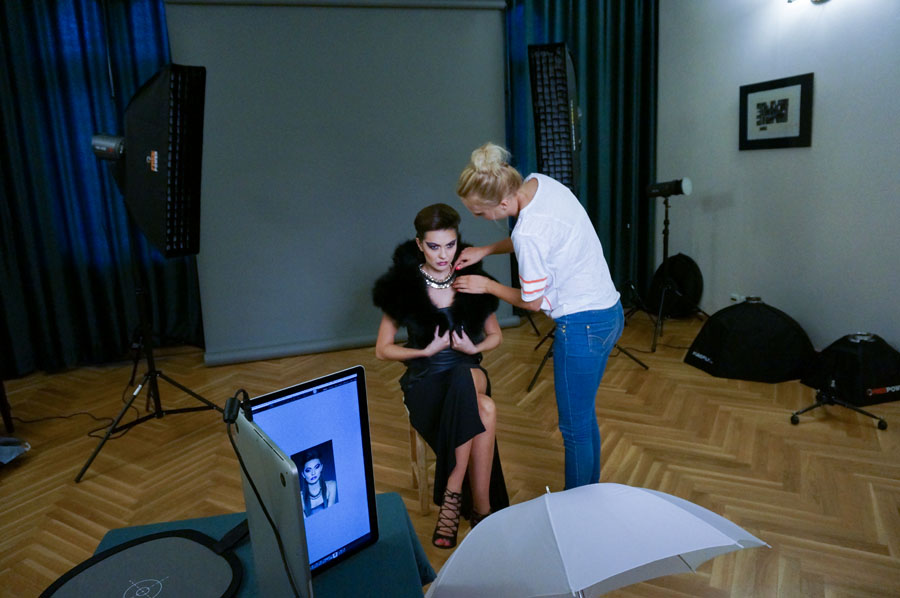
The setup was almost the same, but this time the umbrella light was switched on. As usual, I used a speedlight instead of a studio light because it was quick and convenient. There were no cables, and I didn't even need a stand. This time, two rim lights contributed instead of one. Both had a stripbox with a grid and an MSN II, but the 400 Ws version rather than the 800. Given the very wide power range on these lights, even the 800 Ws model would have worked, but I'd never have used it at full power. The rest of the setup stayed the same. The main light was still shining from the front.
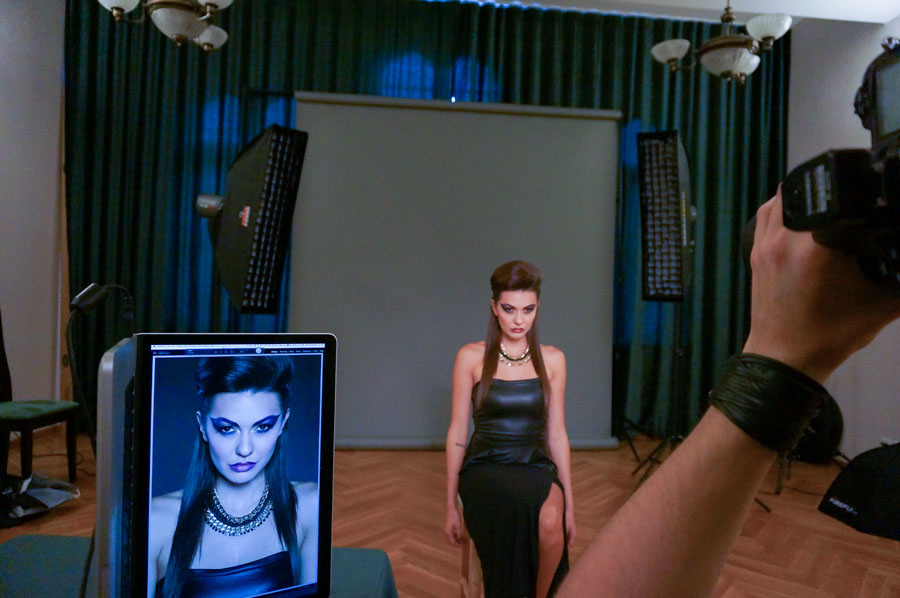
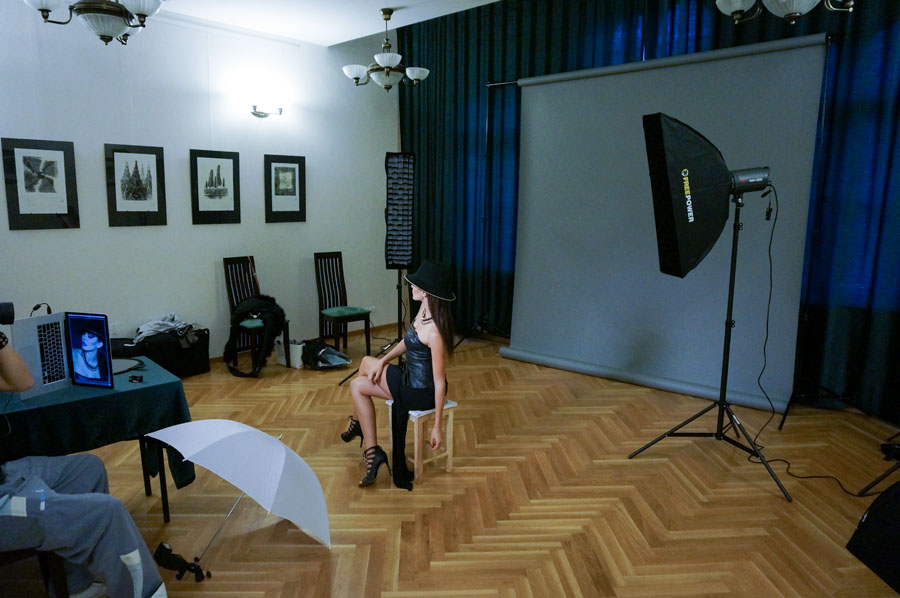
The next shot was a full-body photo against a studio backdrop in smoky gray. The Aurora Firefly XL softbox took the main role, but without the deflector and with only one diffusion layer, the larger outer one. There was one rim light, with a stripbox, of course (and a grid, what else?). We owe this photo to a stool borrowed from the makeup artist's apartment.
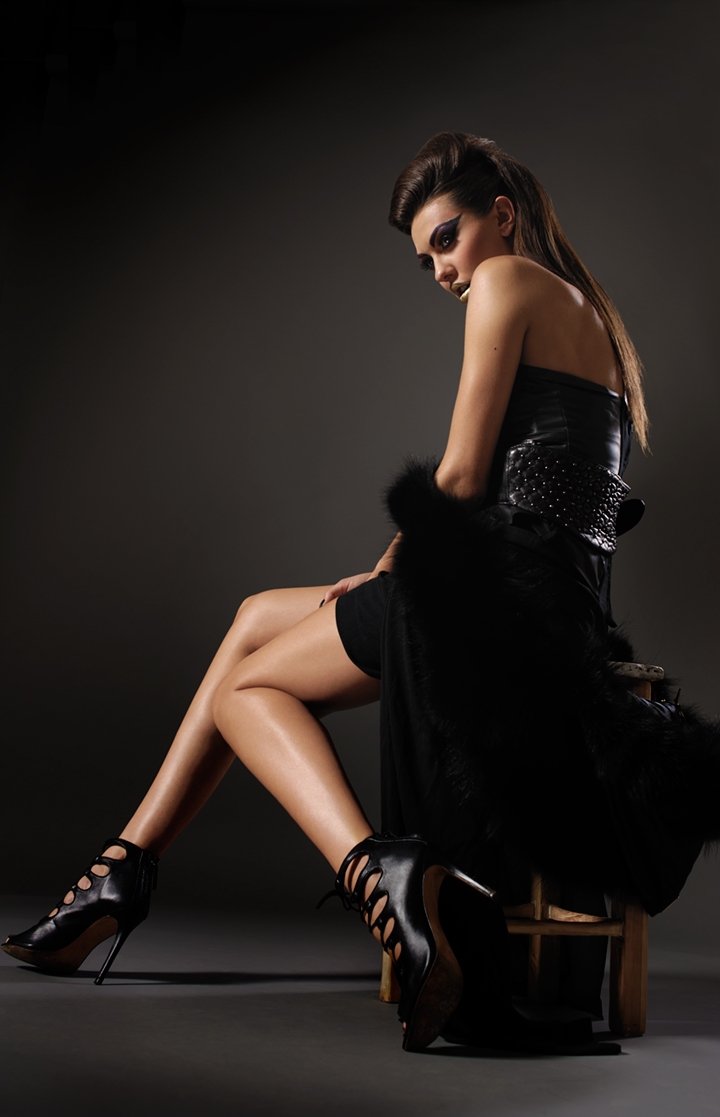
Nikon D700 | Nikkor 35mm 2D | F/6,3 | 1/200 s | ISO 200
I bought a 35 mm lens a year earlier, and this was the first time I used it. The shot didn't look very interesting at 50 mm. The legs were less exaggerated, and the photo lost a lot because of it.
At the end, we took two standing shots, but the softbox was converted into a beauty dish with the optional deflector. With the grid attached and no diffusion material, it creates a distinctive shadow that's easy to see on the background:
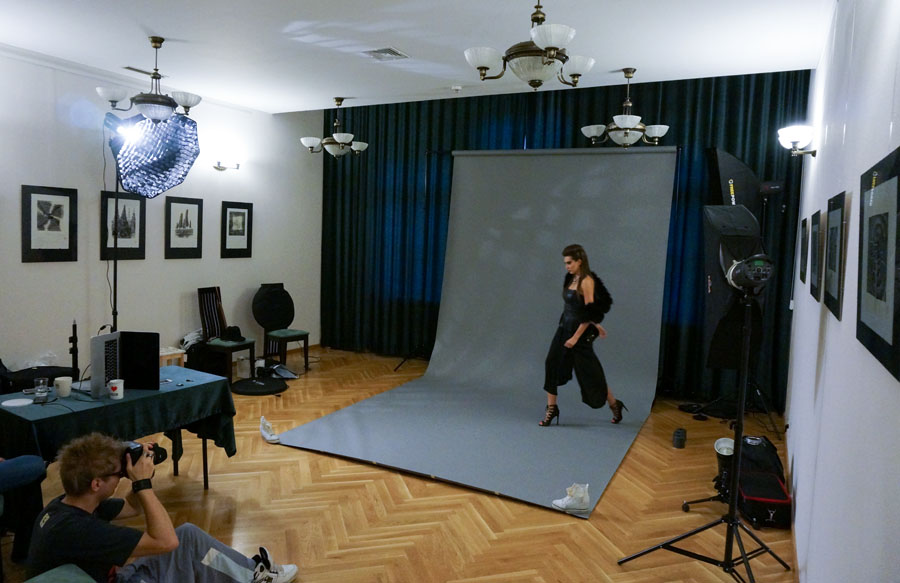
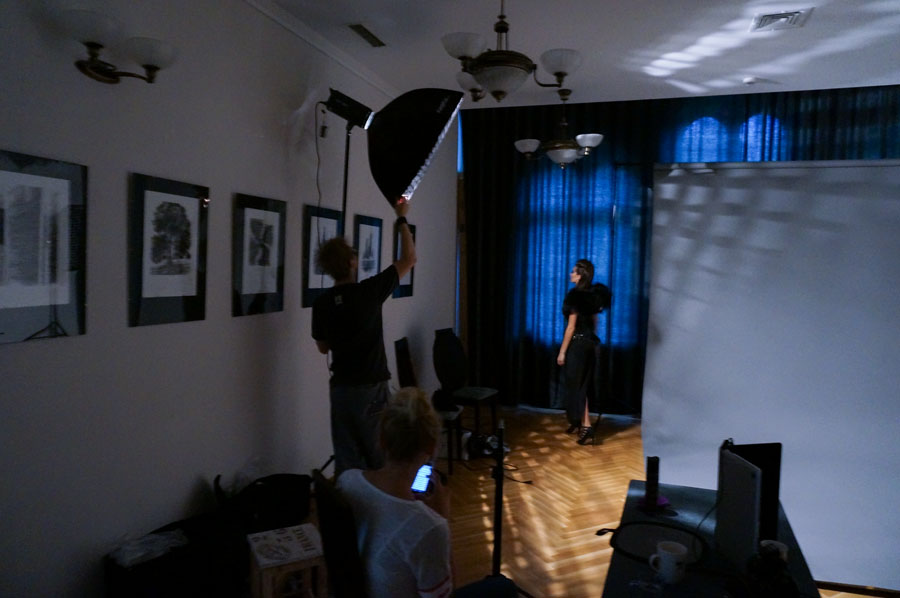
The light is uneven, with brighter and darker patches appearing on the background. They cover a larger or smaller part of it depending on the octa's position. I didn't like this effect in earlier shoots, but this time I thought it would only help the photos.
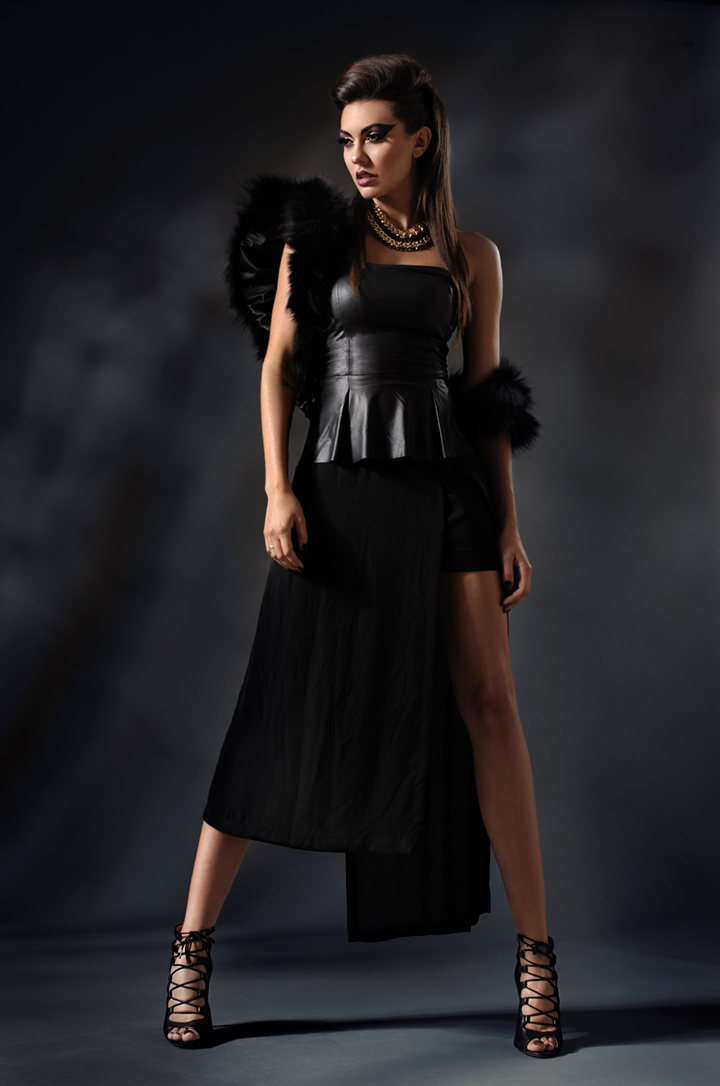
Nikon D700 | Sigma 50mm 1,4 EX DG HSM | F/6,3 | 1/200 s | ISO 200
We placed the octa well off to the side so the model would have strong, visible shadows. With the main light in this position, a rim light is almost always necessary. Without it, the other side of the model would disappear into the shadows. We took one more shot:
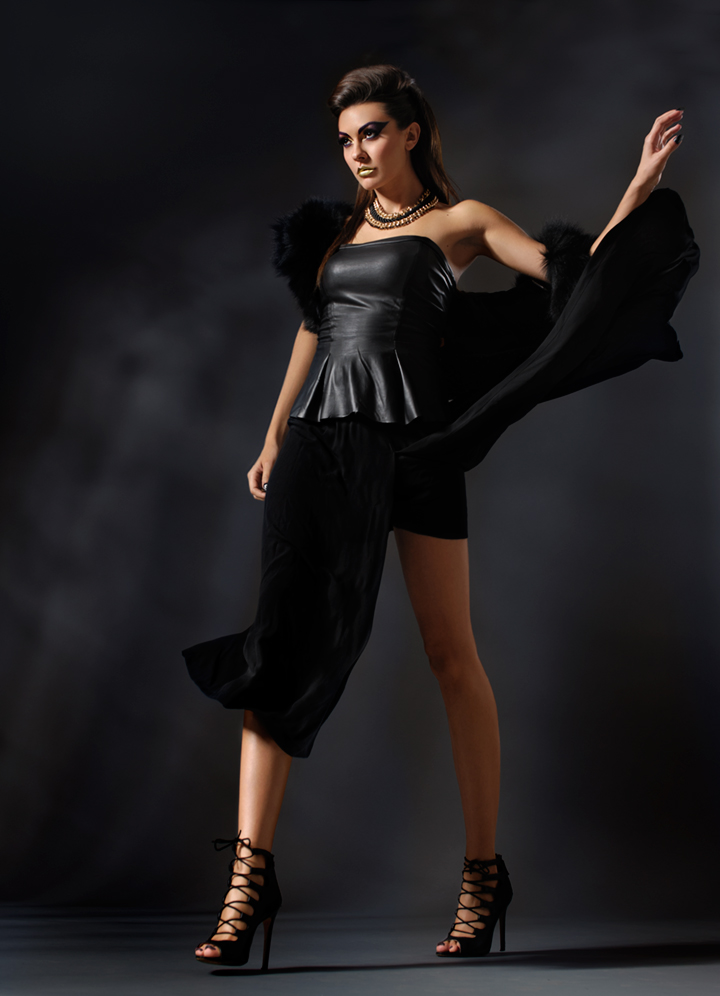
Nikon D700 | Sigma 50mm 1,4 EX DG HSM | F/6,3 | 1/200 s | ISO 200
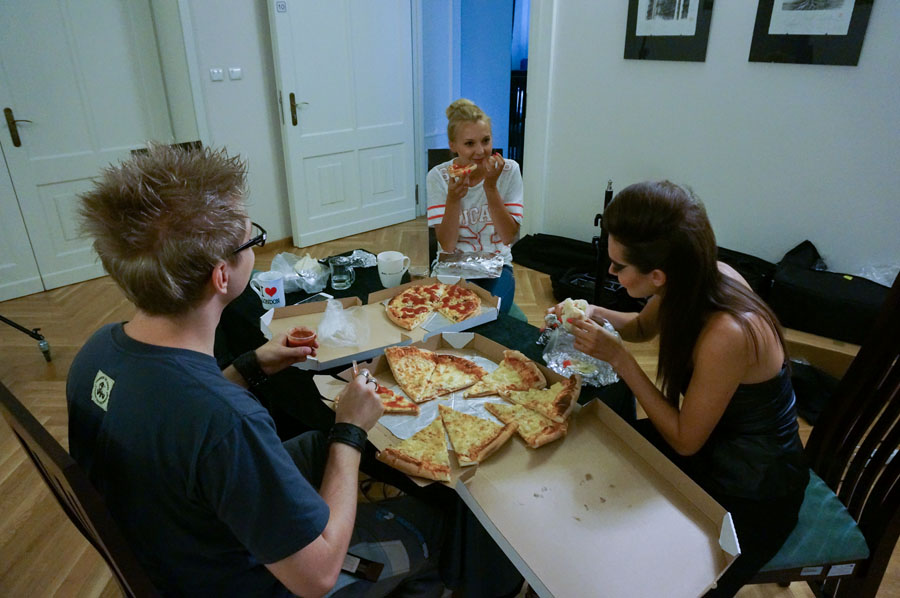
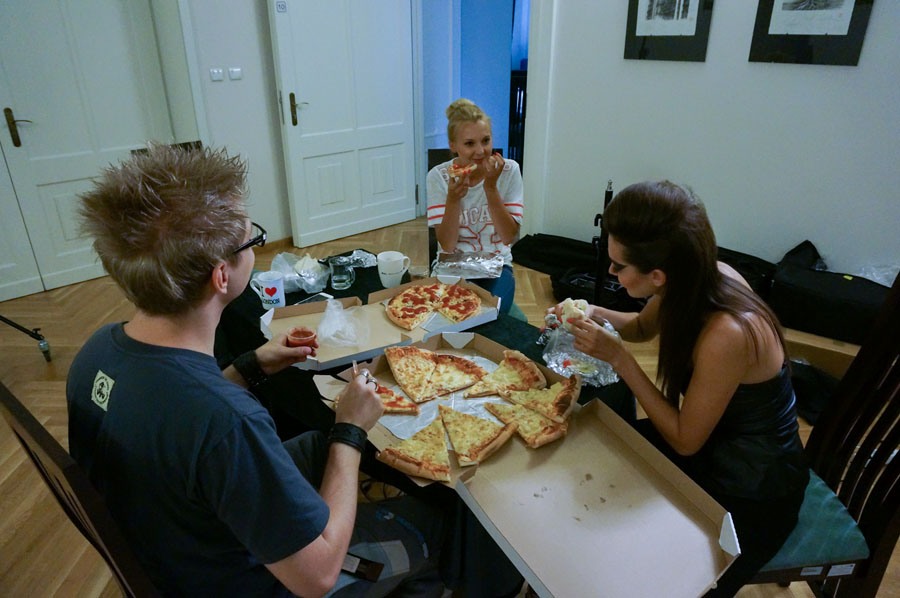
If you look closely, you can see that the makeup is slightly different. As usually happens after a meal, the lips had to be painted again. Blame the pizza and kebab delivery driver. Instead of arriving after the beauty shots, he didn't show up until we were in the middle of the fashion shots, when everyone was so hungry they could barely stay on their feet.
Jinbei MSN II
I won't go into detail about the new lights today because it's too soon. I only wanted to share my first impressions. The value for money is similar to the Jinbei DPsIII, which means it's excellent. The 800 Ws version costs about PLN 1,200. The market changed dramatically over the previous two years. Back then, a light like this at a similar price would have been completely unrealistic. Buying one also removes the need to invest in radio receivers because they're built in, although you can still connect your own. What's more, they let you adjust the power and other settings by radio. Unfortunately, the transmitter doesn't have a display, and you can't set parameters for each light separately. Technically, you can do it by assigning each light to a different channel, but that's impractical and isn't what the system was designed for. I used this gear for another shoot yesterday, and there may be another one tomorrow. Once I have more experience with these lights, I'll describe them in detail and compare them with the Jinbei DPsIII, because at first glance they're direct competitors. I'm already sure there won't be a clear winner. The choice will depend on the type of photos they'll be used for.
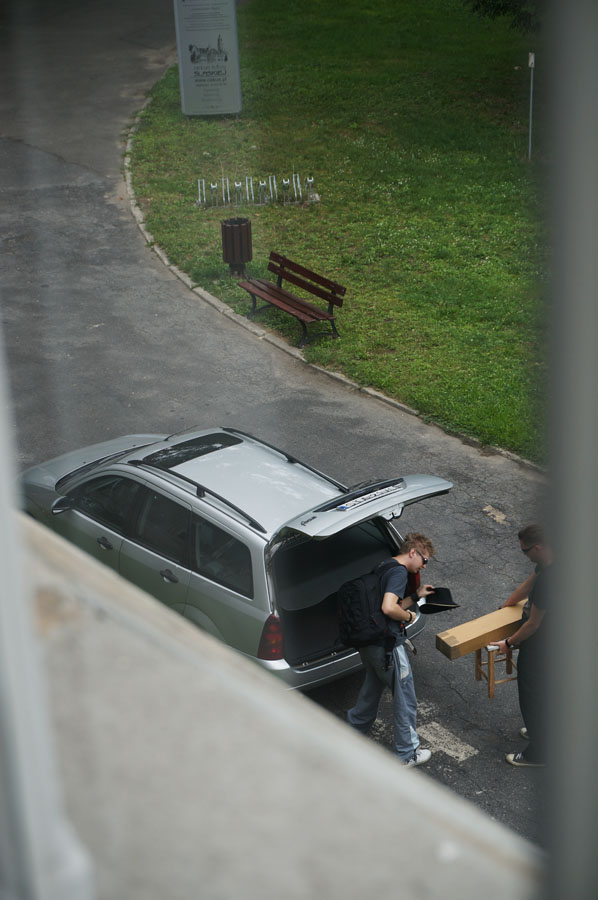
Behind the scenes
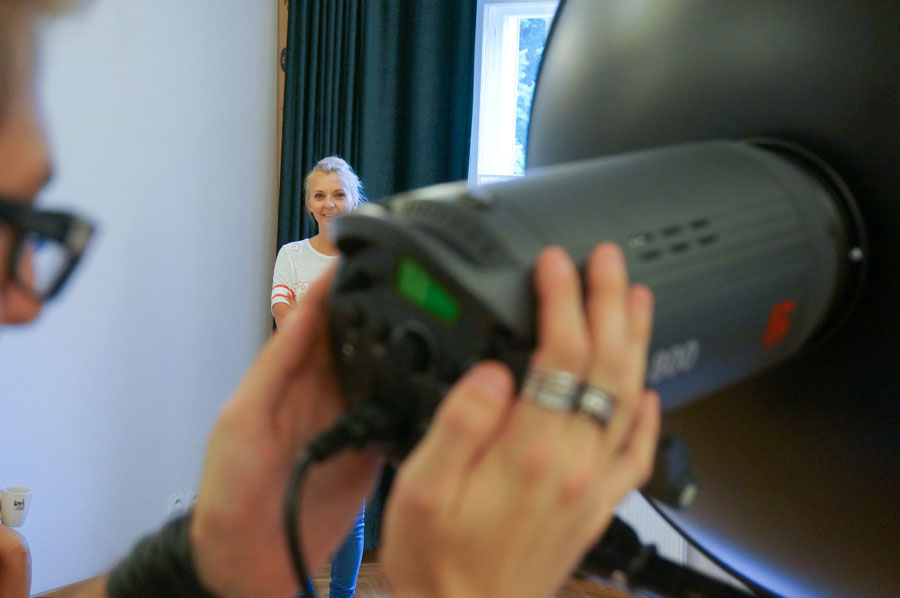
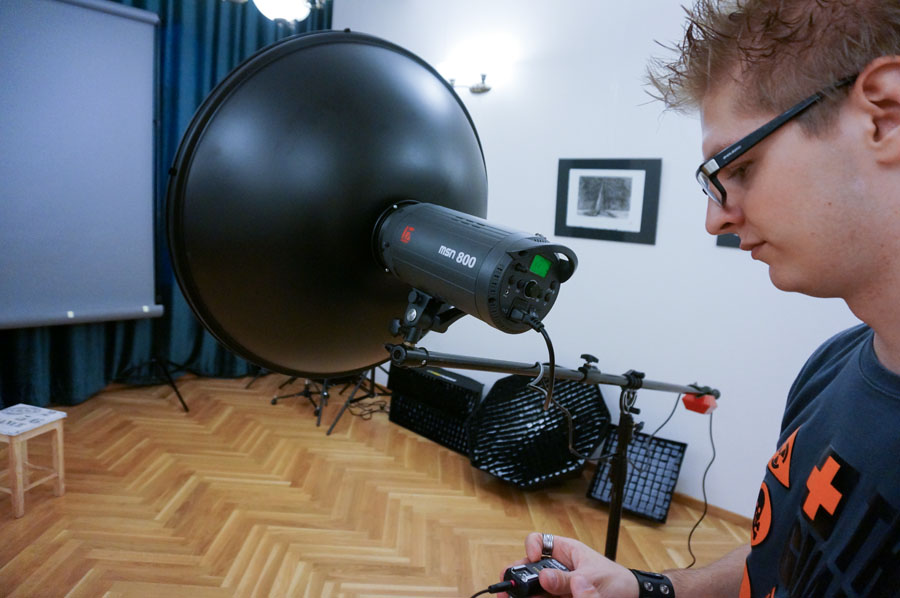
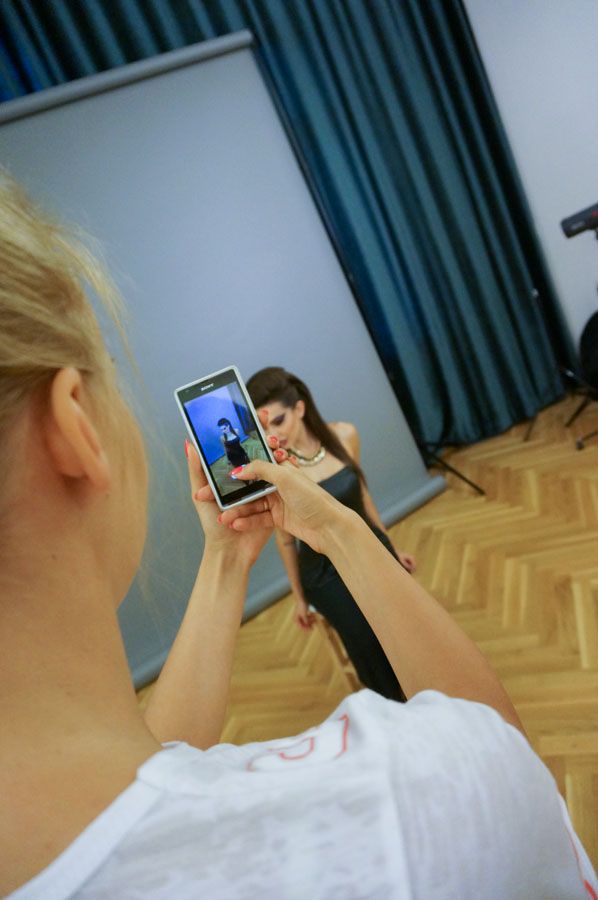
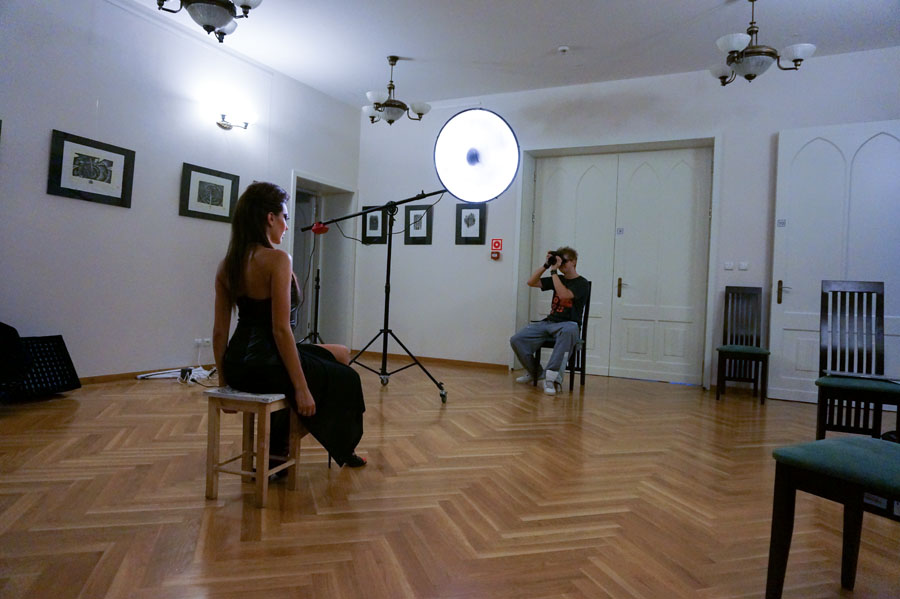
Summary
I don't have any more shoots planned yet. As usual, they'll be arranged from one day to the next. Between shoots, I'll try to process the photos quickly and publish them with a blog post, but I don't know how much of that will be possible in such a short time. Even if I don't finish something in time, I'll start writing about everything as soon as I land in Bangkok. I only have until the end of August for shoots and retouching. In September, I'm starting your retouching training, so there won't be any time left for posts.