A shoot with Idalia—then and now
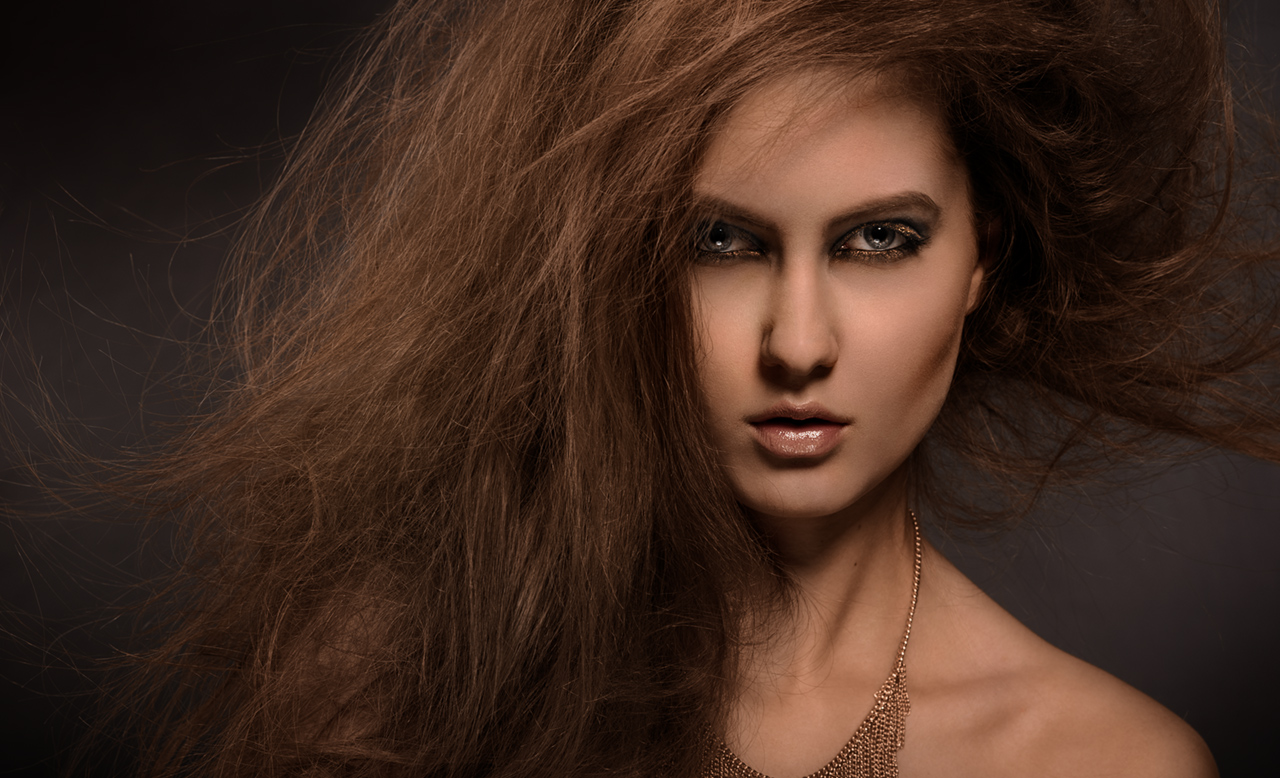
I photographed Idalia Zbrzeźniak of Eastern Models in the second half of 2011 and again at the very end of 2012. The first time we shot full-length images; most recently we did only beauty. After the second shoot, I realized how much had changed in such a short time. Previously, I had no experience with beauty photography. I also didn’t have much equipment—only three speedlights and a transparent umbrella, along with some thin stands and a set of reflectors. There were no studio strobes or other modifiers, apart from ones improvised from pieces of cardboard and tape.
2011
At the time, I still avoided shadows in photographs and believed that softer light was always better—the result of paying far too much attention to what people wrote on internet forums. It wasn’t that I had no idea what I was doing. I already had some ability, so I didn’t place lights randomly merely to make the scene bright; I tried to give the photos some depth. A shoot I did several days after the one with Idalia became a breakthrough. I took photos lit entirely from above and realized that shadows were an advantage, not a flaw. If I had photographed Idalia slightly later, the results would probably have been completely different. Not necessarily better, but different.
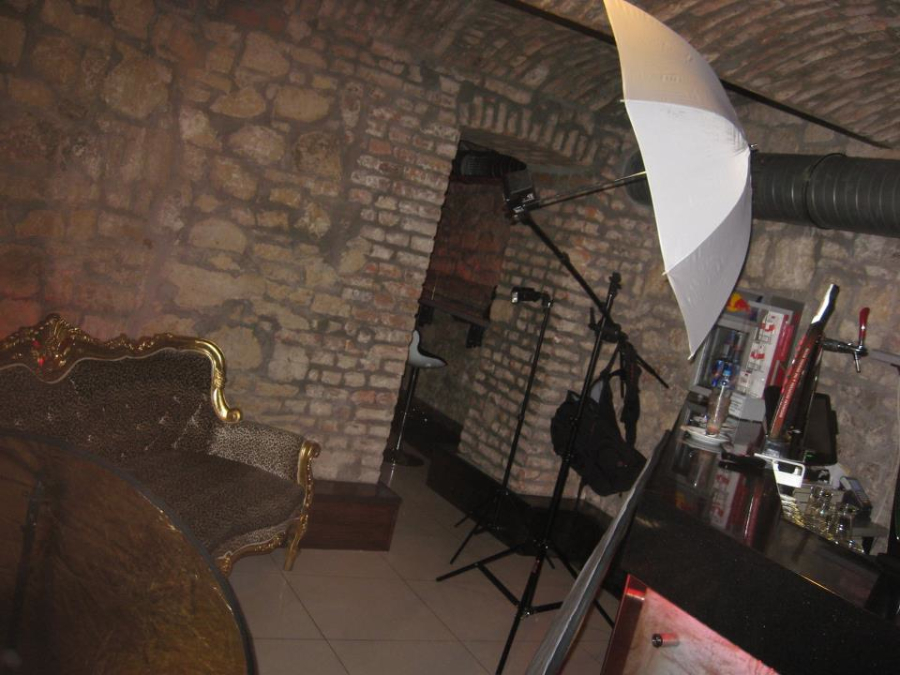
The shoot took place at the Brick club in Tarnowskie Góry, where I was photographing fairly regularly at the time. We occupied the lower level, much of which served as a dance floor. Mateusz “Pro” Prociak assisted, and Karolina Łukaszewicz did the makeup. Just after going down to Brick’s lowest level, before the dance floor, there is a tiny room with a bar and sofa. We made the first shot there:
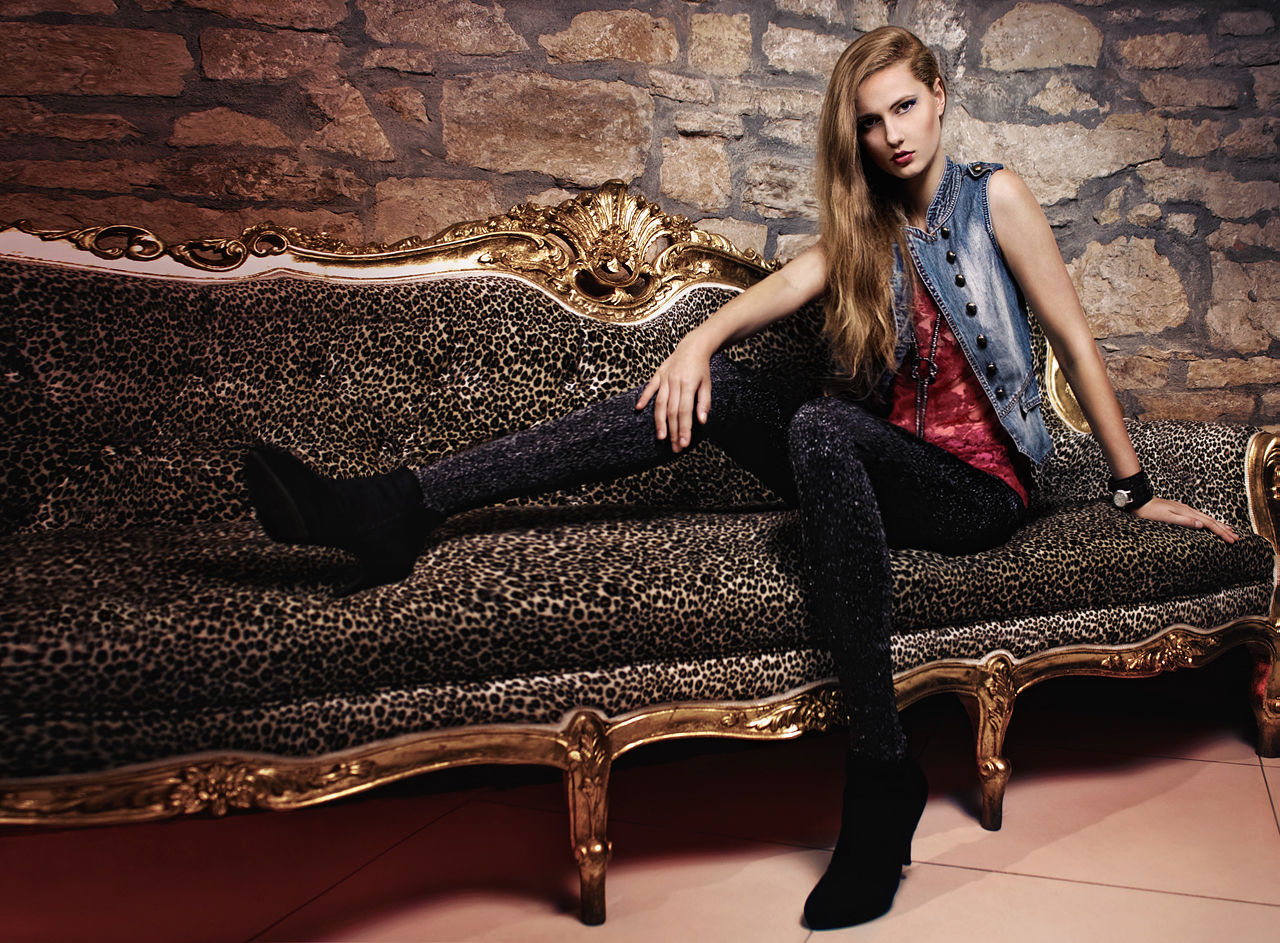
Nikon D700 | Sigma 24-70 | 24 mm | f/2.8, 1/200 s, ISO 200
The room really is tiny. I took the photo at 24 mm and fitting everything in still wasn’t easy. Both the composition and the lighting resulted from the limited space. I was pressed against the wall—or rather the bar—and couldn’t move any farther back. Idalia is tall at 182 cm, so those long legs had to be positioned carefully to fit completely within the frame :). You can see that even one centimeter less at the bottom would already have looked poor.
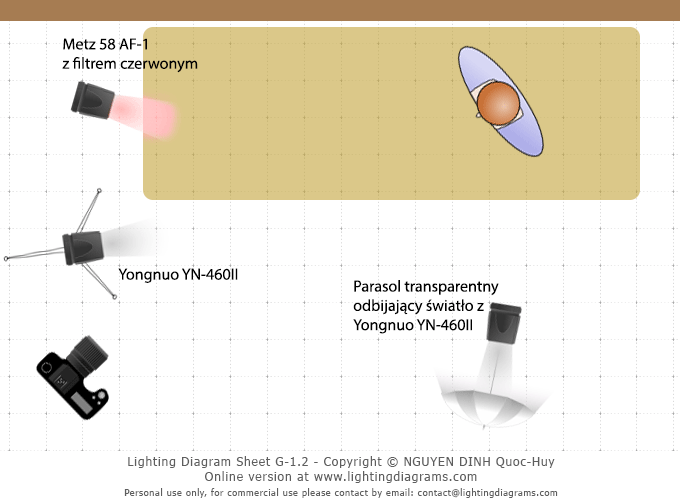
The main light was a Yongnuo YN-460II firing through a transparent umbrella. I suspended it from an improvised boom made from two stands and a reflector holder. Below the sofa was a second light, a Metz 58 AF-1 with a red gel. I got rid of it fairly quickly because it offered no benefit for strobist work. A Yongnuo that cost ten times less wasn’t much weaker and was considerably easier to operate. As the shadow beside the leg shows, I also had a third bare light.
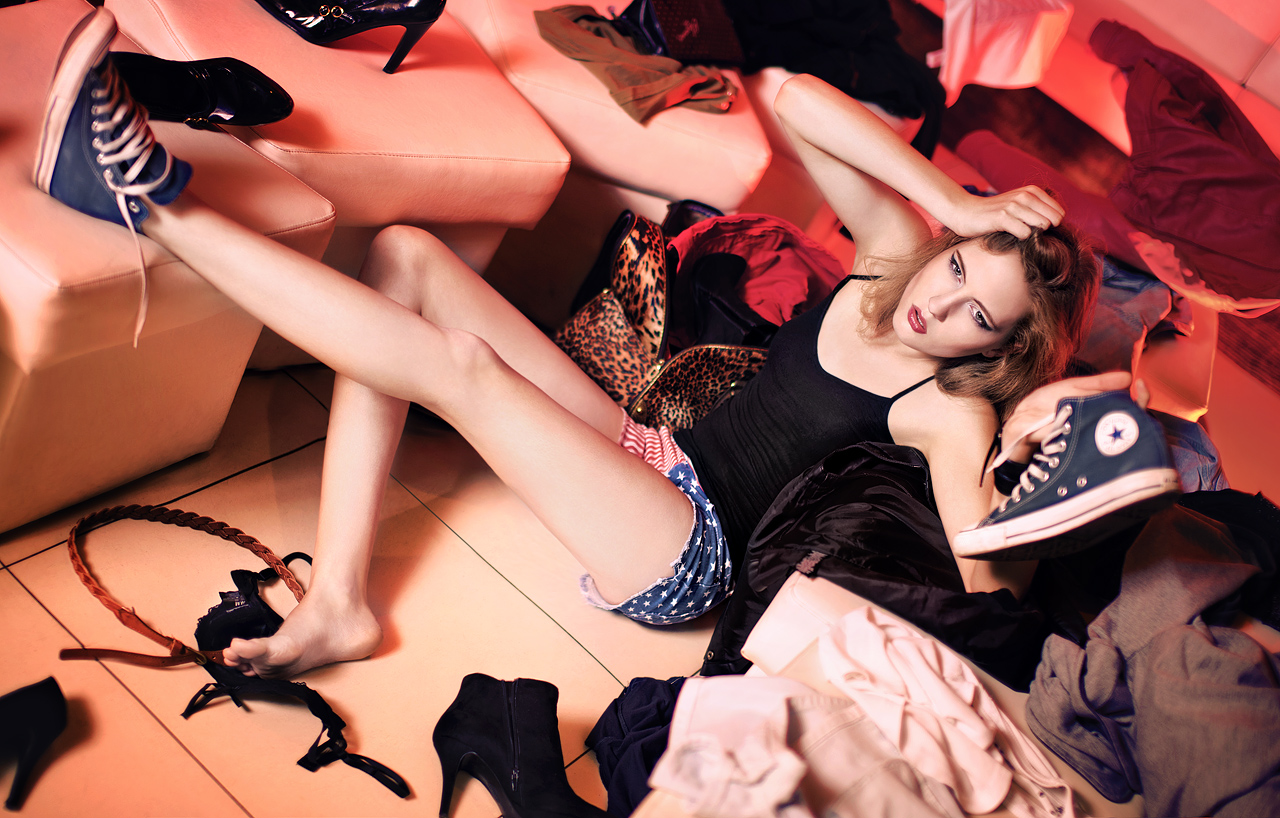
Nikon D700 | Sigma 50mm 1.4 EX DG HSM | f/1.4, 1/200 s, ISO 200
While taking the photo above, I wasn’t sure whether scattering clothes everywhere would look good or resemble a strange behind-the-scenes shot. I still don’t know, so I’ll simply explain how the photo was made…
As before, the main light was a Yongnuo firing through a transparent umbrella. I illuminated the rear of the image with a red-gelled light. There was also another light behind me, as the shadow cast by the right leg makes very clear.
2012
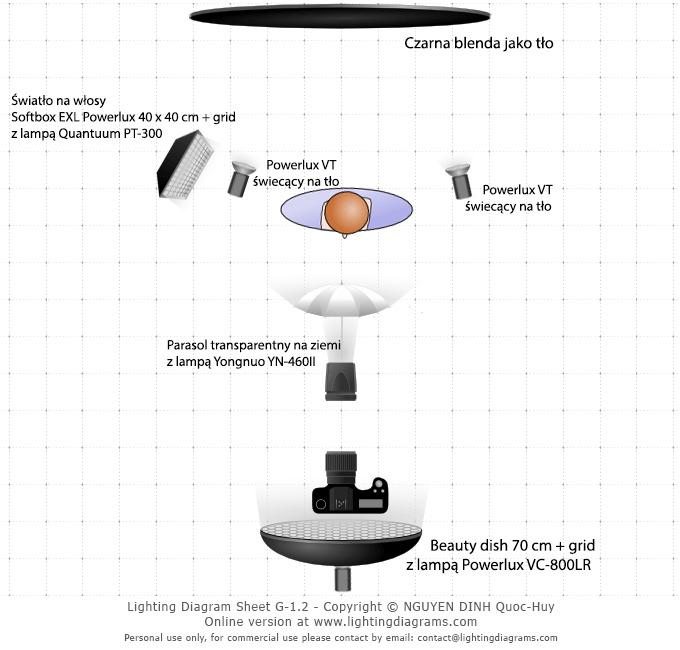
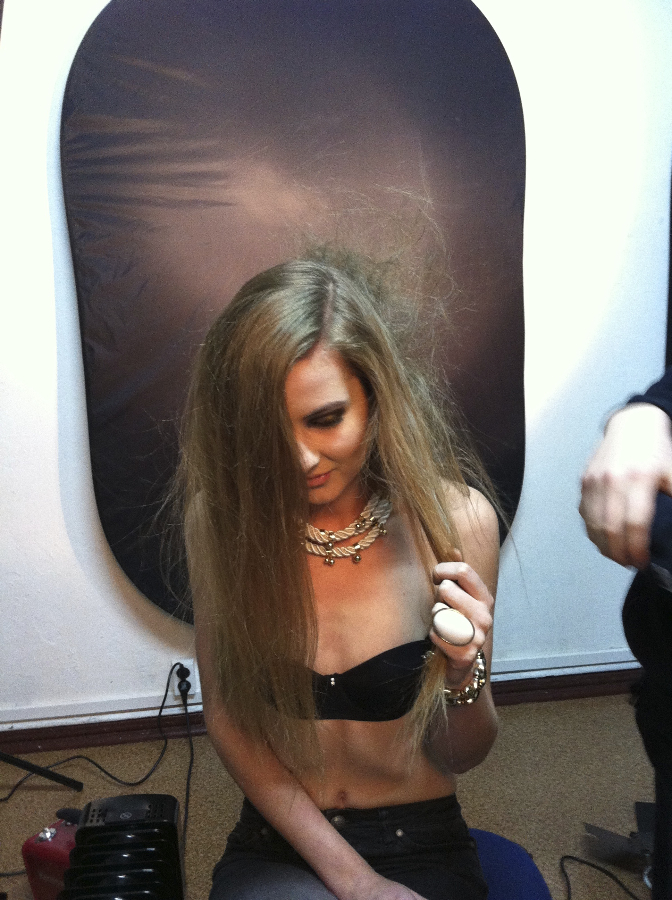
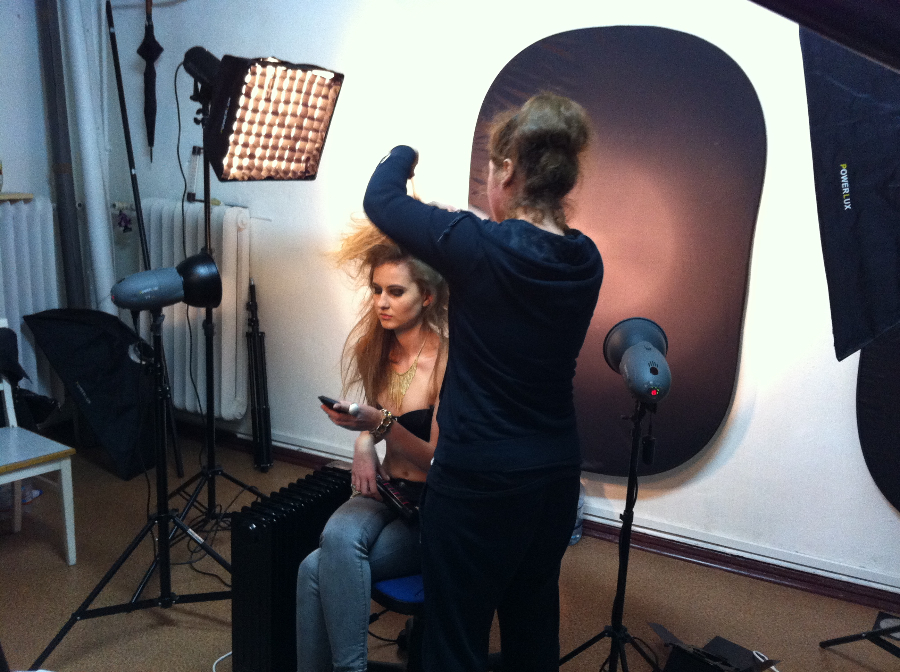
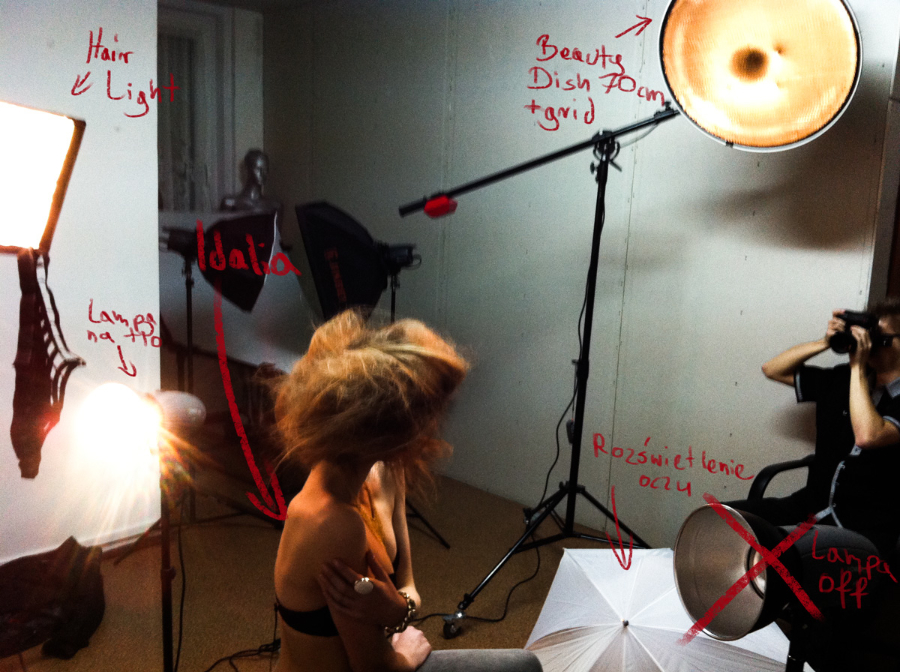
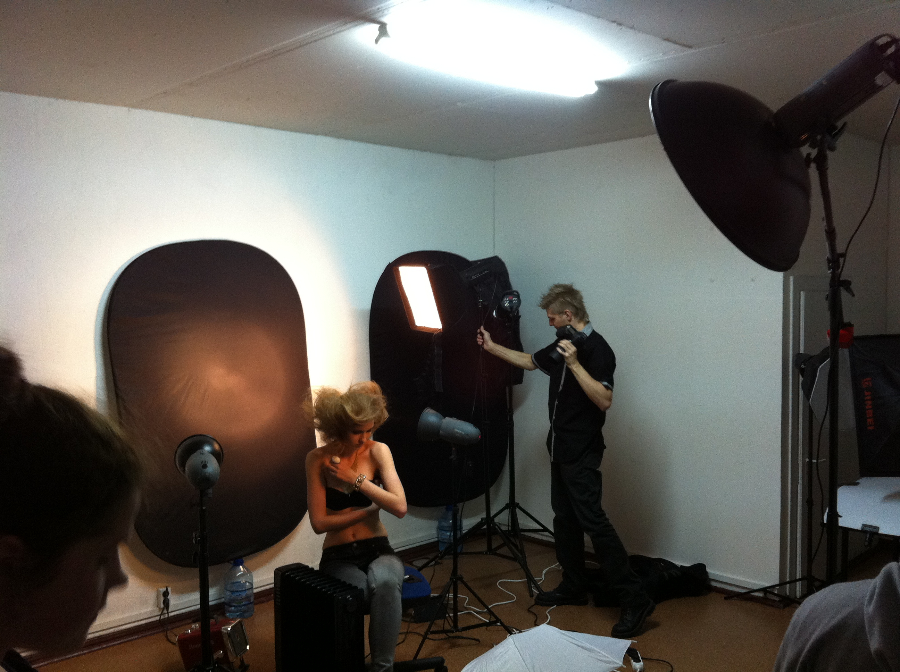
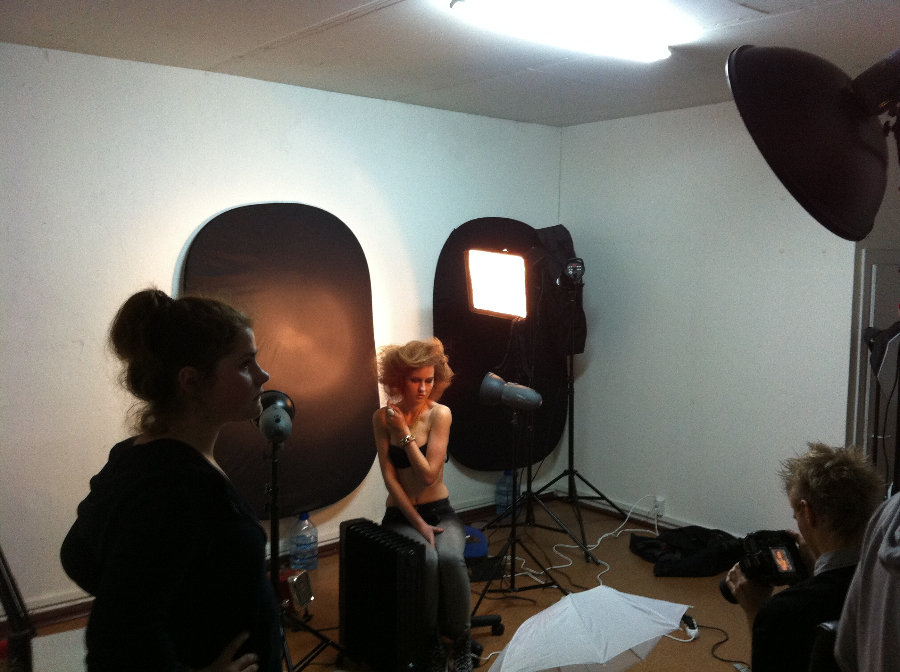
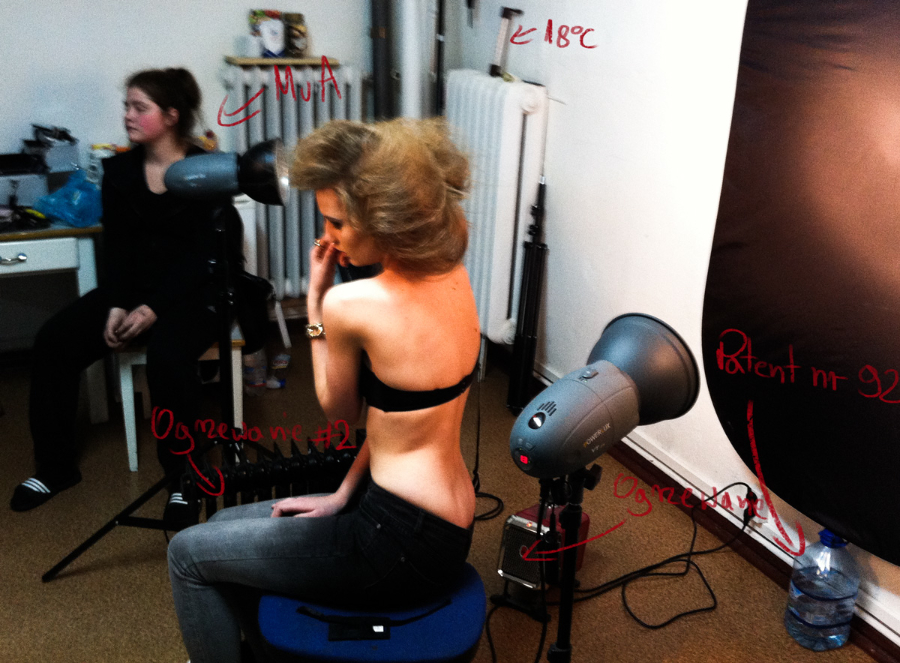
The second shoot took place recently. In the meantime, I had mainly been creating beauty photos, and that was what we shot this time. Vanessa Zalewska did the makeup, and Marcin Zimny, known as “Zimny,” assisted. I had far more equipment available—not only speedlights but studio strobes and modifiers. The main light for both photos was a Powerlux VC-800LR with a gridded 70 cm beauty dish. I suspended the entire unit from a boom high beneath the ceiling. The first shot was straight on:
Nikon D700 | Nikkor 135mm 2D DC | f/9.0, 1/200 s, ISO 200
Two lights with standard reflectors illuminated the background: a Powerlux VT-200 and VT-300. I used two because of the horizontal frame. As most readers had probably noticed, I don’t like evenly lit backgrounds. With two lights, I could create a brighter horizontal band through the center while keeping the top and bottom darker. With one light, either one side became too dark or, when I moved it farther away, the entire background became too evenly illuminated without the darker top and bottom.
A Yongnuo YN-460II speedlight sat on the floor behind a transparent umbrella. It created catchlights in the eyes and brightened the irises. A Quantuum PT-300 fitted with a gridded EXL Powerlux 40 × 40 cm softbox was also aimed at the hair, using this grid. I had needed a modifier like this for hair lighting for a long time. If I had aimed a bare light at such heavily teased hair, it would have looked terrible. Every stray strand would have shone horribly, requiring a huge amount of retouching to stop the hairstyle looking like hay. In situations like these, I had simply fired through a sheet of paper, but that was inconvenient and made the light difficult to direct. I had also built a miniature softbox from several sheets of paper and aluminum foil, which proved equally impractical. This time, I simply softened the light with the softbox and didn’t need to retouch the hair at all. The grid directed the illumination so it didn’t spill sideways, because lighting the face as well was definitely not what I wanted. The 40 × 40 cm size is excellent for this purpose. I chose it specifically as a hair light, although it would probably find other uses occasionally.
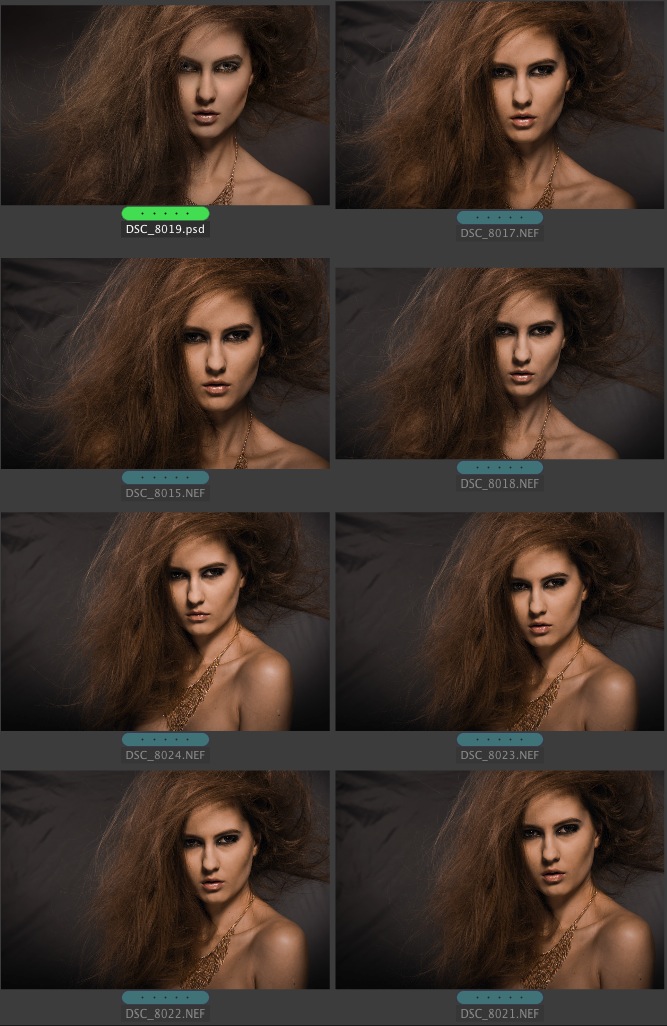
The eternal dilemma: which frame to choose? The final PSD and the remaining RAW files
The next shot shows more of the model:
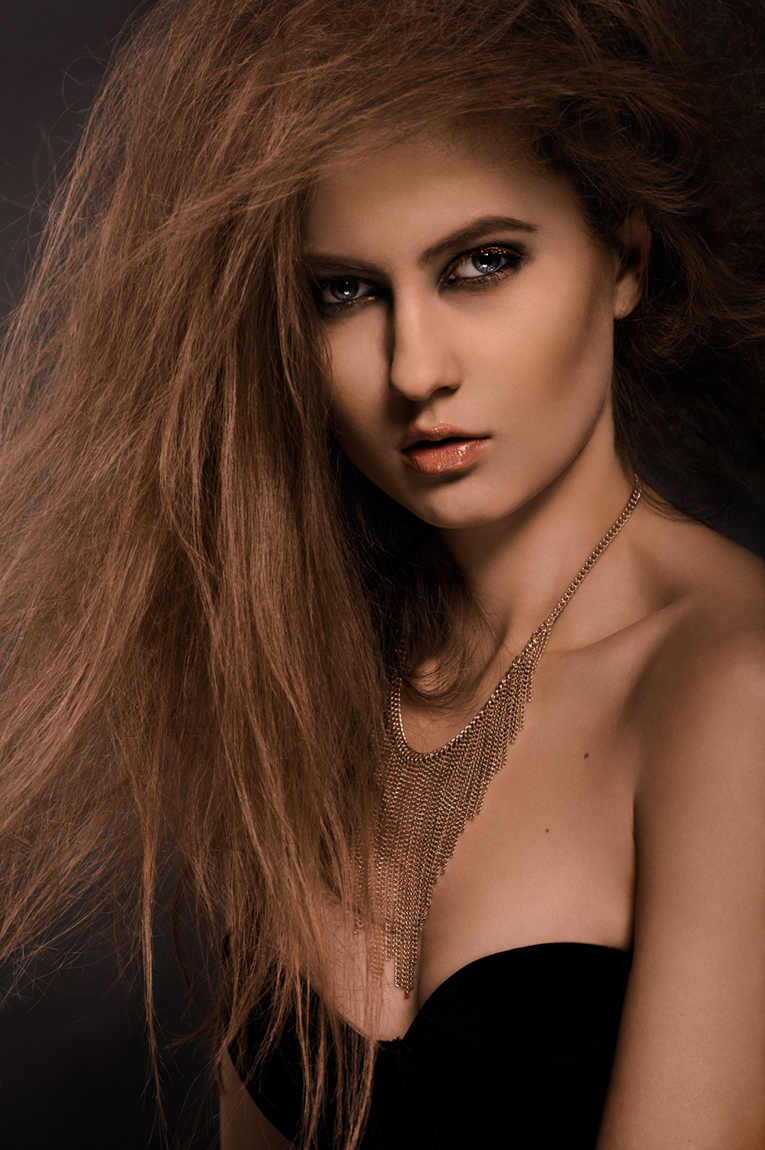
Nikon D700 | Nikkor 135mm 2D DC | f/9.0, 1/200 s, ISO 200
The main light remained in the same place, but the model was no longer facing straight ahead, so one side of her face received more light and the shadows didn’t fall directly downward. I turned off one of the lights on the background. The transparent umbrella remained on the floor, and a black reflector served as the backdrop.
The next shot was similar:
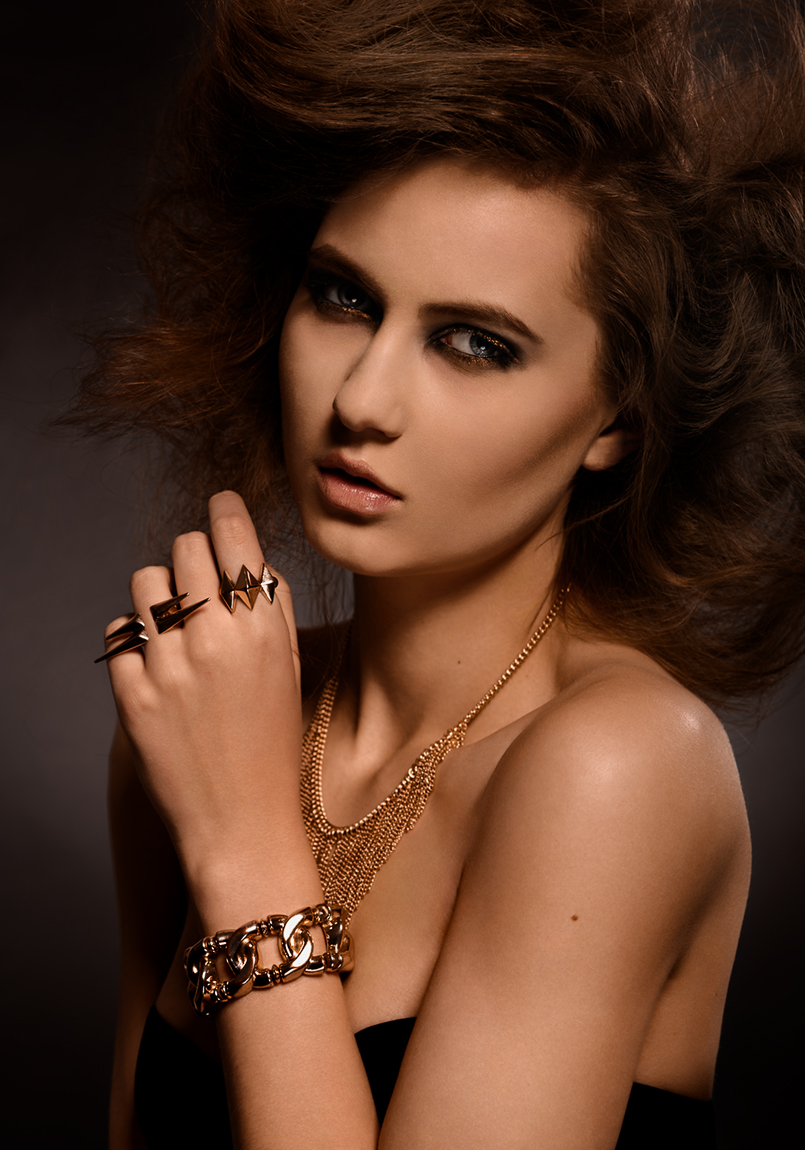
Nikon D700 | Nikkor 135mm 2D DC | f/6.3, 1/200 s, ISO 200
The softbox that had lit the hair was still doing so, but this time from the other side. I also removed its grid.
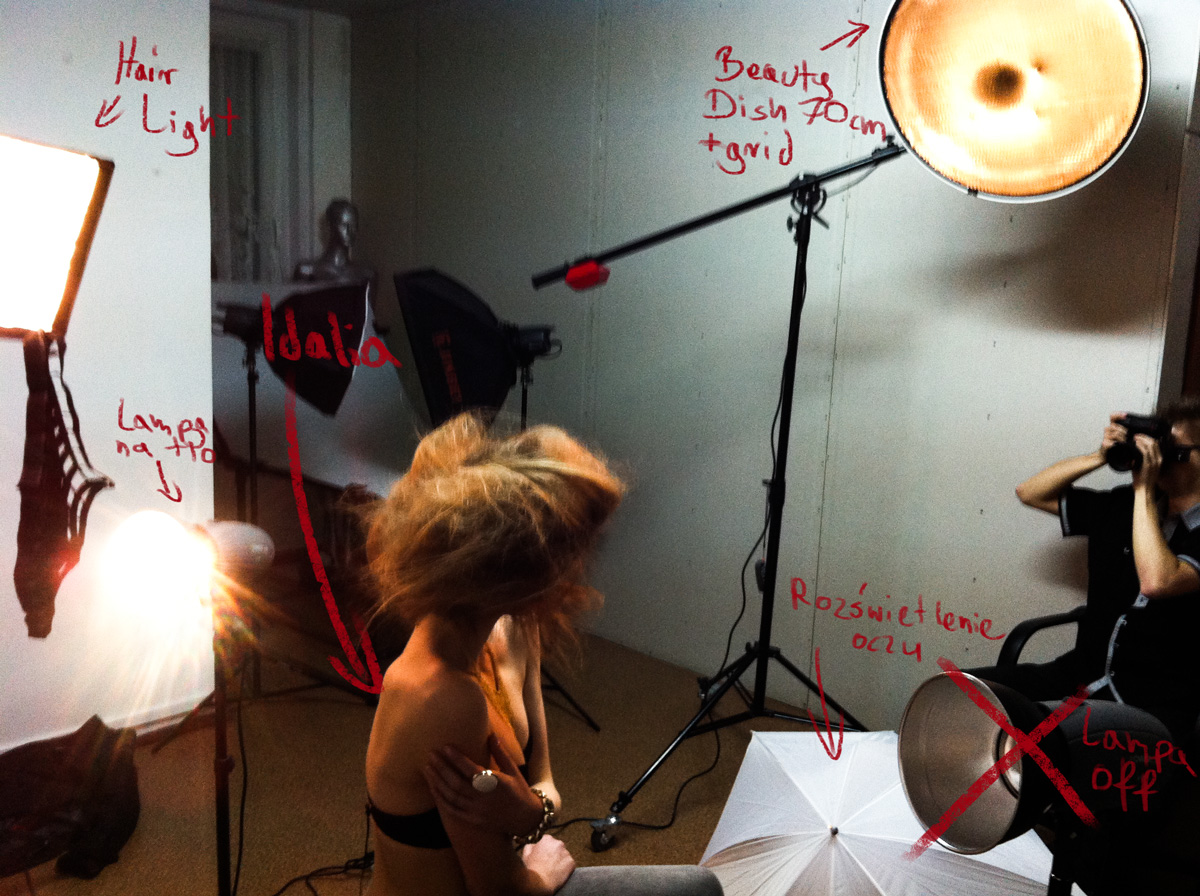
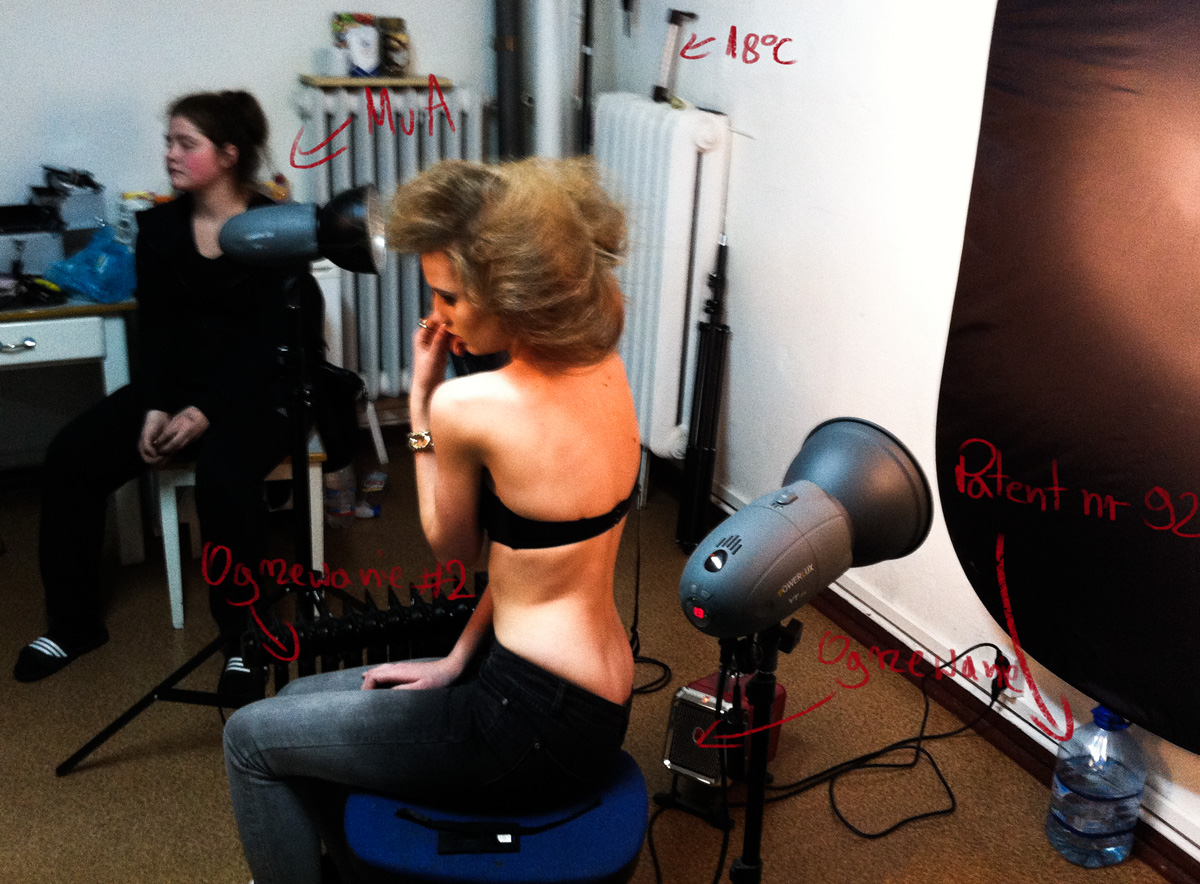
Behind the scenes
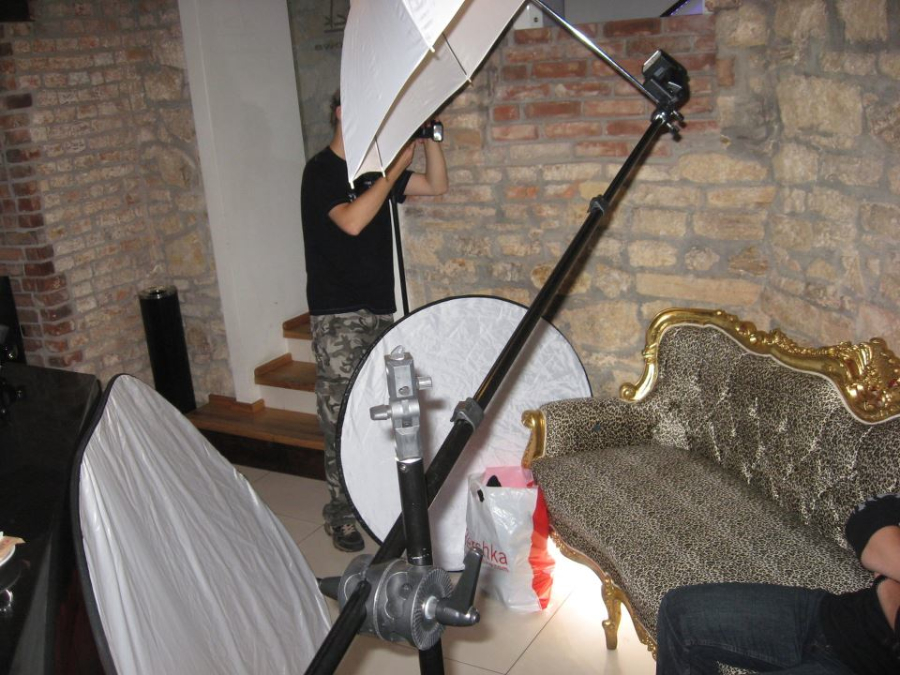
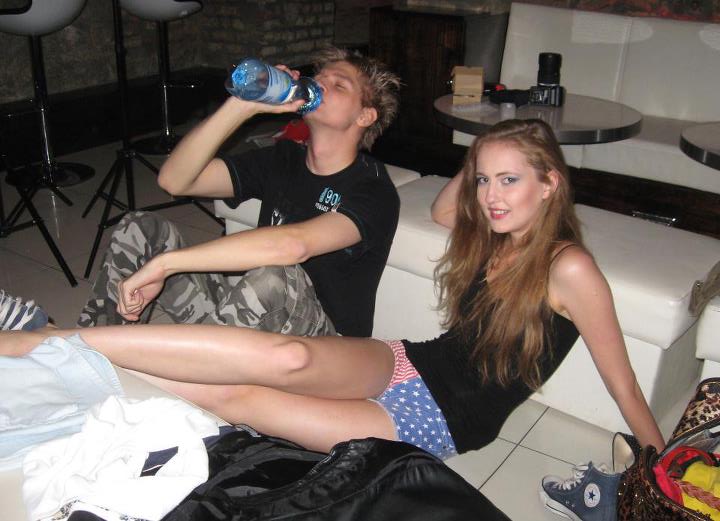
Summary
As you can see, a great deal had changed in the meantime: a different approach to photography, a different style, and different equipment. Only the models were sometimes the same. I would cover the changes in my approach to photography in another post.
In December, I had also concluded that when positioning a beauty dish as high as I usually do, illuminating the eyes with another light is essential. For the moment, that meant a transparent umbrella, although I would probably try other options, such as a stripbox for rectangular catchlights. This was also another shoot using Powerlux lights. I would probably write more about the VC-800LR one day, because at the time I used only one light from that series. For now, I’ll repeat that wireless control had become something without which I could no longer imagine taking photos. My main light normally sits immediately beneath the ceiling, and I position the beauty dish to the centimeter. Changing its power had therefore always wasted a huge amount of time. That problem no longer existed. I had already written at length about the inexpensive, lightweight Powerlux VT lights; you can read about them here.
Powerlux equipment was provided by the official Polish importer, Funsports.