Photography law: the most important things you need to know

I've wanted for a very long time to put together something about the law related to photography, especially photo shoots. Of course, I wouldn't do it alone. I believe only lawyers should speak on this subject, preferably lawyers who specialize in it. Open almost any discussion about the law on a forum or Facebook group and you'll be horrified by the amount of false information. Reading it is often pointless. For example, the belief that photos become Facebook's property when people upload them is incredibly common. So is the belief that you can publish images of public officials, such as police officers, without their consent. I could go on for a long time. Of course, some accurate information appears among all the false claims, but anyone who doesn't work in law will have no way to tell the difference.
I knew I couldn't write a post like this with just any lawyer. I needed someone who knew this area inside out and both wanted and knew how to share that knowledge. That's why I immediately thought of Wojciech Wawrzak and worked with him on this post. He's a lawyer for creatives and the author of praKreacja.pl. He helps entrepreneurs, creators, freelancers, online stores, start-ups, and others in creative industries and e-commerce. In 2015, praKreacja.pl was named Blog of the Year in Onet's competition , both in its category and overall. This year, Wojciech also appeared in a ranking of the most influential bloggers. Some of my readers may also know him from the podcast "Law for Creatives."
You can find contracts for photographers here.
Permissions needed for a photo shoot
I want to do a very simple available-light shoot in a hotel restaurant, without setting up any lights, reflectors, etc. I'll simply sit at a table with the model and photograph her. Do I need the venue owner's written permission before I can publish the photos?
When we enter privately owned premises, we have to accept the rules set by the owner. Sometimes there may be a sign inside prohibiting photography or filming. We can ignore it, of course, but then we have to accept the real-world consequences, most likely an interesting conversation with a security guard. Even if there is no sign, I think it's worth asking whether photography is allowed. That will help us avoid possible trouble.
If we manage to take the photos without speaking to anyone and without an unpleasant visit from a security guard, we may later start wondering whether we're actually allowed to publish them. We need to consider the kind of space in which the photos were taken. The main question is whether the interior design could be considered a work under copyright law and whether our aim was to use that original interior to make our photograph more appealing. In most portraits, however, the interior can probably be treated as incidental to the main subject, in which case we can be relatively relaxed about it.
Regardless of the possible legal arguments, I always advise my clients, especially those arranging shoots for later commercial use, to get the property owner's permission and sign at least a basic agreement. It's better to settle this at the start than deal with a conflict later. Even if that conflict doesn't hurt us legally, it may still cause reputational damage.
It's worth being particularly careful when taking photos in distinctive interiors that people will recognize immediately. If the interior is only an unrecognizable background, for example because it's heavily blurred, permission to publish won't be necessary. The person who signs an agreement or grants permission should be authorized to represent the owner of the interior. The safest option is simply to reach the owner directly.
What if I rent a hotel room? Even though I've paid for it, do I still need permission to publish the photos?
Paying for the room doesn't settle anything by itself. The agreement you make with a hotel when you pay for a room lets you rent it for a specified period. It doesn't give you the right to use the interior for a photo shoot. Of course, everything depends on the scale of the project. I can't imagine a hotel owner pursuing someone over private photos posted on Facebook. But when it's a commercial shoot and the interior is an important part of the photograph, it's worth getting the proper permission.
In the end, I decided to do the shoot in that restaurant and now have the necessary agreement with the owner. The model is sitting at a table with a clearly visible can of Coca-Cola and a pack of Marlboro cigarettes. Dozens of bottles containing various well-known drinks are visible in the background, and a photograph by another photographer and a painting hang on the wall. Is it legal to publish photos containing all of these items?
Let's start with the fact that the design of a Coca-Cola can and the design of a Marlboro cigarette pack can be considered works under copyright law. That means someone owns the copyright to those designs. It follows that the copyright holder has the exclusive right to decide how the work will be used. This is a simplification, of course, but I'm using it deliberately to keep the answer concise.
If we stopped at the conclusion that the designer has the exclusive right to decide how the design is used, we would have to conclude that we can't publish a photograph containing it. By doing so, we would intrude on the creator's exclusive rights and infringe copyright. Fortunately, copyright law allows the permitted use of protected works. In certain situations, the law lets us use a creator's work without asking for permission.
All forms of permitted use are described in Articles 23-35 of the Act on Copyright and Related Rights. The best-known form is the right of quotation. Almost everyone has heard of it, but not everyone knows how to use it correctly. As a result, it's the most frequently abused form of permitted use, and people routinely invoke it unlawfully.
The right of quotation doesn't apply to our Coca-Cola can and Marlboro cigarettes, however. Another form of permitted use is more relevant here: incorporating one work into another.
Art. 292 [Incorporation into another work] A work may be unintentionally incorporated into another work, provided that the incorporated work has no significance to the work into which it is incorporated.
Doesn't that provision describe exactly what we're doing? We take a photograph, which is itself a work whose copyright belongs to the photographer. The photograph shows a Coca-Cola can and a Marlboro cigarette pack, which are works belonging to other people. We've incorporated them into our photograph, but because they aren't important to it, we can rely on permitted use. The same applies to the other drink labels visible in the background and to the photograph and painting hanging on the wall.
Of course, this form of permitted use applies only when the model is the main subject of the photograph and everything else is incidental to that subject and ended up in the frame more or less by accident.
Resolving the copyright question still doesn't settle everything. Both Coca-Cola and Marlboro are registered trademarks. I don't practice trademark law, but it's easy to imagine a situation in which the photograph will be used in an advertisement. Publishing it could then be considered from the standpoint of infringing trademark rights.
In short, you need to be careful when a photograph will be used commercially. Copyright isn't the only issue. You also need to think about trademark protection. In extreme cases, there could even be an allegation of unfair competition, for example if recognizable logos were used to attract attention in an advertisement for a competitor.
After taking those photos, I bring the model to a nearby park and photograph her there. What can go wrong legally? Could a security guard, municipal guard, or police officer approach us and say, "We're very sorry, but photography isn't allowed here"?
That depends on where we're taking the photos. Photography isn't allowed in some places, for example for reasons of national security. Public parks and similar places generally aren't a problem. We also need to consider what the shoot involves. With tongue in cheek, I'd say I don't recommend shooting nudes in public places ;-).
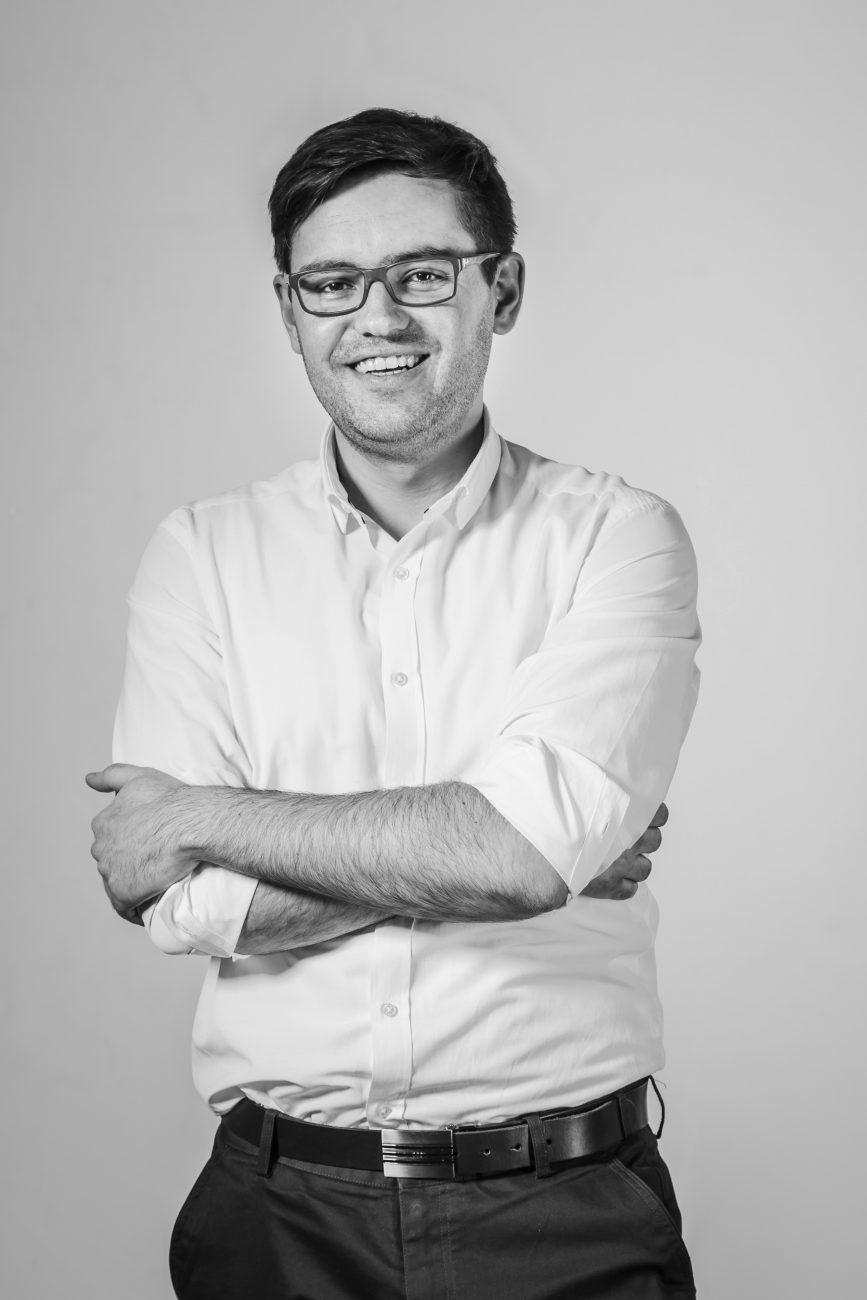
Photo from Wojciech Wawrzak's archive.
Publishing a person's image
Before a noncommercial shoot for my portfolio, I sign an agreement with the model giving me permission to use her image. What if the girl is a minor? Do I sign the agreement with her parents or legal guardian, or with her agency? Should I also verify the signature to make sure it came from someone authorized to give consent?
For a minor, consent to publish her image is given by her legal representative, usually a parent. It's also possible for a model to belong to an agency and for her parent to have already granted that consent to the agency, with the agency authorized to grant further consent.
If we don't have direct contact with the legal representative, the authenticity of the signature naturally becomes an issue. Did it really come from an authorized person, or did the model forge it herself? Unfortunately, there is no good answer for how to proceed. It's hard to expect the signature to be verified every time, although doing so when possible would demonstrate due diligence.
Consent to use someone's image can be withdrawn. Is there any way to protect against that?
Withdrawal of consent to publish a person's image is usually backed by a contractual penalty tailored to the situation. In other words, the agreement states that if consent is withdrawn, the person withdrawing it must pay a contractual penalty. Its amount should be considered carefully so that it covers any loss caused by the withdrawal.
You also need appropriate protection against withdrawal when the model is paid. Because the right to one's image is personal, the right to withdraw consent doesn't depend on whether the model was paid.
Suppose a catalog has been printed in an enormous run and distributed around the world. A penalty of several million PLN doesn't seem excessive. The entire campaign would have to be stopped, the shoot redone from scratch, and so on. On the other hand, setting the penalty too high would only make it easier to challenge the agreement in court, and actually collecting that amount seems unrealistic. It could exceed the person's lifetime earnings. So how should the penalty for withdrawing consent to use an image be calculated?
Unfortunately, there is no magic formula. I do think it's better to set the contractual penalty too high than too low. Why? Because an excessive penalty doesn't invalidate the entire agreement. You can't challenge the whole agreement on that basis. Only during court proceedings can you ask the court to reduce a contractual penalty because its amount is grossly excessive.
For projects like the one you described, I also think it's always worth adding a clause stating that withdrawal applies going forward but doesn't prevent the party that received consent from using materials that have already been produced. Sure, the validity of such a clause can be debated, but I don't think projects of this kind should avoid it. There's nothing to lose, and it provides another safeguard that a court may take into account if a dispute arises.
What about fields of exploitation? As far as I know, they have to be specified in the agreement. I'm wondering how specific they need to be. If the shoot is going to appear in a magazine, do I need to name the magazine, or is "printed editions of magazines" or something similar enough? The same applies to the internet. It would be difficult to list every site where a photo might appear.
"Fields of exploitation" is a term used in relation to copyright and the transfer or licensing of those rights. The right to one's image isn't a copyright or related right, even though it's regulated under the same act. That wasn't a particularly successful choice, since it often leads people to confuse image rights with copyright.
Because the right to one's image isn't the same as copyright, using the term "fields of exploitation" for a person's image can make matters even less clear, although it isn't incorrect. An agreement covering use of a person's image does need to specify the ways in which that image may be used. Formally, these aren't the fields of exploitation described in copyright law, but in practice the issue is the same: which uses of the image the authorized person has consented to.
The more specifically the agreement describes how the image may be used, the better. As you mentioned, that won't always be possible. In those situations, we can describe the type of use more generally, such as "publication in print media" or "publication on the internet."
The context in which the image will be used also deserves attention. If we want peace of mind, the agreement should state that context. We may have consent to publish an image in print media, for example, but nothing in that consent suggests it can be used to advertise underwear. We may have permission to publish it online without ever mentioning that the purpose is to promote a product the model absolutely doesn't want to be associated with. Publishing a person's image can also affect their personal rights, so we can't ignore the context. The person giving consent must understand both the kind of medium in which the image will appear and the context in which it will be used.
Let's move away from photo shoots for a moment. I'm in the city taking reportage photos, and one photograph contains five strangers. Do I need consent from all of them before I publish it?
If those people are merely details of a larger scene, meaning they appeared in the frame accidentally because you were photographing something else and aren't themselves the subject, you can argue that consent isn't needed. This assumes the photograph isn't being used commercially, because for commercial use it's always better to have consent.
If those five people are the core of the photograph, consent to publish their images is required unless another exception applies. For example, they may have been paid to pose, or they may be public figures whose images were captured while they were performing a particular function.
For more details, see this article.
What about the police and other public officials performing their duties? There's a common belief that you can photograph or film them and then publish the material without any consent.
Yes, that belief is common, but it isn't justified. A police officer or other public official isn't a public figure, so merely performing professional duties doesn't create an exception to the requirement for consent to publish their image. Sometimes we may be able to rely on the public interest, for example when exposing a police officer's reprehensible conduct. It might then be possible to argue that the act wasn't unlawful because it was done in defense of public order.
TFP shoots
I get the impression that contract templates can be a good option for TFP shoots and permission to use a person's image, provided they're prepared properly. Good templates cost money, but they're much cheaper than a custom-drafted agreement. A custom agreement will certainly be useful for commercial shoots, where there are so many variables that no template is likely to cover them all. Could you briefly explain the pitfalls facing people who use sloppy agreements with gaps in them? What can the consequences be?
We mentioned the first problem in an earlier answer: consent needs to be specific. Even a good template will leave space for us to define the consent ourselves by stating the medium, context, and duration of the image's use. We need to describe all of this in as much detail as possible. A good template helps by drawing our attention to it, perhaps through a note attached to the relevant clause. My templates, for example, always include comments on important points. A poorly prepared template may omit this issue entirely, leaving us with an agreement that doesn't specify how the image may be used and therefore doesn't do its job at all.
We also mentioned the second problem earlier: protection in case consent is withdrawn. Templates usually omit this and cover only the consent itself. In commercial projects, however, failing to protect against withdrawal creates an enormous risk.
Another problem arises when someone pieces an agreement together from several different templates. This is often the worst situation. Many issues are omitted, while inconsistent terminology, including different names for the parties within the same agreement, can leave us unsure which obligations apply to which party.
Another problem concerns professional image more than law: how the other party reacts to the agreement. Templates found online are often sloppy and poorly edited. If we present ourselves as professionals but send the other party an agreement that simply looks bad, we weaken that professional image. Especially in a creative industry, form matters as well as content. An agreement should also look good and be properly edited, not be an unreadable wall of text.
One last point: when you ask a lawyer to prepare an individual agreement, you get more than the document itself. You also get guidance. Clients often come to me for an agreement and learn about many related issues they hadn't known about. This broader advice can be very useful, especially for larger projects, though not only those. I recommend it to anyone preparing an agreement for their services for the first time and planning to reuse it. Discussing every part individually with a lawyer can clear up a lot of confusion.
Many people think TFP is simply a free shoot. What is it really, and is an agreement with the model giving permission to use her image enough, or is anything else required?
Every agreement covering the use of a person's image needs to address compensation. It should describe the arrangement in detail so that there is no later doubt about when and how much must be paid or how payment will be made. TFP shoots need particular attention because they're really barter transactions. The agreement should describe what each party provides as equivalent in value. This matters when the transaction is later accounted for. I also warn against undervaluing what the parties provide. Valuing each side's contribution at PLN 1 obviously has nothing to do with reality.
Why does that value matter? Among other reasons, income for income-tax purposes includes not only money but also the value of other benefits. If a model receives a shoot worth PLN 500 in exchange for her consent, PLN 500 is her income even though she didn't physically receive any cash. Conversely, a business that receives consent as part of a TFP shoot earns income in the form of consent with a specified value. To "zero out" that income, the business must be able to show that the arrangement was a barter: it provided a shoot of the same value in exchange for consent.
That's why the agreement needs to describe the financial arrangement in detail. It doesn't have to be a separate contract. The relevant clauses are usually included in a single agreement.
Unauthorized use of photographs
A company on the other side of the country used my photographs without my permission. Should I take screenshots and have them notarized, or is that a myth and there is no need to visit a notary? Is there anything else I should do right at the start? If the shoot was TFP, should the model do the same?
Notarized confirmation of screenshots isn't essential. Anything can serve as evidence in civil proceedings. The remaining question is how credible that evidence is. Screenshots are notarized to give the evidence more weight and prevent the other party from challenging it. But if we don't have notarized screenshots in a particular case, we still aren't out of options.
Remember to separate copyright in the photographs from the model's right to her image. Copyright belongs to the photographer, while the right to the image belongs to the model. The photographer and the model can therefore pursue their own claims, respectively for copyright infringement and infringement of image rights.
Can the model sue a company for using her image illegally even if it was a commercial shoot and she was paid? Or can she do so only if she wasn't paid to pose?
If a third party used photographs for which only another party had consent to publish the model's image, the model can pursue her own claims against the infringing party even if she was paid. That compensation effectively covers her consent toward the party covered by the agreement, unless the agreement says otherwise. The agreement may also give the agency power of attorney to pursue claims for infringement of the model's image rights on her behalf.
There is an extensive article about copyright infringement and how to respond to it. You'll find it in the additional materials section.
Facebook's rights to your photos
I know this subject has been done to death, but I still meet people who think that uploading photos to Facebook means handing over all rights to them. So what's the truth? Can Facebook do whatever it wants with my photos?
When you upload a photograph to Facebook, you give Facebook a license to distribute it within the service. Facebook needs that license so it can legally display and distribute content added by users within the service. The license doesn't take away your rights to the photograph. All those copyright chain messages circulating on Facebook are therefore complete nonsense. For more on this, see my article.
Quoting photographs
Some platforms let you embed photos on other sites, as Instagram does, while on Facebook you can simply use the share button. That gives me an easy way to "quote" the photos posted there. But what if a photograph isn't on one of those platforms, or I want to show a photo from someone's Facebook page on my blog? Is there any way to quote a photograph legally without first getting the photographer's permission?
The rules governing quotation also apply to photographs, so we can use them under the general right of quotation. The purpose of the quotation is important. Merely making the material more attractive isn't a sufficient purpose for relying on the statutory right of quotation.
Some services also let you embed photos elsewhere. I still recommend caution here. It may comply with the service's terms, but it may still be unacceptable from a copyright standpoint, especially when the use is commercial. I wrote about an interesting case involving the sharing of photos within Facebook itself here.
I can quote someone else's photograph to discuss its lighting or exposure, for example. Can photographs be quoted for any purposes other than analysis?
Copyright law permits quotation for the following purposes:
- explanation,
- polemics,
- critical or scientific analysis,
- teaching,
- the conventions of a creative genre.
The conventions of a creative genre naturally cause the most confusion because the concept is broad enough to leave some uncertainty. In general, it's worth using common sense and asking yourself whether you would accept someone using your photograph in the same way while invoking the right of quotation. That perspective often produces surprising conclusions. You simply have to put yourself in the creator's position. Whenever there is any doubt, I recommend asking for permission. It's often easy to get, and then you can stop worrying.
Contracts
Update: Contract templates for photographers are now available! You'll find them here.
Conclusion
I think we've covered the most important issues here. Briefly, admittedly, but you'll find more detail on some of them below. There is probably still plenty left to discuss, but I hope that we'll be able to hold a webinar or expand on these subjects in some other way before long.
Additional materials
Articles and podcasts in which Wojciech Wawrzak expands on some of the issues covered in this post:
- Consent to publish a person's image
- Who owns the rights to your photos on Facebook and Instagram?
- Sharing photos on Facebook for commercial purposes: a case study
- How to respond to online copyright infringement
Other articles that photographers may find useful: