Minty and colored contact lenses
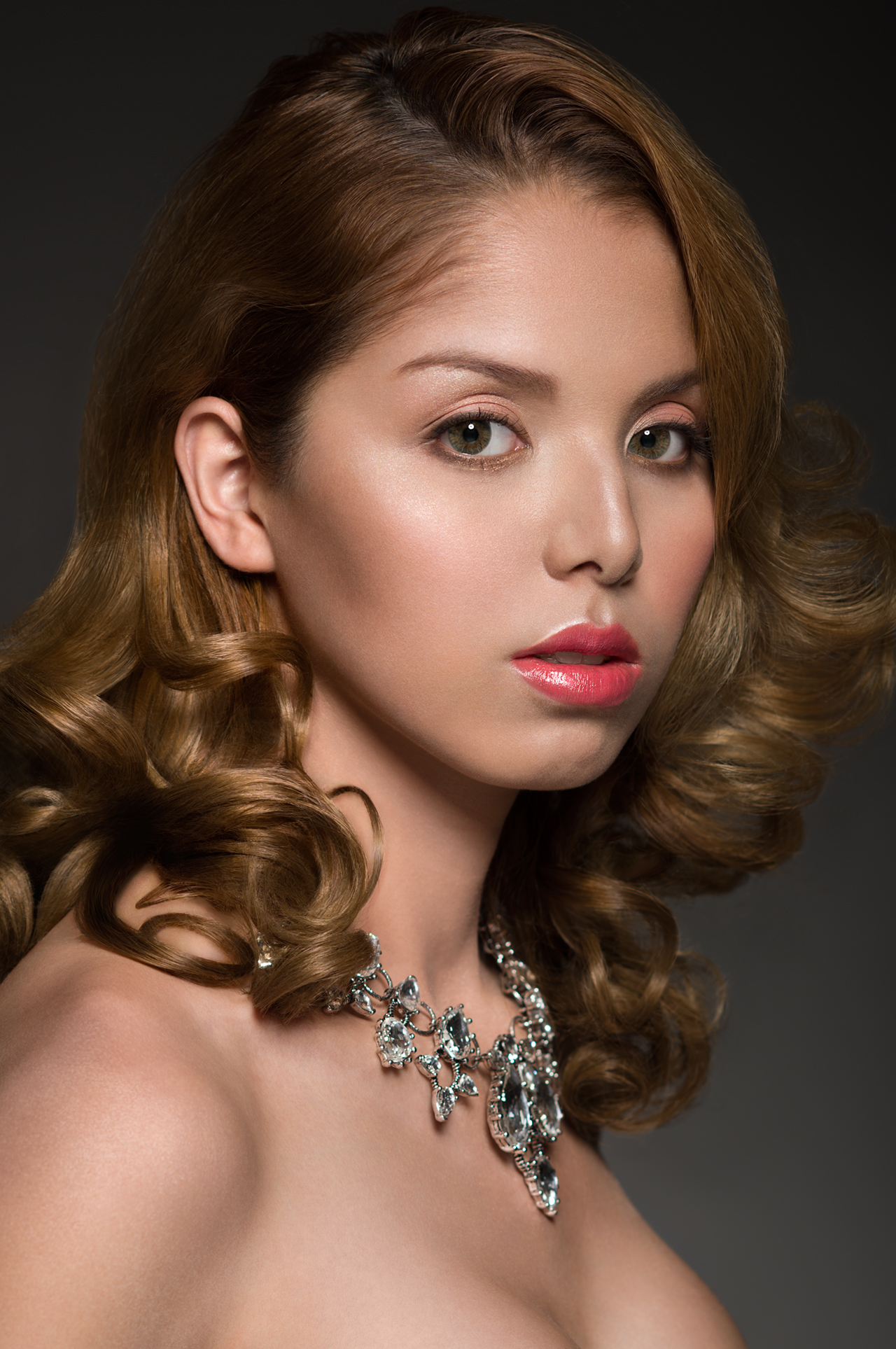
How did I manage to live in Bangkok for two and a half years before photographing my first Thai model? I have no idea. One thing is certain, and I’ve mentioned it many times before: there are no Asian models in Asia… I mean, there are, but they make up only a fraction of the industry. In Thailand, most models are Brazilian. There are also many Russian, Ukrainian, and generally Slavic-looking women. Unfortunately, Polish women are only a small percentage of them, although that hasn’t stopped me from regularly encountering them—I’ve already written about shoots with them several times.
It was obvious almost from the beginning that Thai models would also have to appear in my photos this time. The model in today’s shoot is half Thai. I was looking for a beautiful model for a session with makeup artist Patti Lu, who lived in Hong Kong and is now in Europe. We failed to coordinate our schedules the year before, but this time it was easier: Patti came to Bangkok for more than a month, which resulted in two shoots together. The second will also appear on the blog soon.
The plan was simple: shoot beauty photos. Nothing else was planned apart from a general direction for the retouching. Patti Lu made all her makeup looks glossy, so she wanted the light reflections to be clearly visible in the photos as well. My photographs, on the other hand, almost always had very matte highlights, without obvious reflections on the skin. One glance at my portfolio makes its consistency in that respect clear. At the same time, one of my favorite photos was retouched differently, so I knew I should create more images with more visible highlights.

Nikon 810 | Nikkor 135mm 2D DC | f/5.6 | 1/200 | ISO 64
Asian and European models
There is another aspect that fits this subject well. My first shoot in Bangkok was with a Japanese model. At the time, I didn’t know that Asian women were expected to be presented differently from European women. Asian models are expected to have light skin, so by darkening hers I made the biggest possible mistake and eventually had to redo the entire shoot. Of course, the model didn’t point it out because that wouldn’t be considered proper for a Japanese woman, but eventually I realized it myself. Being pale is even more important in Thailand. You can see it clearly on television, where you almost have to squint to avoid being blinded by the glow of everyone’s complexion. Every cosmetic product is whitening, or at least blocks UV radiation. A lighter direction for the retouching was therefore obvious, although I didn’t want to overdo it. I kept the natural colors; I simply didn’t darken them as I often had before. Extremely pale skin wouldn’t have worked well with this lighting. Another difference is the aversion to every mole and even freckles. I normally leave them in, but with Asian models that’s a bad idea.
The model was Minty, who contacted me about a shoot through Facebook. She has a very distinctive look, is 174 cm tall, and would also be excellent for glamour or nude photography. She mainly does lookbooks and fashion. Minty is half Thai; unfortunately, the other half remains unknown. She was considering a contract in New York but was still in Bangkok at the time.

Nikon 810 | Nikkor 135mm 2D DC | f/5.6 | 1/200 | ISO 64
Contact lenses and the appearance of the eye
The shoot had one very serious problem that I didn’t anticipate, although I should have. Contact lenses that change the appearance of the iris are extremely popular in Asia. They exist all over the world, but they’re particularly common here; stalls selling them are everywhere. The problem is that these lenses are completely unsuitable for photographs. As long as the frame is wide enough that no detail in the eye is visible, everything is fine. In a portrait frame it gets worse, although at web resolution it remains reasonably acceptable. The disaster begins when image quality matters. No matter what I write, most people will decide that I’m exaggerating. It’s easier to show an example:

Normal contact lenses at the top; lenses that change the iris at the bottom.
It was too late to remove them. I noticed while taking a test shot, when the makeup was almost finished. I immediately knew how serious the problem would be because I had photographed someone wearing similar lenses back in Poland. I’ll never forget my failed attempts to rescue those images.
This time it was equally clear that trying to retouch eyes like these made no sense—there simply wasn’t enough detail. One week after the shoot with Minty, I therefore took additional eye photos under the same lighting but without unnecessary additions in the eyes. All that remained was to replace the irises covered by colored contacts with the ones photographed without them.
At the resolution used on the blog, the difference is too small to notice. But I know I’ll thank myself the first time I make a print for not leaving the eyes in their original state.
Lighting
There’s little reason to describe the lighting at length because it was very simple: a 70 cm beauty dish fitted with a grid and a Jinbei DPsIII 800 Ws light. A transparent umbrella with a speedlight, a YongNuo YN 560 IV, sat on the floor to illuminate the eyes. It was positioned farther from the subject than usual.

Nikon 810 | Nikkor 135mm 2D DC | f/5.6 | 1/200 | ISO 64
Photos two and three used two rim lights in the form of very narrow gridded stripboxes, each fitted to a Jinbei DM2 300 Ws. The first photo used only one rim light.
I didn’t use any additional light on the background this time. Instead of the black reflector I use for almost every shoot, I chose a Savage paper backdrop in Smoke Gray. Mine arrived from Poland together with the rest of my equipment, but from what I can see it’s also available in Thailand. If I had placed it as close as I normally place the reflector, it would have appeared far too bright—more than 50% gray. Positioned farther away, it produced the result visible in the photos.

Behind the scenes
I recorded a very short video showing the lighting arrangement and part of the shoot:
Summary
From then on, I would always warn models before a shoot that they couldn’t wear contact lenses that change the appearance of the iris.
This was my first studio shoot with the Nikon D810 and a ColorChecker, and my first with a boom that allowed the lamp’s angle to be adjusted using a low-mounted control. I did several more shoots over the following month, so I planned separate posts about those items—the D810 and the ColorChecker.
P.S.
A considerable amount of material had been added since my retouching course went on sale, so anyone who bought it earlier might want to take another look.
Anyone who didn’t own the course but wanted to learn retouching like mine could still buy it at the promotional price and win a Wacom Intuos tablet. The information and purchase option were available here.
More updates soon.
Studio equipment was provided by Fripers.pl.